



Best camera for wildlife: Ultimate Guide 2025
Why Wildlife Photography Demands the Right Camera
The best camera for wildlife photography is about capturing split-second moments. It requires lightning-fast autofocus, high burst speeds, and powerful telephoto lenses to freeze action that happens in milliseconds.
Top Wildlife Camera Recommendations:
| Camera Type | Best For | Key Feature | Example Model |
|---|---|---|---|
| Professional Full-Frame | Serious enthusiasts & pros | 30+ fps burst, advanced AF | Nikon Z9, Canon R5 Mark II, Sony A9 III |
| Mid-Range Full-Frame | Advanced users | 20-30 fps, excellent AF | Nikon Z8, Canon R6 Mark II |
| APS-C Mirrorless | Budget-conscious shooters | Crop factor reach advantage | Canon R7, Canon R10 |
| Bridge Camera | Beginners | All-in-one superzoom | Nikon Coolpix P1100 |
| Micro Four Thirds | Compact system users | 2x crop factor, weather sealing | OM System OM-1 Mark II |
Wildlife photography is challenging due to unpredictable subjects, difficult lighting at dawn and dusk, and the need for significant telephoto reach. Modern cameras have revolutionized the genre with AI-powered animal eye detection, high burst speeds, and excellent low-light sensors. Advanced subject tracking is the difference between a blurry photo and a portfolio-worthy shot.
The core features that separate wildlife cameras from general-purpose bodies:
- Autofocus speed and accuracy – Tracking a bird in flight or a running mammal requires phase-detection AF with dedicated animal/bird recognition
- Burst shooting speed – 15-20 fps is the sweet spot for capturing peak action without drowning in files
- Resolution – 30-50 megapixels provides enough detail for cropping distant subjects
- Low-light performance – Wildlife is most active during golden hour when light is scarce
- Weather sealing – Because nature doesn’t care about your gear budget
Sensor size also matters. Full-frame excels in low light, but APS-C and Micro Four Thirds (MFT) cameras offer a “crop factor” that extends your lens’s reach, turning a 300mm lens into a 450mm (APS-C) or 600mm (MFT) equivalent.
I’m digitaljeff, a digital media and content creation expert with 20 years of experience. This guide will help you match your needs to the right technology to find the best camera for wildlife photography.
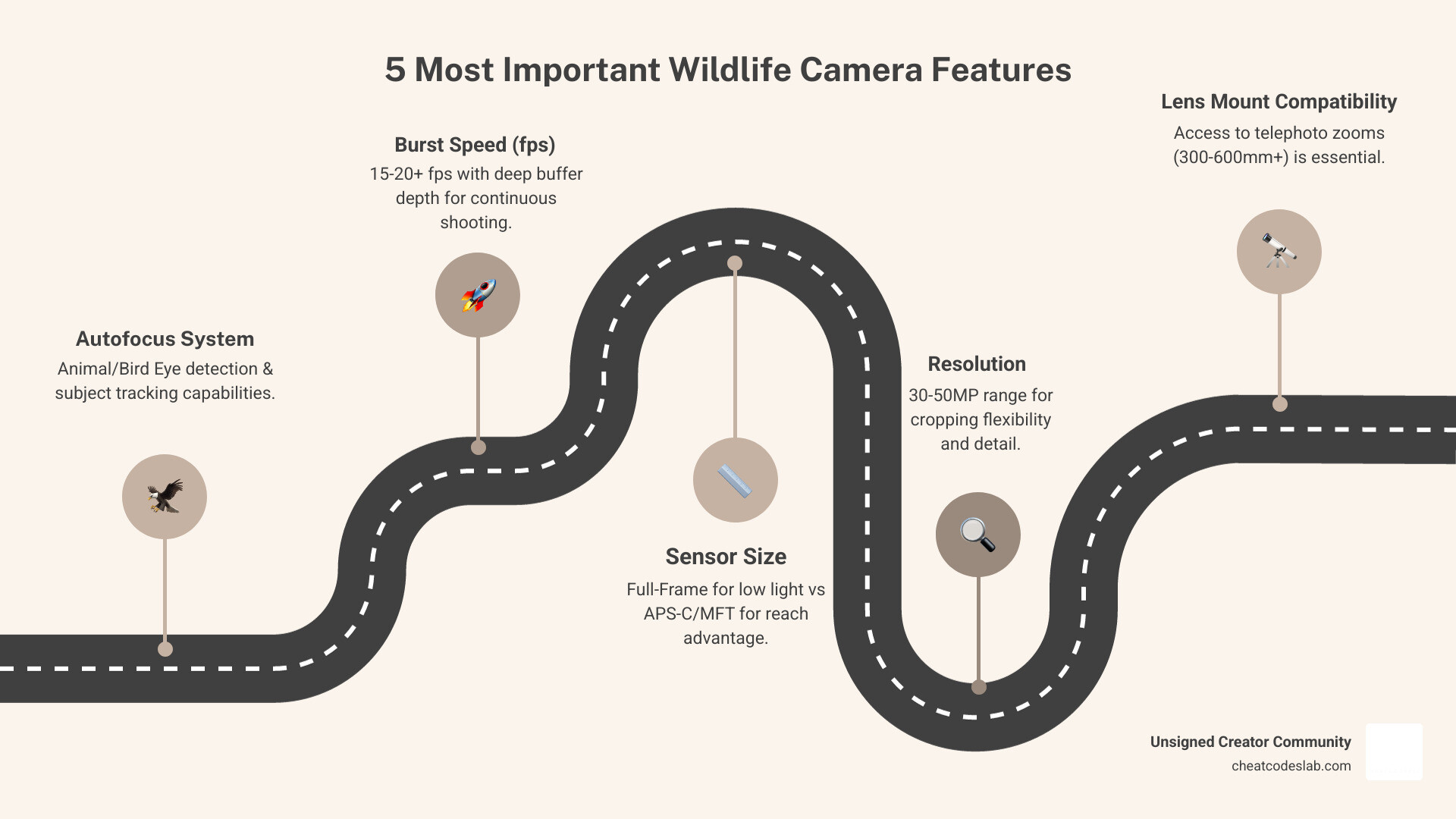
Best camera for wildlife word guide:
- best photography backpack for traveling
- best place to buy used camera gear
- best travel insurance for camera gear
The Ultimate Guide to Finding the Best Camera for Wildlife
This guide dives into the crucial technical features and recommendations to help you choose the perfect camera for stunning wildlife shots, regardless of your skill level.
Essential Features: Autofocus, Speed, and Resolution
These three features are the foundation of great wildlife photography.
Autofocus (AF) performance is critical for capturing fast-moving animals. Look for these key features:
- Subject Tracking: Follows a subject across the frame.
- Animal/Bird Eye AF: A game-changer that specifically finds and tracks the eyes of animals and birds for perfect focus.
Modern mirrorless cameras from Sony, Canon, and Nikon excel here. A strong AF system, like those in the Sony ⍺1 and Nikon Z9, is non-negotiable for serious wildlife work.
Burst Speed (fps) and Buffer Depth are vital for capturing peak action. A rate of 15-20 fps is a great target, letting you capture a rapid sequence of images. While some cameras like the Sony Alpha 9 III offer an incredible 120fps, this requires a deep buffer (temporary memory) and fast CFexpress memory cards to avoid interruptions while shooting.
Resolution (Megapixels) determines your cropping flexibility. A sensor in the 30-50MP range is ideal, allowing you to crop in on distant subjects without significant loss of quality. High-resolution cameras like the 60MP Sony Alpha 7R V provide immense cropping power, though they produce larger files.
Sensor Wars: Full-Frame, APS-C, and MFT Explained
Sensor size impacts image quality, low-light performance, and lens reach.

Full-Frame Sensors (36x24mm): The largest of the three, these sensors offer the best low-light performance and create a shallow depth of field for pleasing background blur (bokeh), making your subject stand out. They are ideal for shooting at dawn and dusk.
APS-C Sensors: Smaller than full-frame, these sensors have a 1.5x or 1.6x crop factor. This is a major advantage for wildlife, as it extends the reach of your lenses (e.g., a 300mm lens acts like a 450mm lens). APS-C systems are often lighter and more budget-friendly.
Micro Four Thirds (MFT) Sensors: With a 2x crop factor, MFT systems offer the greatest reach in the most compact and lightweight package. A 300mm lens provides a 600mm equivalent field of view. The OM System OM-1 Mark II is a prime example of a powerful, portable MFT camera.
The main trade-off is that smaller sensors typically have reduced low-light performance compared to full-frame. Your choice depends on whether you prioritize ultimate image quality (full-frame) or reach and portability (APS-C/MFT).
DSLR vs. Mirrorless: The Modern Wildlife Photographer’s Dilemma
DSLRs offer a lag-free optical viewfinder and traditionally longer battery life. However, they are heavier, bulkier, and their autofocus systems are generally less advanced than their mirrorless counterparts. The Nikon D850 is a classic example of a powerful DSLR.
Mirrorless cameras are now the industry standard for wildlife. Key advantages include:
- Advanced AI Autofocus: Superior subject detection and tracking (including animal/bird eyes) across the entire sensor.
- Electronic Viewfinder (EVF): Shows a preview of the final image, including exposure.
- Silent Shutter: Crucial for not disturbing timid wildlife.
- Pre-Release Capture: Captures moments before you fully press the shutter.
- Compact Size: Generally smaller and lighter than DSLRs.
The Nikon Z8 exemplifies these modern features. The industry has shifted to mirrorless technology, and for new wildlife photography purchases, a mirrorless camera is the recommended choice.
Top Professional & Mid-Range Camera Recommendations
This table gives you a quick overview of some fantastic options:
| Model | Sensor | Max FPS (RAW) | Key AF Feature | Price Point | Brand System |
|---|---|---|---|---|---|
| Nikon Z9 | 45.7MP Full-Frame | 20 fps (RAW), 120 fps (11MP JPEG) | Advanced AI Subject Detection (animals, birds) | Premium | Nikon Z |
| Canon EOS R5 Mark II | 45MP Full-Frame | 12 fps (Mech), 30 fps (Elec) | AI-driven Dual Pixel CMOS AF II | Premium | Canon RF |
| Sony ⍺1 | 50.1MP Full-Frame | 30 fps (RAW) | Real-time Tracking AF, Bird Eye AF | Premium | Sony E |
| Nikon Z8 | 45.7MP Full-Frame | 20 fps (RAW) | Advanced AI Subject Detection (animals, birds) | High-End | Nikon Z |
| Canon EOS R6 Mark II | 24MP Full-Frame | 12 fps (Mech), 40 fps (Elec) | Deep Learning AF with Animal Eye AF | Mid-Range | Canon RF |
| Sony Alpha 7 IV | 33MP Full-Frame | 6 fps (RAW) | Real-time Tracking, Animal/Bird Eye AF | Mid-Range | Sony E |
| Fujifilm X-H2S | 26.1MP APS-C | 40 fps (RAW) | Subject-recognition AF (animals, birds) | High-End APS-C | Fujifilm X |
| OM System OM-1 Mark II | 20.4MP MFT | 120 fps (locked AF) | AI-detect Quad Pixel AF | Mid-Range MFT | Micro Four Thirds |
Choosing a Brand System:
- Nikon (Z-mount): Known for rugged bodies, great ergonomics, and class-leading AF in top models.
- Canon (RF-mount): Offers an exceptional lineup of high-quality telephoto lenses and incredibly “sticky” autofocus.
- Sony (E-mount): Has the most mature mirrorless lens ecosystem with many third-party options and benchmark-setting AF technology.
- Fujifilm (X-mount): Provides a great balance of performance and portability with its APS-C systems and is praised for its color science.
- OM System (MFT): The king of portability and reach, with a 2x crop factor and outstanding image stabilization and weather sealing.
The Best Camera for Wildlife Photography for Beginners
For beginners, the goal is to balance budget, ease of use, and helpful features.
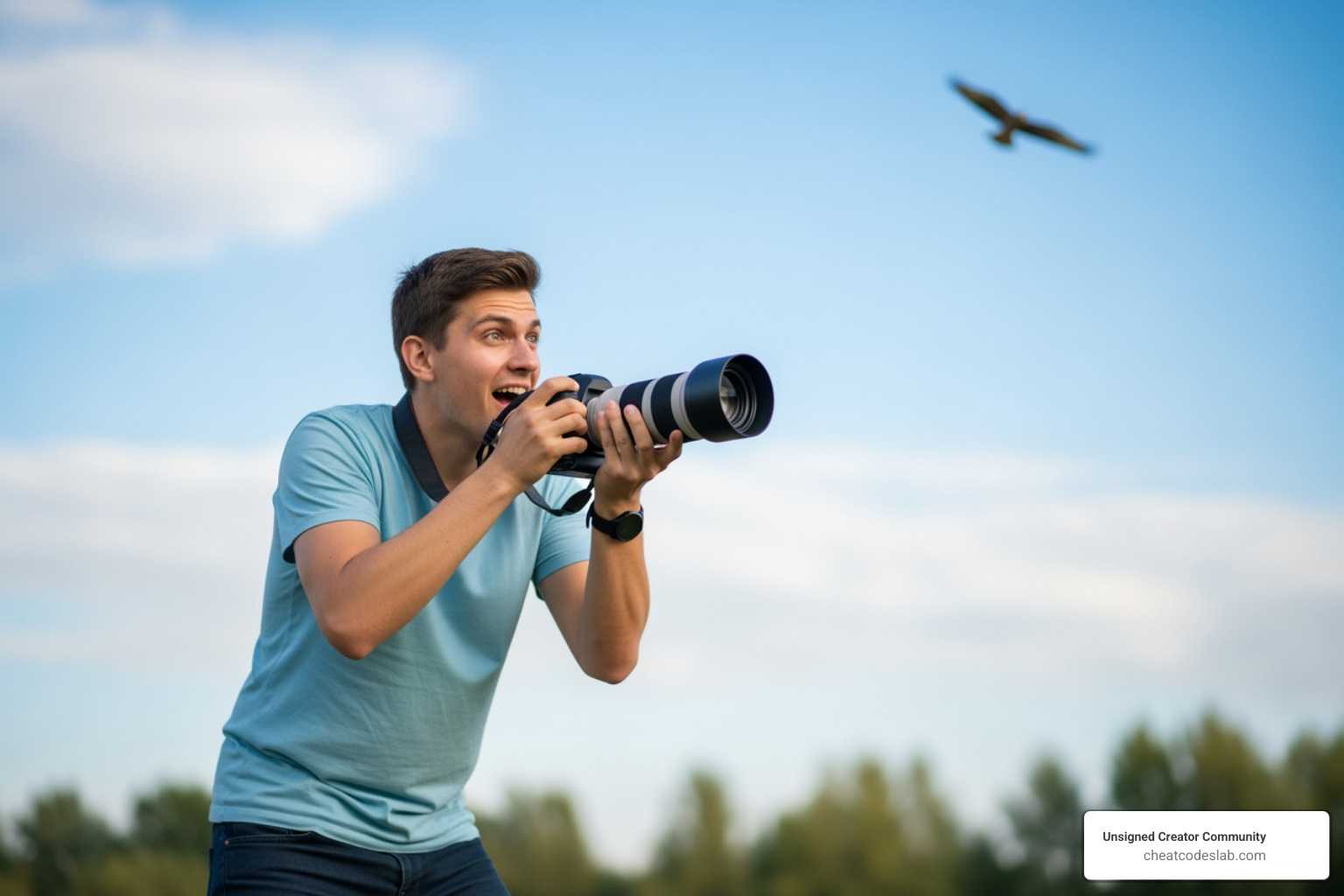
Bridge Cameras are a great all-in-one starting point. They feature a built-in, non-interchangeable lens with a massive zoom range. The Nikon Coolpix P1100, for example, offers an incredible 24-3000mm equivalent zoom, providing best reach for beginners without the cost of separate telephoto lenses.
Entry-Level Mirrorless Cameras offer a step up in quality and flexibility, allowing you to change lenses as your skills grow.
- Canon EOS R10: A speedy APS-C camera with a fast 23fps burst rate and Canon’s excellent Dual Pixel AF, offering great value and reach.
- Canon EOS R8: An entry-level full-frame camera that brings superior low-light performance and a blazing 40fps electronic shutter to a more affordable price point.
For more beginner tips, see our Best Camera for Beginners guide.
Beyond the Body: Lenses, Video, and Other Key Features
Your lens choice and other features are just as important as the camera body.
Lens Selection: The lens is often more critical than the camera body.
- Telephoto Zooms (e.g., 150-600mm): Offer flexibility to frame subjects at various distances.
- Prime Lenses (e.g., 400mm f/4): Provide superior image quality and better low-light performance.
- Some high-end lenses like the NIKKOR Z 600mm f/4 TC VR S include a built-in teleconverter, allowing you to extend your reach instantly.
Video Capabilities: Most modern cameras shoot excellent video. Look for at least 4K 30p. High-end models offer 8K video, which provides incredible flexibility for cropping in post-production or pulling high-resolution stills from your footage.
In-Body Image Stabilization (IBIS): This feature moves the camera sensor to counteract camera shake, which is critical for getting sharp handheld shots with long telephoto lenses.
Weather Sealing: Essential for protecting your gear from dust, moisture, and light rain. Look for cameras with robust sealing if you plan to shoot in harsh conditions.
Pre-Release Capture: A game-changing feature on cameras like the Nikon Z8 that starts recording images to a buffer before you fully press the shutter, ensuring you don’t miss the peak moment of action.
Trail Cameras vs. Manual Cameras: The cameras in this guide are manually operated for creative control. Trail cameras are different; they are unmanned, motion-activated cameras used for remote monitoring, typically offering lower image quality.
Conclusion: Capturing Your Next Great Adventure
Finding the best camera for wildlife is a personal quest to match your budget and style. The ideal camera balances three key elements: speed (fast autofocus and high fps), resolution (for cropping flexibility), and the right lens choice, which is often more important than the body itself.
However, the most advanced gear is no substitute for skill and patience. Understanding light, composition, and animal behavior is what truly lifts a photo.
As you prepare for your next adventure, the best camera is the one that helps you capture the shot. To round out your kit, explore our guides on Beginner Camera Gear and the Best Photography Gear available.
At Unsigned Creator Community (CheatCodesLab), we’re here to empower you with the tools and knowledge to succeed. Now go capture your next great adventure!


About the author


How to Archive Posts on Instagram in 4 Easy Steps
Master archiving on Instagram in 4 easy steps to organize your profile and protect your content.

Beginner’s Guide to 10k free instagram followers app
Discover how a 10k free instagram followers app works, its risks, and safe organic growth strategies for real engagement in 2026.

Beginner’s Guide to Best Instagram Report App
Discover the best Instagram report app for real-time analytics, automated reports, and data-driven decisions in 2026.
How to Master Advanced SEO Search Techniques in 7 Steps
Master advanced search techniques in SEO with 7 proven steps to boost rankings, technical audits, and organic traffic.

Cheat Sheet to the Best Business Apps
Discover the best business apps to streamline operations, boost productivity, and scale your business in 2026.

How to Get Instagram Followers Free APK in 5 Steps
Discover how instagram followers free apk 2026 download works and learn safe organic growth strategies instead of risky third-party tools.
Related
How to Archive Posts on Instagram in 4 Easy Steps
Master archiving on Instagram in 4 easy steps to organize your profile and protect your content.

Beginner’s Guide to Best Search Engine Optimization SEO
Master best search engine optimization SEO with this beginner's guide covering on-page, technical, and AI strategies for higher rankings.

Ultimate Checklist for Social Media Marketing Agency
Discover the ultimate checklist for choosing a social media marketing agency that drives real ROI and growth.

Hot Summer Caption Ideas That Spark Engagement
Discover hot summer caption ideas that boost engagement, from short aesthetic lines to funny unhinged vibes and beach photo dumps.

How to Add Text to Instagram Story in 5 Easy Steps
Learn how to add text to Instagram Story in 5 easy steps with our native tips and creative text hacks for better engagement.

How to Add Audio to Instagram Story the Right Way
Learn how to add audio clip in Instagram Story using built-in music or your own file with this step-by-step guide.