

Social Media Audience Targeting: 5 Key Triumphs
Why Social Media Audience Targeting Transforms Your Marketing Results
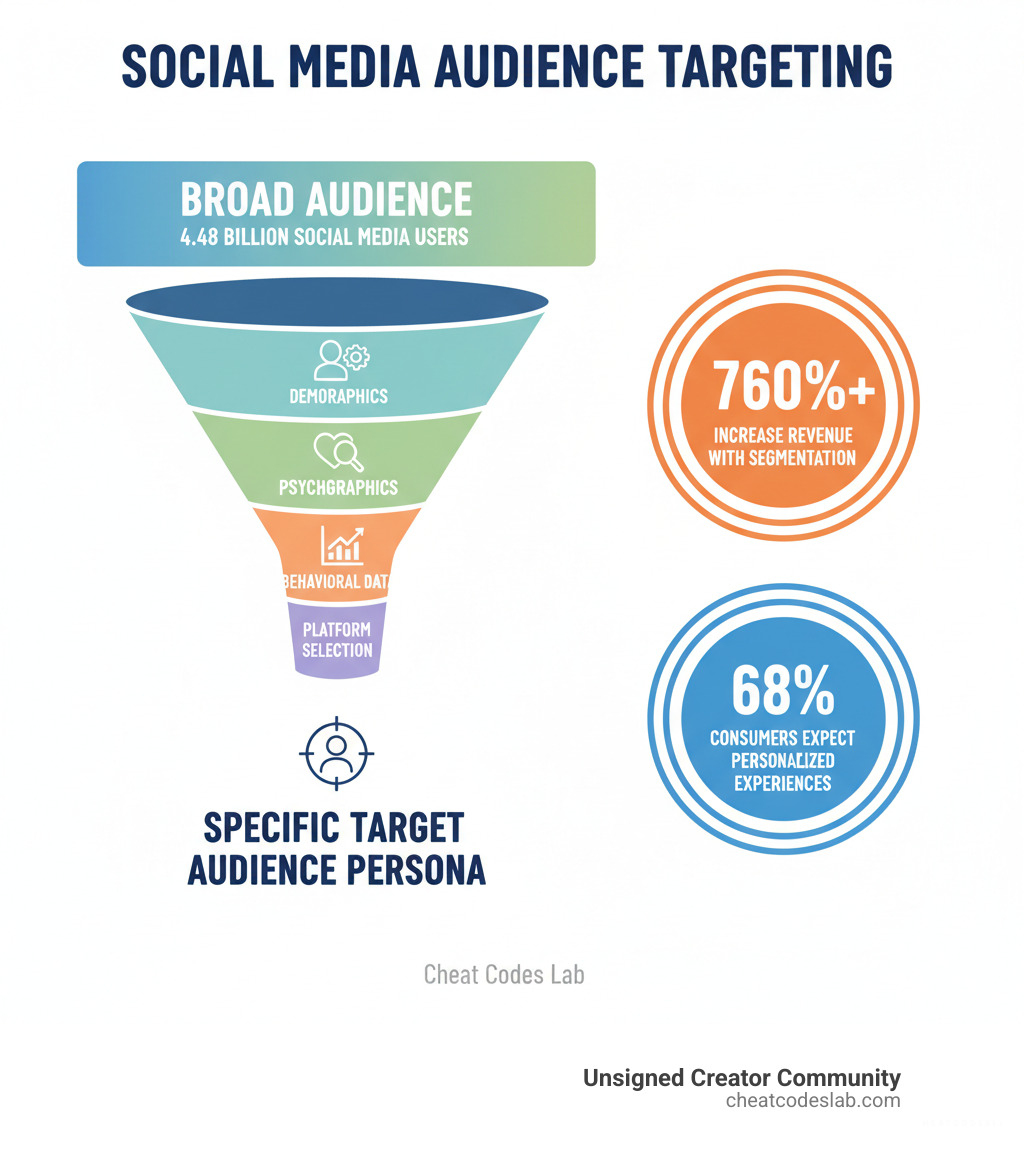
Social media audience targeting is the strategic process of reaching specific groups on social platforms based on their demographics, interests, and behaviors.
Key Components:
- Demographics: Age, gender, location, income
- Psychographics: Values, interests, lifestyle
- Behavioral Data: Purchase history, online habits
- Platform Selection: Choosing where your audience is most active
- Content Personalization: Creating messages for segmented groups
Primary Benefits:
- Increased ROI: Segmentation can boost revenue by up to 760%.
- Better Engagement: 68% of consumers expect personalized experiences.
- Reduced Ad Spend Waste: Target only users likely to convert.
- Stronger Brand Loyalty: Build authentic connections with the right people.
In a digital landscape with over 4.48 billion active social media users, trying to reach “everyone” is ineffective. The difference between thriving and struggling brands is knowing who they’re talking to.
Yet, many marketers struggle. Only 42% know their audience’s demographics, and less than half understand their interests. This disconnect explains why many campaigns fail despite significant investment. When you target the right audience with relevant content, you tap into a powerful influence network, as 92% of consumers trust recommendations from people they follow more than branded messages.
Targeting has evolved from basic filters to sophisticated AI-powered systems that analyze search intent and predict behaviors. Platforms like Meta, LinkedIn, and TikTok offer unprecedented precision, but only if you use them strategically.
I’m digitaljeff, and for 20 years, I’ve helped brands generate over 1 billion views through strategic social media audience targeting. I’ve learned what separates campaigns that convert from those that waste resources. Let me show you how to open up your audience potential.
Learn more about social media audience targeting:
- social media marketing tips for businesses
- social media branding tips
- best social media promotion companies
Foundations: Why Defining Your Audience is Non-Negotiable
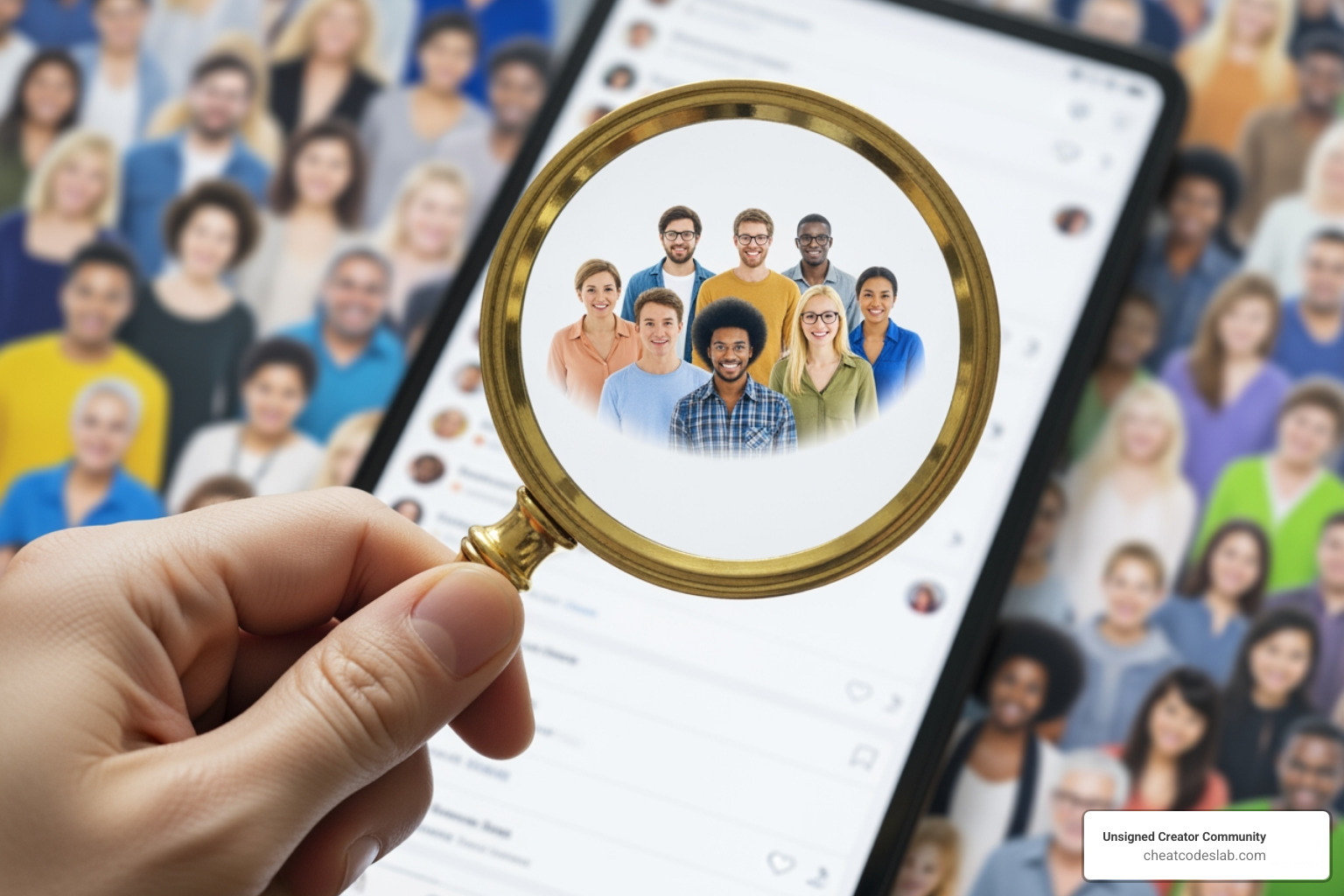
Defining your audience is the difference between shouting into a void and joining a meaningful conversation. With over 4.48 billion active users on social media, brands that succeed are not the loudest—they’re the most focused.
Effective social media audience targeting makes every marketing dollar work harder by focusing on those genuinely interested in your offer. This precision reduces waste and improves ROI. More importantly, it builds authentic relationships. When you deliver value to the right people, you create loyal advocates. According to McKinsey research, word of mouth drives 20-50% of all purchasing decisions, and 92% of consumers trust recommendations from people they follow on social media more than branded messages.
What is a Social Media Target Audience?
Your social media target audience is a detailed portrait of the people who will genuinely benefit from what you offer. Understanding them involves looking at several layers:
- Demographics: The basics—age, gender, location, income, and education. This helps you choose the right platforms. For example, 77% of U.S. adults aged 30-49 use Facebook, while younger audiences are more concentrated on platforms like TikTok.
- Psychographics: The “why” behind their choices—their values, passions, and beliefs. A wellness brand might target people who value sustainability, not just “health.”
- Behavioral Data: Their digital footprints—purchase history, websites visited, and content consumed. This helps you understand what they’re ready to do next.
- Purchase Intention & Subcultures: Where they are in the buying journey and the niche communities they belong to. Tapping into a shared identity creates authentic connections.
The goal is to understand the motivations and challenges that drive real people, allowing you to create content that genuinely connects.
How to Find Your Target Audience
Finding your audience is an ongoing process of findy. Here’s how to gather the insights you need without guessing:
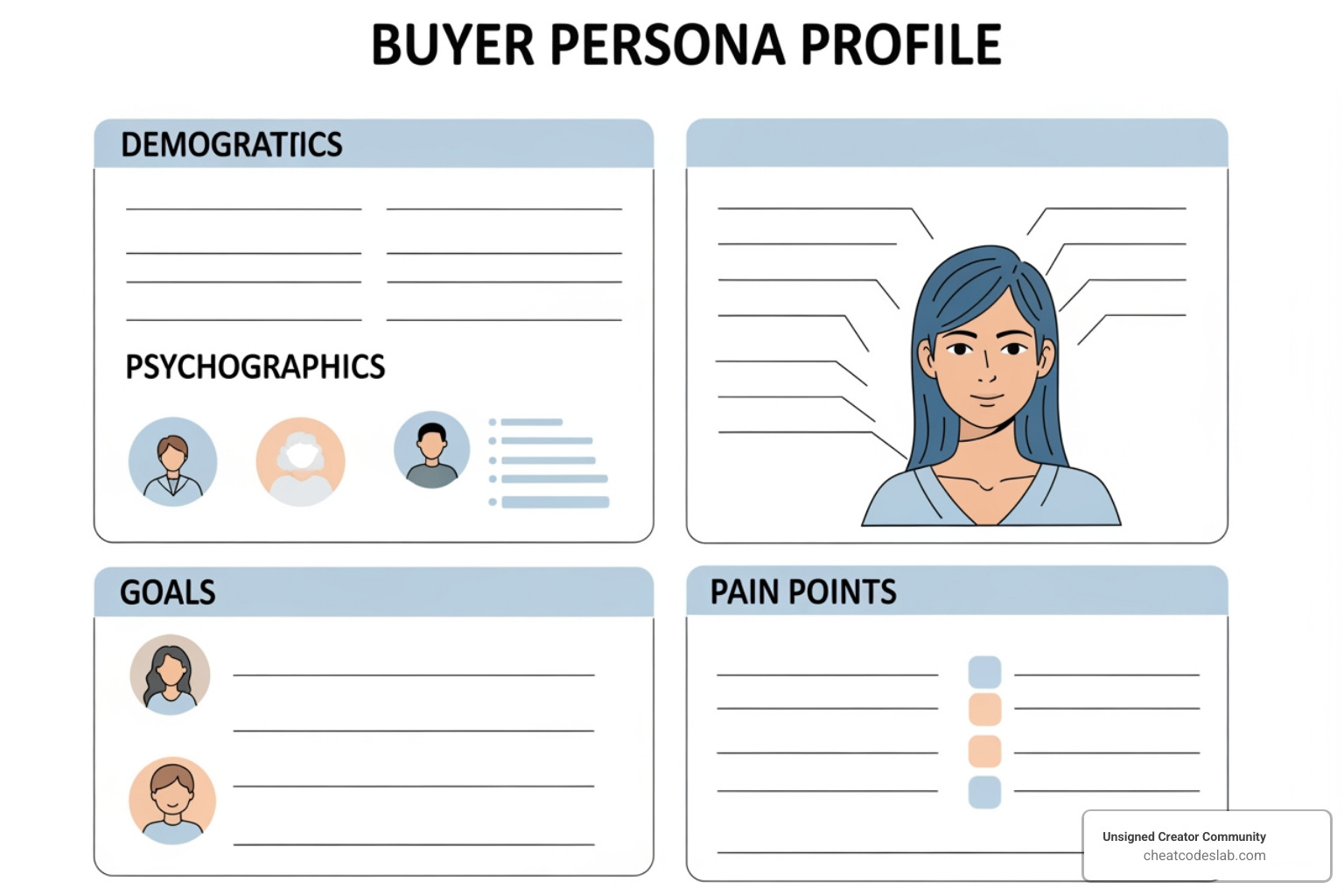
- Create Buyer Personas: Build detailed profiles of your ideal customers based on real data. Go beyond demographics to outline their daily challenges and aspirations.
- Conduct Market Research: Study your industry, analyze competitors, and identify gaps your brand can fill.
- Gather Community Feedback: Use surveys and email campaigns to ask your existing audience what they want, what platforms they use, and what challenges they face.
- Use Social Listening Tools: Monitor conversations, hashtags, and keywords to uncover pain points and preferences in real-time.
- Analyze Voice of Customer (VoC) Data: Look for patterns in reviews, comments, and support tickets. A HubSpot survey found that 82% of marketers agree high-quality customer data is essential, yet only 42% know their audience’s demographics. This gap is your opportunity.
- Leverage Platform Analytics: Use the built-in tools on Meta, LinkedIn, and other networks to see who follows you and what content resonates.
A Practical Guide to Social Media Audience Targeting
We’ve covered the “why” and “what” of understanding your audience. Now, let’s put that knowledge to work. This is your playbook for turning research into campaigns that connect with real people. Social media audience targeting isn’t just about finding people—it’s about starting conversations that matter.
Leveraging Platform-Specific Capabilities for Social Media Audience Targeting
Each platform has its own crowd and tools. What works on LinkedIn might fail on TikTok. Understanding these differences is key.
- Meta (Facebook & Instagram): The heavyweight for B2C, with sophisticated targeting based on life events (engagements, new parents), interests, and behaviors.
- LinkedIn: The undisputed leader for B2B targeting. Zero in on users by company industry, job title, seniority, and professional skills.
- YouTube: Leverage Google’s search data to target users based on what they’ve actively searched for, indicating high purchase intent.
- TikTok: Essential for reaching younger audiences (nearly 48% saturation among 18-29 year olds). Its “smart targeting” algorithmically expands your reach to users likely to engage.
- X (formerly Twitter): Ideal for real-time engagement. Target based on conversations, keywords, and follower look-alikes to join relevant discussions.
- Pinterest: A powerhouse for e-commerce. 90% of weekly pinners use the platform to make purchasing decisions, making it perfect for visual products like home decor and fashion.
Beyond these, use Custom Audiences to retarget your existing contacts (email lists, website visitors) and Lookalike Audiences to find new users who mirror your best customers.
The table below shows how different platforms excel at different business goals:
| Platform | Best For | Key Targeting Strengths |
|---|---|---|
| Meta (Facebook/Instagram) | Brand awareness, community building | Demographics, interests, life events, behaviors |
| B2B lead generation, professional networking | Job titles, industries, company size, professional skills | |
| YouTube | Sales, education, brand awareness | Search intent, detailed interests, life events |
| TikTok | Brand awareness (younger audiences), viral reach | Smart targeting, interest-based, demographic |
| X (Twitter) | Real-time engagement, thought leadership | Conversations, keywords, follower look-alikes |
| E-commerce sales, visual products | Purchase intent, visual interests, demographic |
Creating and Testing Content That Resonates
Finding your audience is half the battle; creating content that speaks with them is the other.
- Custom Messaging: Tailor your tone, language, and format to each audience segment and platform. A message for Gen Z on TikTok should differ from one for executives on LinkedIn.
- Value-First Approach: Help, don’t just sell. Provide valuable, relevant, and consistent content—whether educational, entertaining, or problem-solving—to build trust.
- Native Formats: Your content must feel natural to the platform. Use short-form video for Reels and TikTok, long-form for YouTube, and professional text for LinkedIn.
- UGC and Influencers: Amplify your reach by encouraging user-generated content and partnering with influencers. People trust people more than brands—a fact proven by GymShark’s record-breaking sales via influencer collaborations.
- A/B Testing: Eliminate guesswork by testing different headlines, visuals, and calls to action. Use the data to continuously refine your approach and improve results.
When you create, adapt, and test content that genuinely speaks to your target audience, you build real connections that drive real results.
Want to streamline your content creation process? Explore our content creation tools to optimize your strategy and make social media audience targeting work harder for your brand.
Measuring Success and Overcoming Challenges
Even with a great strategy, the digital world is always shifting. This section is about using data to fuel long-term growth and steer the inevitable challenges. The goal is to continuously refine your social media audience targeting to ensure it keeps delivering results.
How to Measure the Effectiveness of Your Social Media Audience Targeting
If you’re not tracking performance, you’re guessing. Measuring effectiveness is the foundation of improvement. Focus on these key metrics:
- Engagement Rate: Shows how much your audience cares about your content (likes, comments, shares). High engagement means your targeting is accurate.
- Click-Through Rate (CTR): Reveals if your message compels action. A strong CTR suggests you’re reaching the right people with the right message.
- Conversion Rate: The most important metric. It’s the percentage of people who complete a desired action (e.g., purchase, sign-up).
- Cost Per Acquisition (CPA): The cost to gain one new customer. Your goal is to drive this number down.
- Return on Ad Spend (ROAS): The revenue generated for every dollar spent on ads. This directly measures profitability.
Use the built-in analytics dashboards on each social platform as a starting point. For a unified view across multiple channels, consider third-party tools. Also, understand attribution models to see how social media contributes to conversions across a multi-touch customer journey.
Common Targeting Challenges and How to Solve Them
Even seasoned marketers face roadblocks. Here are common challenges and their solutions:
-
Challenge: Overly Broad or Narrow Targeting. If you’re too broad, you waste money; too narrow, and you miss customers.
- Solution: Start with a moderately broad audience based on your personas, then use A/B testing and performance data to refine. Use lookalike audiences to scale without losing precision.
-
Challenge: Ad Fatigue. Showing the same ad to the same people too often causes them to tune out.
- Solution: Regularly refresh your ad creatives (visuals, headlines) and use frequency caps to limit how often an individual sees your ad.
-
Challenge: Outdated Data. Audience interests and behaviors evolve. Stale data leads to irrelevant targeting.
- Solution: Accept real-time data. Continuously review your personas, conduct social listening, and analyze fresh performance data to stay current.
-
Challenge: Privacy Changes. With third-party cookies disappearing, granular data collection is harder.
- Solution: Shift toward intent-based marketing. AI-powered tools, like those from CheatCodesLab, analyze search queries and content engagement to understand user intent while respecting privacy.
-
Challenge: Lack of Integration. Social media targeting shouldn’t exist in a silo.
- Solution: Integrate social media insights with your broader marketing efforts, like email and SEO. Use social media to build your email list for a direct communication channel.
Social media audience targeting is an ongoing process of refinement. By staying adaptable and leveraging smart tools, you can overcome these challenges and open up your full social media potential.
Explore our content creation tools to streamline your strategy.


About the author

How to Archive Posts on Instagram in 4 Easy Steps
Master archiving on Instagram in 4 easy steps to organize your profile and protect your content.

Beginner’s Guide to 10k free instagram followers app
Discover how a 10k free instagram followers app works, its risks, and safe organic growth strategies for real engagement in 2026.

Beginner’s Guide to Best Instagram Report App
Discover the best Instagram report app for real-time analytics, automated reports, and data-driven decisions in 2026.
How to Master Advanced SEO Search Techniques in 7 Steps
Master advanced search techniques in SEO with 7 proven steps to boost rankings, technical audits, and organic traffic.

Cheat Sheet to the Best Business Apps
Discover the best business apps to streamline operations, boost productivity, and scale your business in 2026.

How to Get Instagram Followers Free APK in 5 Steps
Discover how instagram followers free apk 2026 download works and learn safe organic growth strategies instead of risky third-party tools.
Related
How to Archive Posts on Instagram in 4 Easy Steps
Master archiving on Instagram in 4 easy steps to organize your profile and protect your content.

Beginner’s Guide to Best Search Engine Optimization SEO
Master best search engine optimization SEO with this beginner's guide covering on-page, technical, and AI strategies for higher rankings.

Ultimate Checklist for Social Media Marketing Agency
Discover the ultimate checklist for choosing a social media marketing agency that drives real ROI and growth.

Hot Summer Caption Ideas That Spark Engagement
Discover hot summer caption ideas that boost engagement, from short aesthetic lines to funny unhinged vibes and beach photo dumps.

How to Add Text to Instagram Story in 5 Easy Steps
Learn how to add text to Instagram Story in 5 easy steps with our native tips and creative text hacks for better engagement.

How to Add Audio to Instagram Story the Right Way
Learn how to add audio clip in Instagram Story using built-in music or your own file with this step-by-step guide.