



Beginner camera gear: Perfect Starter Kit 2025
Your Journey into Photography Starts Here
Are you looking for the best beginner camera gear? Starting photography is exciting, but choosing your first camera can feel overwhelming. While a phone is a great start, a dedicated camera open ups true creative control.
Here’s a quick look at what beginners should consider:
- Camera Type: Mirrorless cameras are recommended over DSLRs. They are lighter, more compact, and better for video.
- Essential Items: A camera body, a versatile lens, a memory card, and extra batteries.
- Key Features: Look for 16-24 megapixels, manual modes for learning, and a good autofocus system.
- Budget: Great beginner mirrorless kits with a lens can be found for under $1000.
The best camera is one you’ll actually use. It should be simple enough to learn on but capable enough to grow with you. The photographer makes the picture, not the gear.
This guide will help you choose a setup that fits your needs without breaking the bank. You’ll learn to avoid “Gear Acquisition Syndrome” (G.A.S.) and focus on what’s important: taking great photos.
I’m digitaljeff, a content strategist and filmmaker. With two decades in digital media, I’ve learned what truly works for beginner camera gear.
Beginner camera gear further reading:
- best photography gear
- best place to buy used camera gear
- when is the best time to buy used camera gear
Building Your First Kit: A Guide to Beginner Camera Gear
While your phone is great for framing, a dedicated camera helps you master the foundations of photography like aperture, shutter speed, and depth of field. Let’s explore the core pieces of your first beginner camera gear setup.
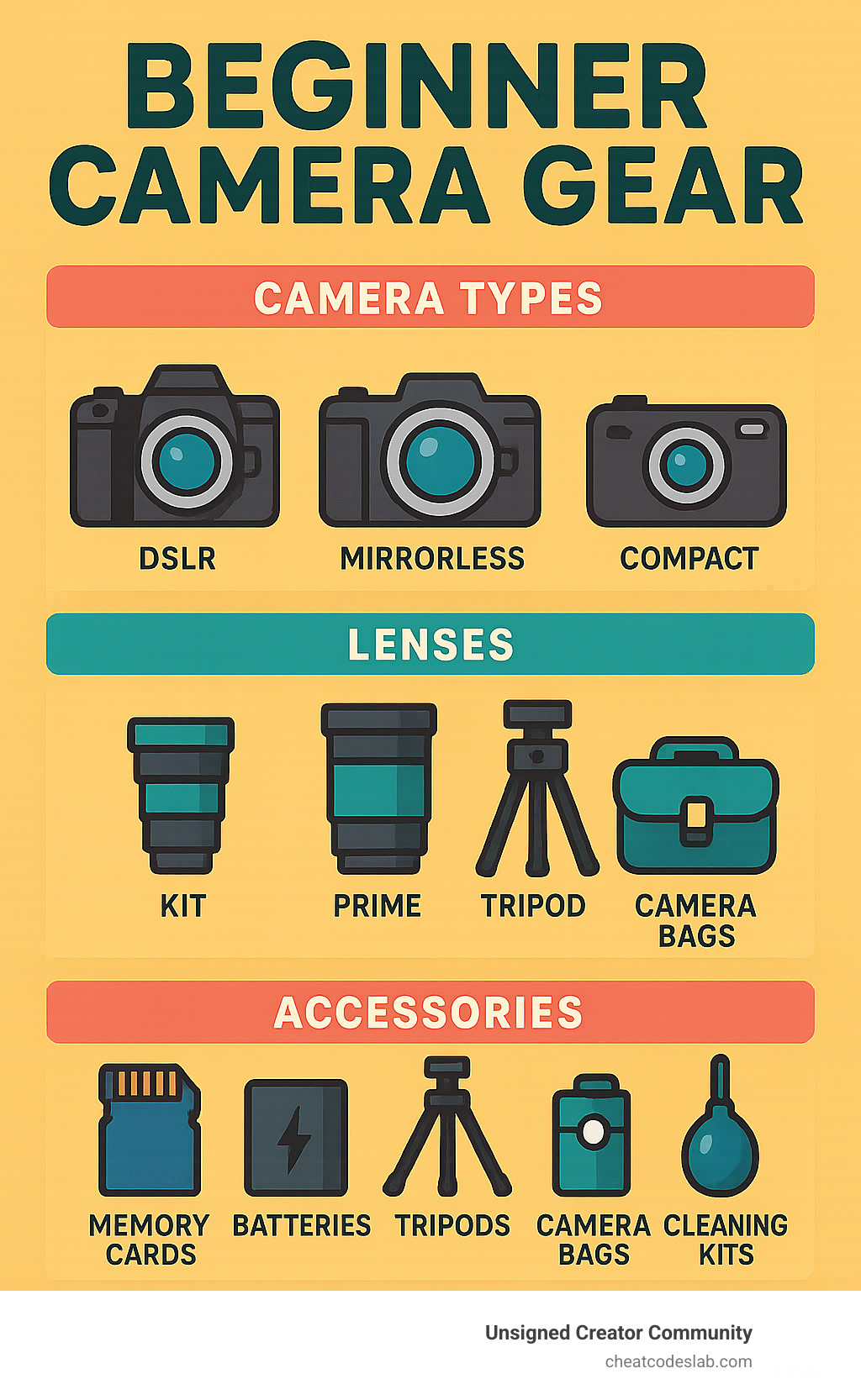
Camera Types Explained: DSLR vs. Mirrorless for Beginners
Choosing between a DSLR and a Mirrorless camera is a key first step.
-
DSLR (Digital Single-Lens Reflex) Cameras: These use a mirror to provide a real-time view through an optical viewfinder. They can be a good budget option if bought used and often have excellent battery life. However, they are bigger, heavier, and most manufacturers are now focused on mirrorless technology.
-
Mirrorless Cameras: As the modern standard, these cameras are smaller, lighter, and send light directly to the sensor. Their electronic viewfinder (EVF) is a game-changer for learning, as it shows you a preview of your photo before you take it. They also generally offer superior video features and autofocus.
Our Recommendation: For most beginners, a mirrorless camera is the best choice. It offers a more modern experience, is better for video, and the EVF is incredibly helpful for learning.
- Compact Cameras: These have a fixed, non-changeable lens (like the Ricoh GR IIIx). They are simple and portable, but lack the versatility of an interchangeable lens camera.
Want to dive deeper? Learn more from the experts at Digital Camera Magazine.
The Camera Body: Key Features for Your First Camera
Focus on the features that help you learn, not just the price tag.

- Sensor Size: This affects image quality and background blur. Crop sensors (APS-C, M4/3) offer a fantastic balance of quality, cost, and portability for beginners. Full-frame sensors provide the best quality, especially in low light, but are pricier.
- Megapixels (MP): Most beginner cameras have 16-24 megapixels, which is more than enough for large, high-quality prints. Focus on your skills, not the pixel count.
- Manual Modes: To truly learn photography, you need a camera with manual, aperture priority, and shutter priority modes. Many beginner models also have helpful guided menus that explain what each setting does.
- Autofocus (AF) System: A good AF system keeps your photos sharp. Mirrorless cameras typically excel here with fast, reliable performance.
- Video Capabilities: If you plan to shoot video, look for 4K recording. A microphone input is crucial for vlogging or content creation.
- Ergonomics and Size: Your camera should feel comfortable to hold and carry. Lighter, compact mirrorless cameras are often a great choice for travel and everyday use.
- Brand Choice: All major brands—Canon, Nikon, Sony, Fujifilm, and Olympus/OM System—offer excellent beginner cameras. Choose one that feels right and has a good selection of lenses for your future needs.
Find specific recommendations in our guide: Best Camera for Beginners.
Lenses and Accessories: Completing your beginner camera gear setup
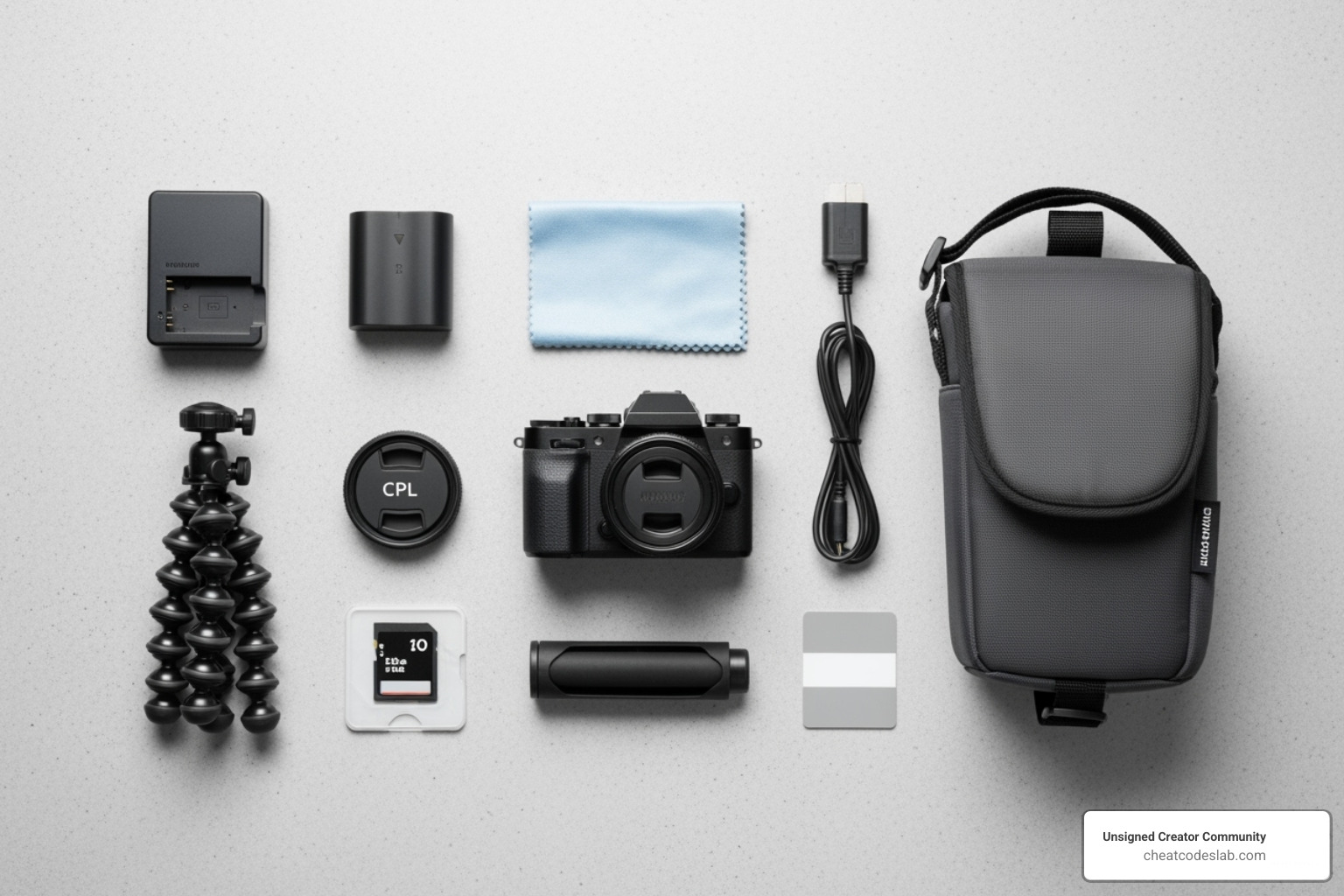
Your lens has a huge impact on the final image. Here are the essentials to round out your kit.
Lenses: Do Beginners Need Extra Lenses?
Start with one or two, and expand as you find what you love to shoot.
- Kit Lens: Most beginner kits include a versatile zoom lens (e.g., 18-55mm). It’s perfect for learning composition and different focal lengths.
- Prime Lens (“Nifty Fifty”): A 50mm or 35mm f/1.8 lens is often the best first upgrade. These affordable lenses are sharp, excel in low light, and create beautiful background blur (bokeh), making them ideal for portraits. Learn more here: Best Lens for Portraits.
- Zoom Lenses: As you advance, you might add a telephoto zoom (e.g., 70-300mm) for sports, wildlife, or distant landscapes.
Important Accessories for Beginners
- Memory Cards: Get a couple of reliable 64GB Class 10 or UHS-I cards from trusted brands like SanDisk or Lexar.
- Extra Batteries: Absolutely essential for mirrorless cameras. Carry at least one spare. Third-party brands can offer great value.
- Camera Bag: A padded bag protects your gear from bumps and weather. Get one with a little extra room to grow. Check out our guide: Best Photography Backpack for Traveling.
- Tripod: Crucial for sharp low-light shots, long exposures, and landscapes. Prioritize stability over light weight.
- Cleaning Kit: An air blower, microfiber cloth, and lens solution are essential for keeping your gear clean and functional.
Smart Buying and Next Steps
Choosing your beginner camera gear is just the start. Smart buying and continuous learning are key to a rewarding photography journey.
How Much Should a Beginner Expect to Spend?
You don’t need a huge budget. A solid beginner mirrorless camera kit with a lens can often be found for under $1000. This allows for a new entry-level model or a higher-end used one.
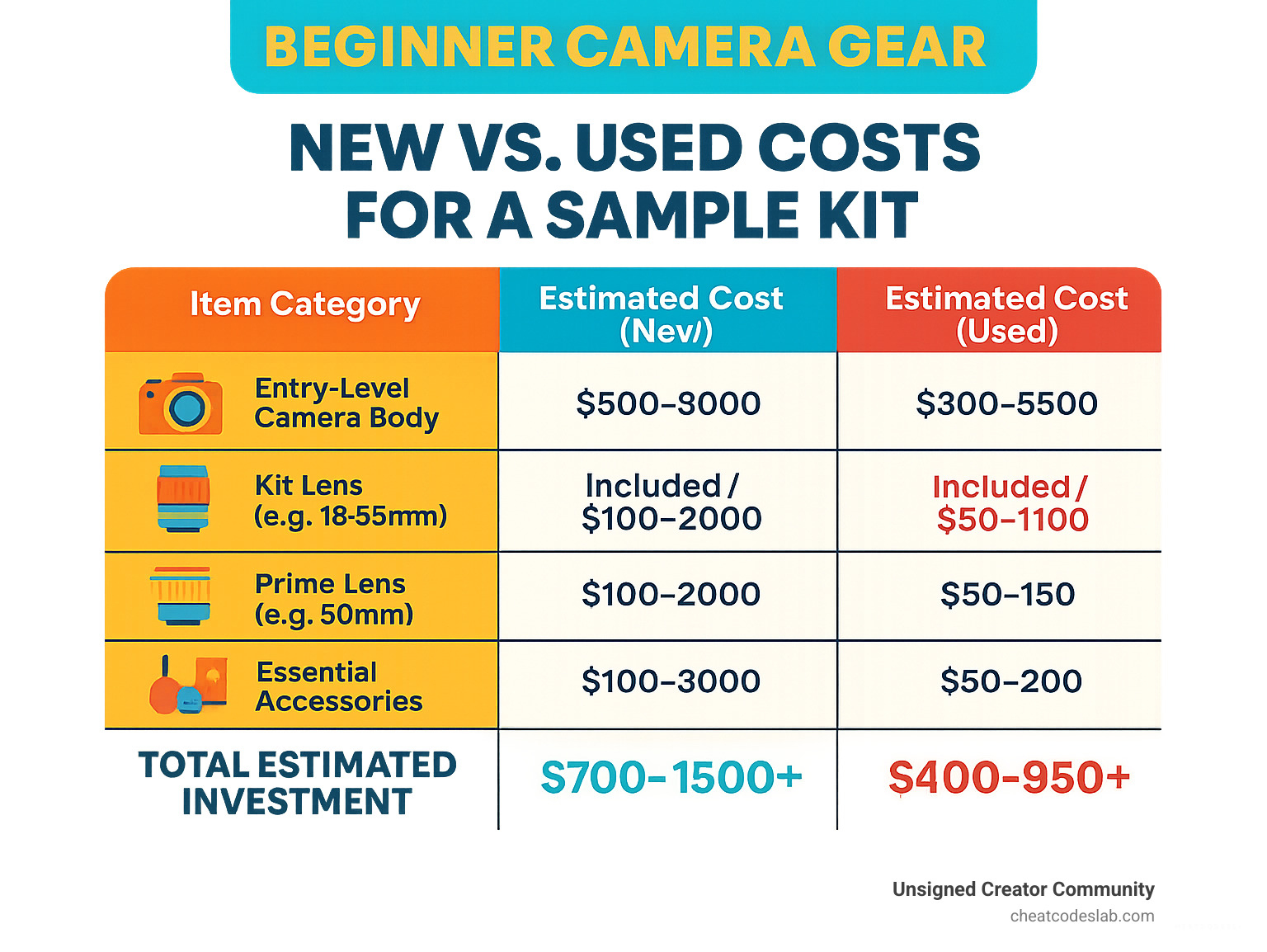
Here’s a general cost breakdown:
| Item Category | Estimated Cost (New) | Estimated Cost (Used) |
|---|---|---|
| Entry-Level Camera Body | $500 – $800 | $300 – $500 |
| Kit Lens (e.g., 18-55mm) | Included / $100 – $200 | Included / $50 – $100 |
| Prime Lens (e.g., 50mm) | $100 – $200 | $50 – $150 |
| Essential Accessories | $100 – $300 | $50 – $200 |
| Total Estimated Investment | $700 – $1500+ | $400 – $950+ |
Focus your budget on what matters to you, whether it’s a sharp prime lens for portraits or 4K video features. Avoid “Gear Acquisition Syndrome” (G.A.S.)—start with the essentials and upgrade only when your skills demand it. For specialized fields, see our guide on Camera Equipment for Real Estate Photography.
Where to Find Deals on the best beginner camera gear
The used market is a smart way to get quality beginner camera gear for less, often saving you over 30%.
- Reputable Used Retailers: Online stores like MPB and KEH Camera thoroughly inspect gear and offer warranties. Major retailers like Adorama and B&H Photo Video also have trusted used departments.
- Online Marketplaces: On sites like eBay, look for sellers with high ratings and use buyer protection.
- Local Camera Stores: A great way to inspect gear in person before buying.
Tips for Buying Used: Check seller condition ratings, look for warranties, and read all descriptions carefully for any listed flaws.
For more advice, explore our guides on Best Place to Buy Used Camera Gear and When is the Best Time to Buy Used Camera Gear.
Final Thoughts: It’s About the Photographer, Not the Gear
The camera is just a tool. Your passion, eye, and dedication are what create stunning photographs. A dedicated camera is superior to a phone for learning the fundamentals like aperture, shutter speed, and ISO.
Key Advice for Beginners:
- Focus on Learning: The best camera is one that helps you master manual controls.
- Practice Composition: Learn the rules of composition, like the rule of thirds.
- Experiment with Light: Photography is all about understanding and using light.
- Invest in Lenses: Good lenses often have a greater impact on image quality than the camera body.
- Don’t Fear the Used Market: It’s a fantastic way to get quality gear affordably.
- Accept Post-Processing: Learning basic editing in software like Adobe Lightroom is an integral part of modern photography.
Your journey is about capturing moments and expressing your unique perspective. Start simple, learn, and grow. We at Unsigned Creator Community are committed to empowering you. Explore our certified AI tools and cheat codes for creators to help your work get the visibility it deserves. Happy shooting!


About the author

How to Archive Posts on Instagram in 4 Easy Steps
Master archiving on Instagram in 4 easy steps to organize your profile and protect your content.

Beginner’s Guide to 10k free instagram followers app
Discover how a 10k free instagram followers app works, its risks, and safe organic growth strategies for real engagement in 2026.
Beginner’s Guide to Best Instagram Report App
Discover the best Instagram report app for real-time analytics, automated reports, and data-driven decisions in 2026.
How to Master Advanced SEO Search Techniques in 7 Steps
Master advanced search techniques in SEO with 7 proven steps to boost rankings, technical audits, and organic traffic.
Cheat Sheet to the Best Business Apps
Discover the best business apps to streamline operations, boost productivity, and scale your business in 2026.

How to Get Instagram Followers Free APK in 5 Steps
Discover how instagram followers free apk 2026 download works and learn safe organic growth strategies instead of risky third-party tools.
Related
How to Archive Posts on Instagram in 4 Easy Steps
Master archiving on Instagram in 4 easy steps to organize your profile and protect your content.

Beginner’s Guide to Best Search Engine Optimization SEO
Master best search engine optimization SEO with this beginner's guide covering on-page, technical, and AI strategies for higher rankings.

Ultimate Checklist for Social Media Marketing Agency
Discover the ultimate checklist for choosing a social media marketing agency that drives real ROI and growth.

Hot Summer Caption Ideas That Spark Engagement
Discover hot summer caption ideas that boost engagement, from short aesthetic lines to funny unhinged vibes and beach photo dumps.

How to Add Text to Instagram Story in 5 Easy Steps
Learn how to add text to Instagram Story in 5 easy steps with our native tips and creative text hacks for better engagement.

How to Add Audio to Instagram Story the Right Way
Learn how to add audio clip in Instagram Story using built-in music or your own file with this step-by-step guide.