

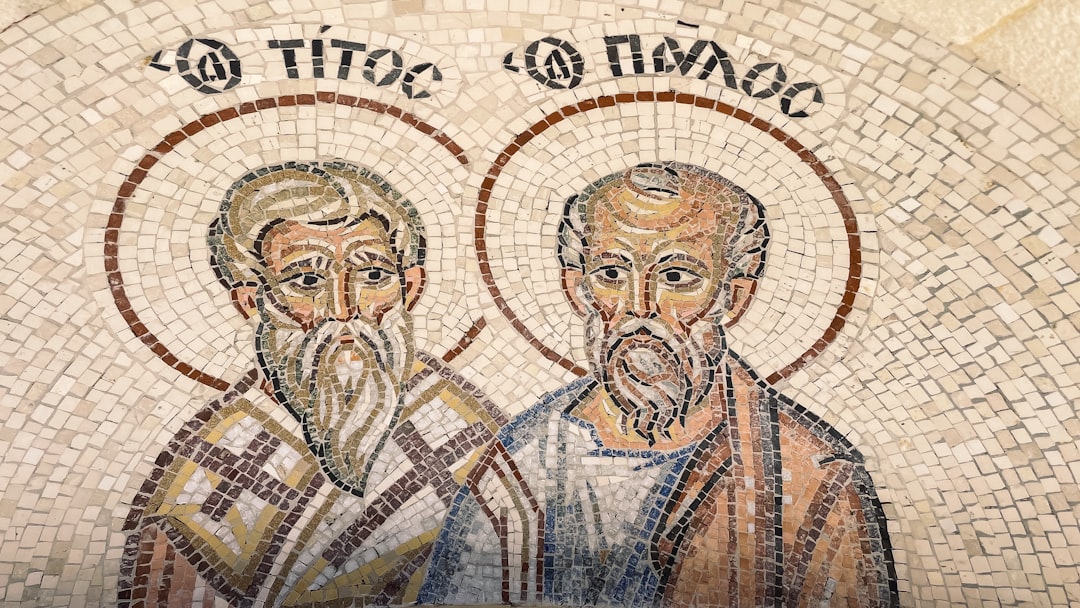

Stoicism in early christianity: Unveiling 3 Profound Truths
Why Understanding Stoicism’s Influence on Early Christianity Matters
Stoicism in early christianity represents a fascinating philosophical encounter where ancient wisdom traditions collided, changing each other in ways that still influence our world.
Quick Answer: Key Ways Stoicism Influenced Early Christianity
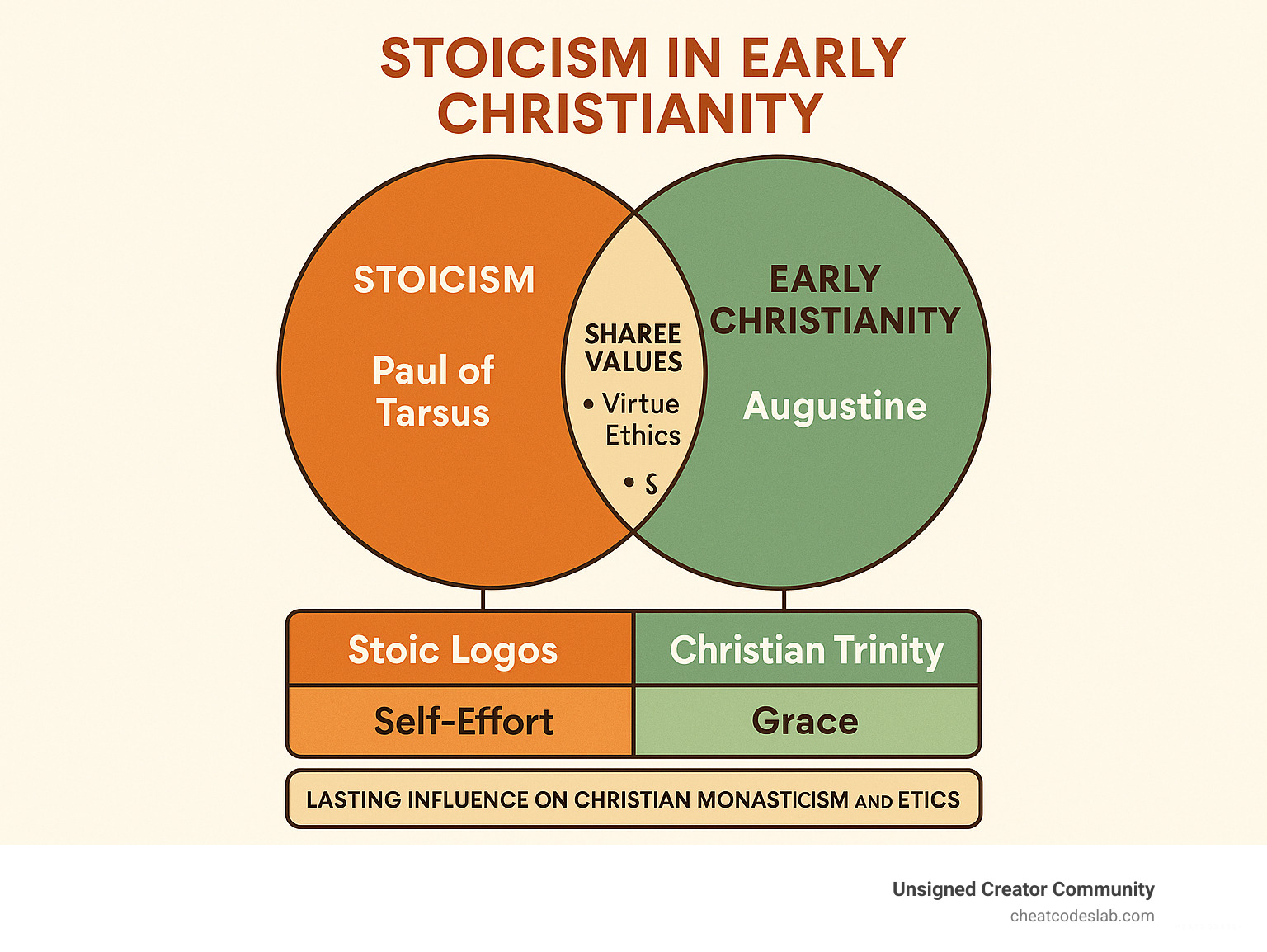
- Ethical Framework: Both emphasized virtue, self-control, and moral character.
- Hardship Philosophy: Stoic acceptance of suffering aligned with Christian views on trials.
- Inner Freedom: Both taught liberation from external circumstances through internal discipline.
- Divine Providence: The Stoic logos (divine reason) paralleled the Christian understanding of God’s plan.
- Key Figures: Paul, Augustine, and other Church Fathers engaged with Stoic ideas.
- Fundamental Differences: Stoics valued self-sufficiency, while Christians stressed dependence on God’s grace.
It’s remarkable that Seneca and Jesus were both born around 4 BC, living parallel lives in the Roman world. As theologian Paul Tillich noted, Stoicism was “the only real alternative to Christianity in the Western world” during this era.
The first and second centuries CE were dominated by Stoic thought. Roman Stoics like Seneca, Epictetus, and Marcus Aurelius shaped how people understood virtue, suffering, and the divine. Christianity didn’t emerge in a vacuum; it grew within this rich Stoic context. Early Christian writers were both attracted to and challenged by Stoic ideas, adapting concepts like apatheia (freedom from destructive emotions) while rejecting others. This creative tension was foundational to Christian theology.
About the Author: I’m digitaljeff. Through my study of philosophy and digital content creation, I explore how ancient wisdom like stoicism in early christianity shapes modern personal development. I’ve seen how these timeless principles help creators find focus and discipline today.
The Philosophical Encounter: Stoicism in Early Christianity
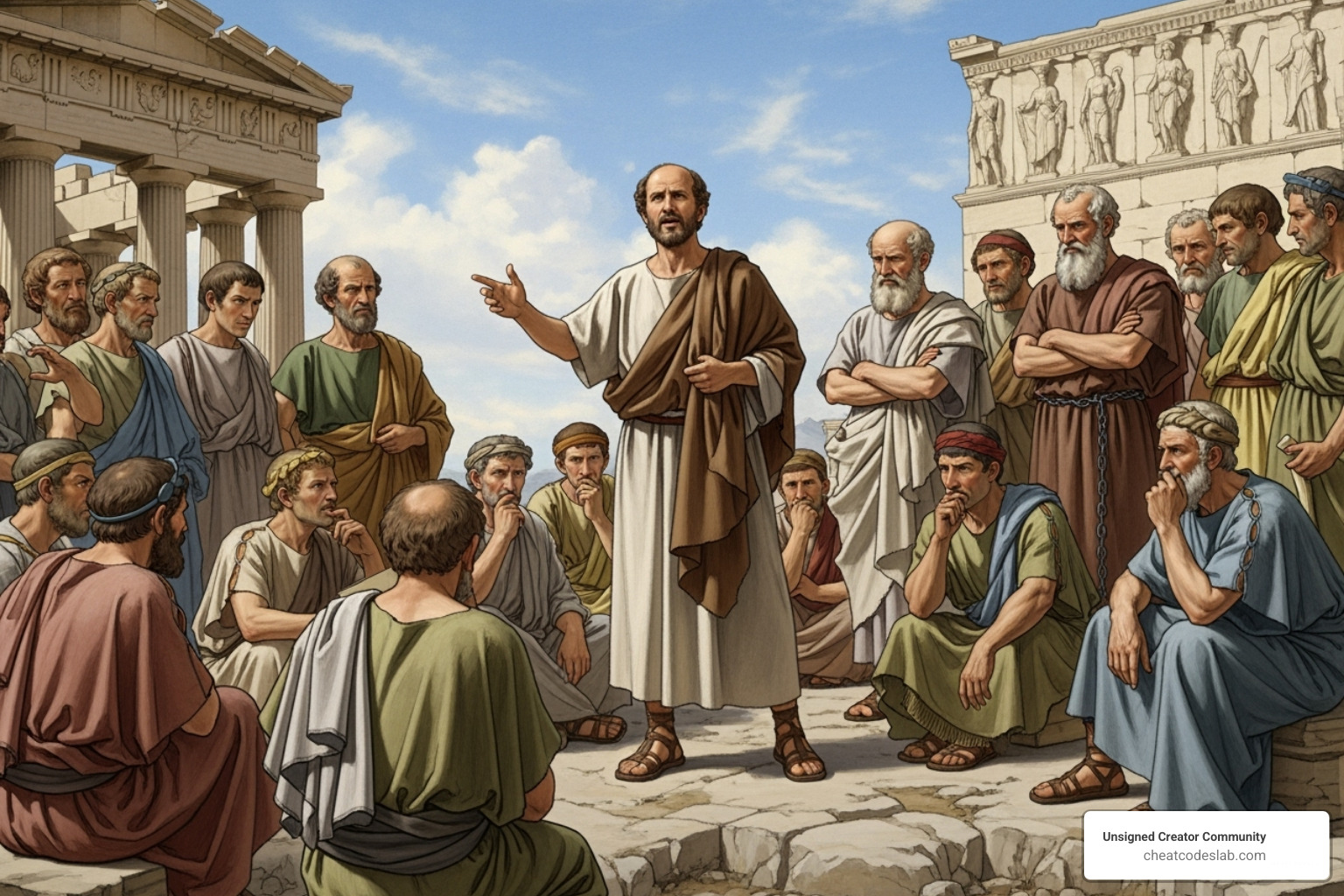
The story of stoicism in early christianity is a fascinating philosophical conversation between two powerful worldviews in the Roman Empire. Founded by Zeno of Citium around 301 BCE, Stoicism was a practical blueprint for living well. Its core tenets were that happiness comes from virtue alone and that one should live according to Nature, aligning with the rational order of the universe, or Logos.
By the time Christianity emerged, Roman Stoics like Seneca, Epictetus, and Marcus Aurelius dominated the intellectual landscape with practical, day-to-day philosophy. Their influence was profound and long-lasting. For a look at their principles in practice, The Stoic Way of Life offers great insights.
Shared Virtues: Where Stoicism and Early Christianity Converged
Early Christians found surprising common ground with Stoic ideas. Both traditions championed reason, moderation, and virtue. The concept of inner freedom—finding contentment from within, regardless of external events—resonated deeply with both, though Christians attributed this peace to God.
Both also valued self-control and rejected excess. Perhaps most strikingly, they shared a view of hardship as an opportunity for growth. Stoics saw challenges as a chance to build character, a sentiment echoed by the Apostle Paul, who wrote that suffering produces endurance and hope. This link between Stoic resilience and Paul’s belief in enduring hardships highlights their natural alignment.
| Feature | Stoicism | Early Christianity |
|---|---|---|
| Virtue | Sole good, necessary & sufficient for happiness | Necessary for spiritual life; faith/grace paramount |
| Emotions | Aim for freedom from destructive passions | Emotions are natural; Christ showed them |
| Community | Focus on individual wisdom; universal brotherhood | Emphasis on church community; love for all |
| Hardship | Accepted as growth opportunity | Accepted for spiritual growth and following Christ |
These shared principles fostered a natural dialogue. For modern applications, see Modern-Day Examples of Stoicism.
The Engagement of Early Christian Thinkers
Early Christian writers actively engaged with, adapted, and challenged Stoic ideas. The Apostle Paul, hailing from the Stoic center of Tarsus, used philosophical arguments skillfully in his letters, employing Greek terms recognizable to a Stoic audience. You can explore this relationship at St. Paul and Stoicism.
Other key figures, such as Justin Martyr and Tertullian, praised Stoic moral sentiments, with Tertullian even calling Seneca “often ours.” The most sophisticated engagement came from Saint Augustine, who thoughtfully critiqued Stoic fatalism in “The City of God” while praising their concept of divine providence. This process of “Christianizing” Stoic concepts—adopting what was useful while fitting it into a Christian framework—was common, showing how seriously early Christians took Stoic wisdom. You can read more about these figures here: Saint Paul and Saint Augustine.
Fundamental Divides: God, Salvation, and the Self

Despite the common ground, stoicism in early christianity revealed unbridgeable differences. The core divides concerned the nature of God, salvation, and the self.
- God: Stoics were pantheistic; their Logos was an impersonal, rational principle identical to the universe. In contrast, the Christian God is transcendent and personal, separate from but involved in creation. The Christian Logos is not a principle but a person: Jesus Christ. This is a key difference you can explore in The Stoic view of the divine.
- Salvation: Stoicism was about self-effort. A wise person could achieve inner peace through reason and self-control, becoming completely self-sufficient. Seneca on self-sufficiency details this ideal. Christianity taught the opposite: humans are fallen and need God’s grace for salvation. No amount of self-effort suffices; redemption comes only through faith and dependence on God.
- Fate vs. Free Will: Stoic determinism, where everything is predetermined by fate, clashed with the Christian emphasis on moral responsibility and the freedom to choose good or evil.
These differences meant that while early Christians could appreciate and adapt Stoic ethics, they could not accept a worldview that made humans their own saviors.
Lasting Echoes: Debates, Differences, and the Modern View

The interaction between stoicism in early christianity didn’t end in antiquity. Its echoes have shaped theological debates and intellectual movements for centuries. Seneca’s writings remained popular in the Middle Ages, and a Renaissance revival saw humanists like Justus Lipsius attempt to create a Christianized Stoicism. Later, Enlightenment thinkers used Stoicism to question theology, showing its adaptability.
Modern scholarship approaches the relationship with more nuance. The old anxiety about Stoic influence threatening Christian uniqueness has given way to a rich field of scholarly exploration. For a comprehensive overview, see A Guide to Stoicism by St. George Stock.
Apatheia vs. Agape: Contrasting Views on Emotion and Love
One of the most persistent points of contention between Stoicism and Christianity revolves around their views on emotions, particularly in the concepts of apatheia and agape.
Stoic apatheia is not emotionlessness but freedom from disturbing passions like excessive grief or fear. The goal was to use reason to control impulses that cloud judgment. In contrast, Christian theology affirms emotions as natural, noting that Christ himself displayed anger and grief. While Christianity calls for self-control, it values positive emotions like compassion and joy.
This difference extends to love. Stoics were wary of intense emotional attachments that could threaten inner tranquility. Christian agape—unconditional, self-sacrificing love—is paramount, seen as the very essence of God. The Stoic aimed to master the self; the Christian aimed to renounce the self to serve others in love. Explore more at Stoicism in Relationships and The Stoic view on love.
The Great Debate: Scholarly Views on Stoicism in Early Christianity
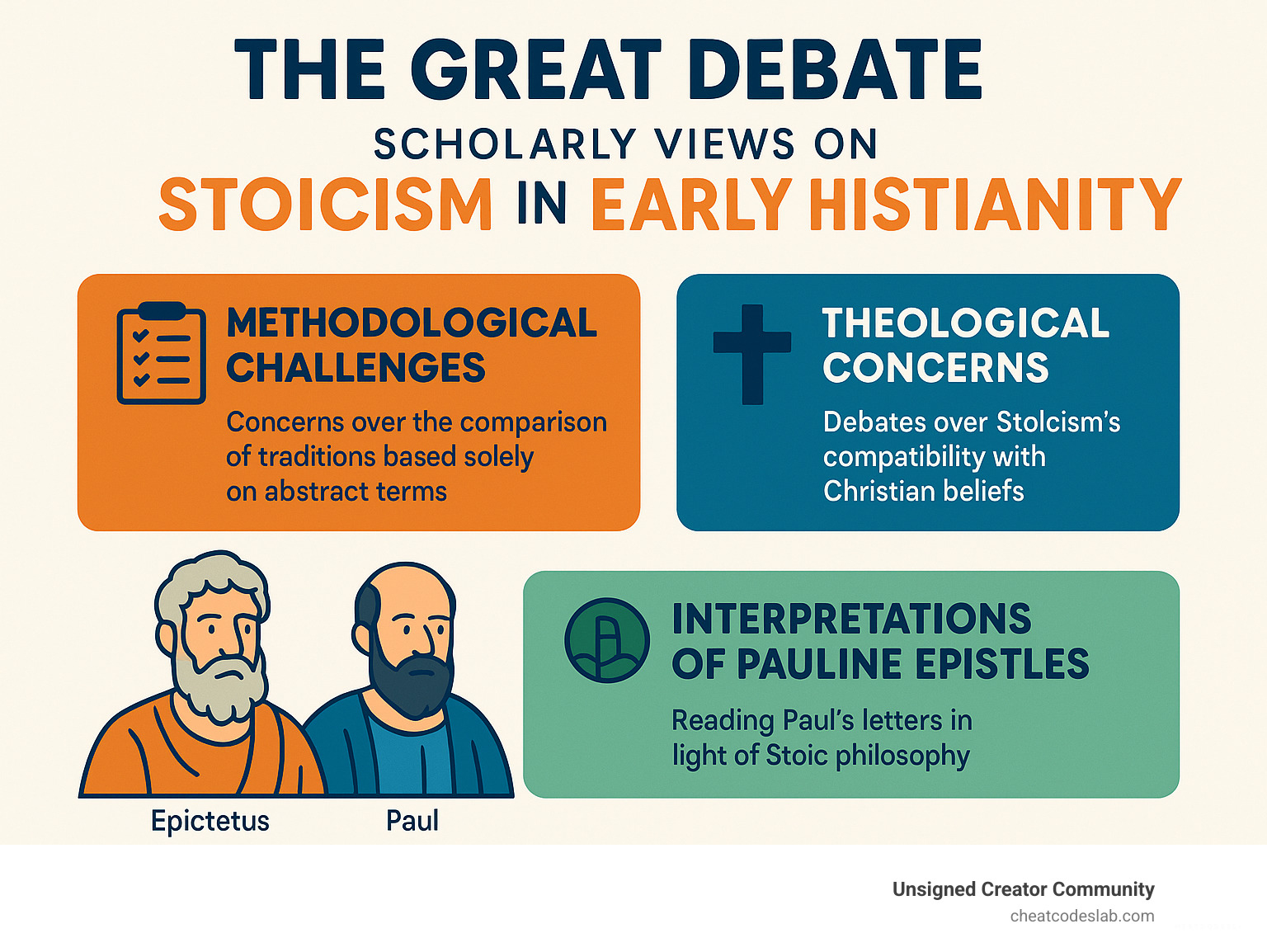
The relationship between stoicism in early christianity has been a vibrant arena for scholarly debate, particularly concerning the extent and nature of Stoic influence on specific New Testament authors, such as Paul.
Early on, scholars like Rudolf Bultmann argued for heavy Stoic influence, causing concern about Christian uniqueness. By the late 1970s, this anxiety subsided, and the convergence of ideas became a valuable area of study.
Contemporary scholarship is more nuanced, with methodological debates on how to compare the two traditions fairly. However, many scholars find value in reading Paul in conversation with Stoic thinkers. A significant recent argument, detailed in the book Book on Stoicism in Early Christianity, challenges the traditional view that Platonism was the main philosophical influence on early Christianity, arguing that Stoicism was often more significant. This ongoing discussion, covered in resources like this Scholarly overview of Stoicism and Christian Ethics, highlights the complexity of this historical interaction.
Conclusion: The Enduring Dialogue
The story of stoicism in early christianity is a complex, enduring dialogue, not a simple adoption. Stoicism provided the philosophical context in which Christianity grew, acting as both a resource and a rival.
From shared ethics to deep divides on God and salvation, the interaction was profound. Christian thinkers engaged with Stoic ideas, adapting and critiquing them to fit a Christocentric worldview. This dialogue has evolved from ancient debates to modern scholarship, revealing the nuanced ways these traditions intersected.
For us at CheatCodesLab, these ancient roots offer valuable insights. The Stoic emphasis on discipline and resilience is highly relevant for modern creators. The enduring conversation between Stoicism and Christianity reminds us that great ideas are shaped by their environment, offering timeless lessons for personal ethics, spiritual growth, and strategic thinking. To continue your journey, we invite you to Explore more on the philosophy of Stoicism.


About the author


How to Archive Posts on Instagram in 4 Easy Steps
Master archiving on Instagram in 4 easy steps to organize your profile and protect your content.

Beginner’s Guide to 10k free instagram followers app
Discover how a 10k free instagram followers app works, its risks, and safe organic growth strategies for real engagement in 2026.

Beginner’s Guide to Best Instagram Report App
Discover the best Instagram report app for real-time analytics, automated reports, and data-driven decisions in 2026.

How to Master Advanced SEO Search Techniques in 7 Steps
Master advanced search techniques in SEO with 7 proven steps to boost rankings, technical audits, and organic traffic.

Cheat Sheet to the Best Business Apps
Discover the best business apps to streamline operations, boost productivity, and scale your business in 2026.

How to Get Instagram Followers Free APK in 5 Steps
Discover how instagram followers free apk 2026 download works and learn safe organic growth strategies instead of risky third-party tools.
Related

Get Your Feed Right with These Black Owned Social Media Companies
Discover top black owned social media agency options for 2026. Boost ROI, engagement & authentic storytelling with Clutch-rated leaders like Verbatim.

Stoicism Meets Jungian Psychology: A Powerful Pairing for Mental Fortitude
Unlock mental fortitude & self-understanding with carl jung stoicism. Integrate ancient wisdom and modern psychology for resilience.

Stoic Explained: More Than Just a Stiff Upper Lip
Want to define stoic? Uncover ancient Stoic philosophy, core principles, and practical wisdom for emotional resilience today.

Where to Find The Daily Stoic at Fully Booked Stores
Find The Daily Stoic even if it's daily stoic fully booked. Discover why this bestseller is so popular & where to get your copy now!

Beginner’s Guide to Understanding Stoicism Basics
Unlock Stoicism's wisdom: master emotions, build resilience, and live virtuously. Your beginner's guide to a practical philosophy.

The Crossroads of Faith and Philosophy: Exploring Stoicism and Christianity
Uncover the surprising parallels and core differences between stoicism and christianity for a meaningful life.