


Personal Brand Website Design from Drab to Fab
Your Personal Brand Website Design Is Your Digital First Impression
Personal brand website design is the process of building a focused, visually compelling online home that tells your story, showcases your work, and turns visitors into opportunities.
If you want the quick answer, here’s what makes a personal brand website work:
| Element | Why It Matters |
|---|---|
| Clear headline | Tells visitors who you are in seconds |
| Professional photo | Builds instant human connection |
| Portfolio or work samples | Proves your skills without words |
| Testimonials | Adds credibility and social trust |
| Call to action | Guides visitors to the next step |
| Mobile-friendly design | 64% of web traffic comes from mobile |
| Custom domain | Looks professional and boosts SEO |
Think of your website as your digital headquarters. Social media profiles are rented space — the platform owns the rules. Your website? That’s yours. It works for you 24/7, even while you sleep.
The stakes are real. According to LinkedIn data, professionals with a personal website receive 2-3x more recruiter and client outreach than those without one. And in a world where people Google you before they ever meet you, a weak or missing website is a missed opportunity.
A great personal brand site doesn’t need to be complicated. It just needs to be clear, authentic, and built with purpose.
I’m digitaljeff — a tech entrepreneur, filmmaker, and content strategist who has spent over two decades helping top personal brands build their digital presence through smart personal brand website design strategies. Let’s break down exactly how to take your site from drab to fab.
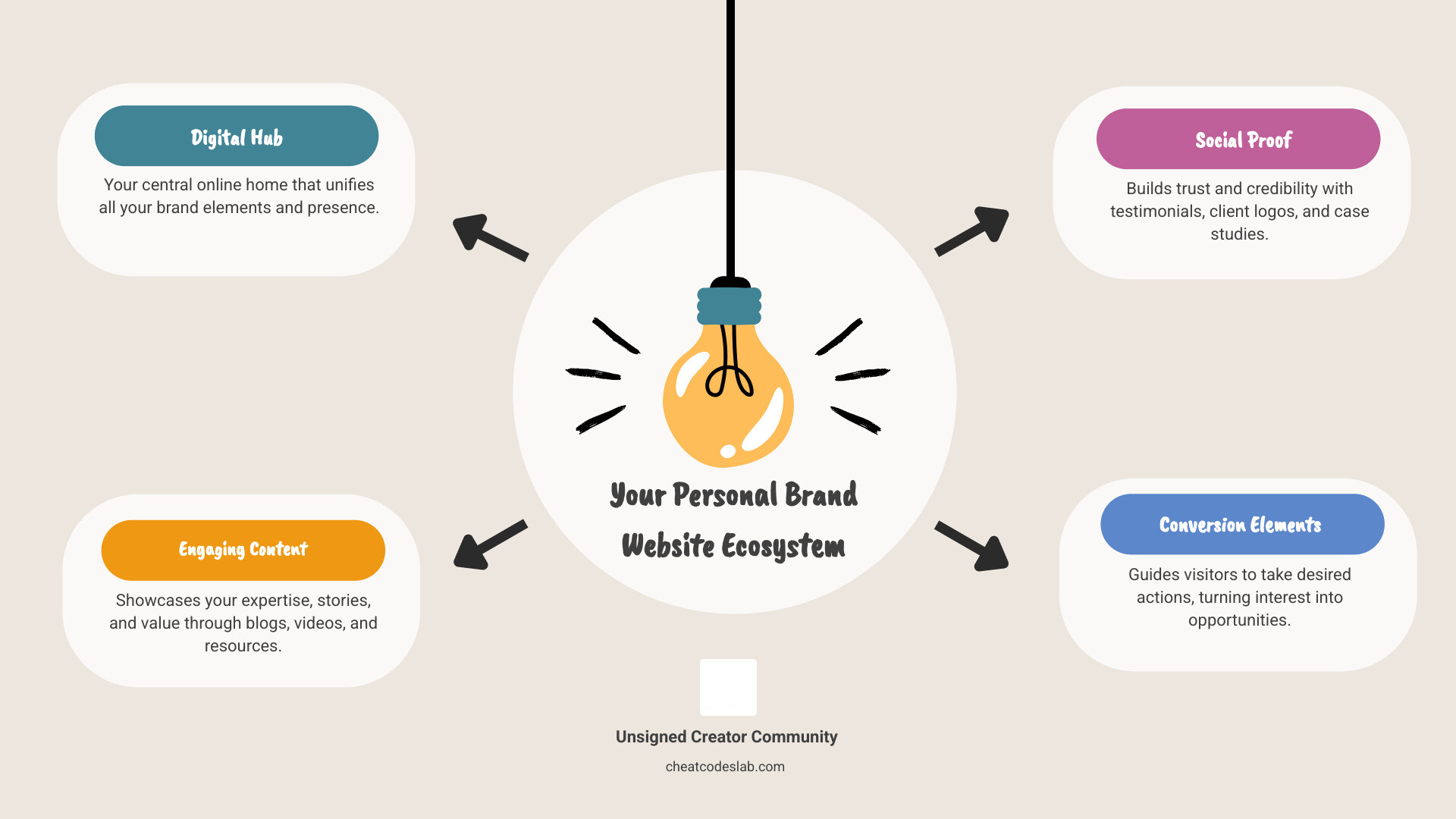
Simple guide to Personal brand website design:
Essential Elements of Personal Brand Website Design
When we talk about moving from “drab to fab,” we aren’t just talking about adding a few flashy animations. Effective personal brand website design is about creating a high-converting digital hub. If your website is the engine of your career, these elements are the high-octane fuel that keeps it running.
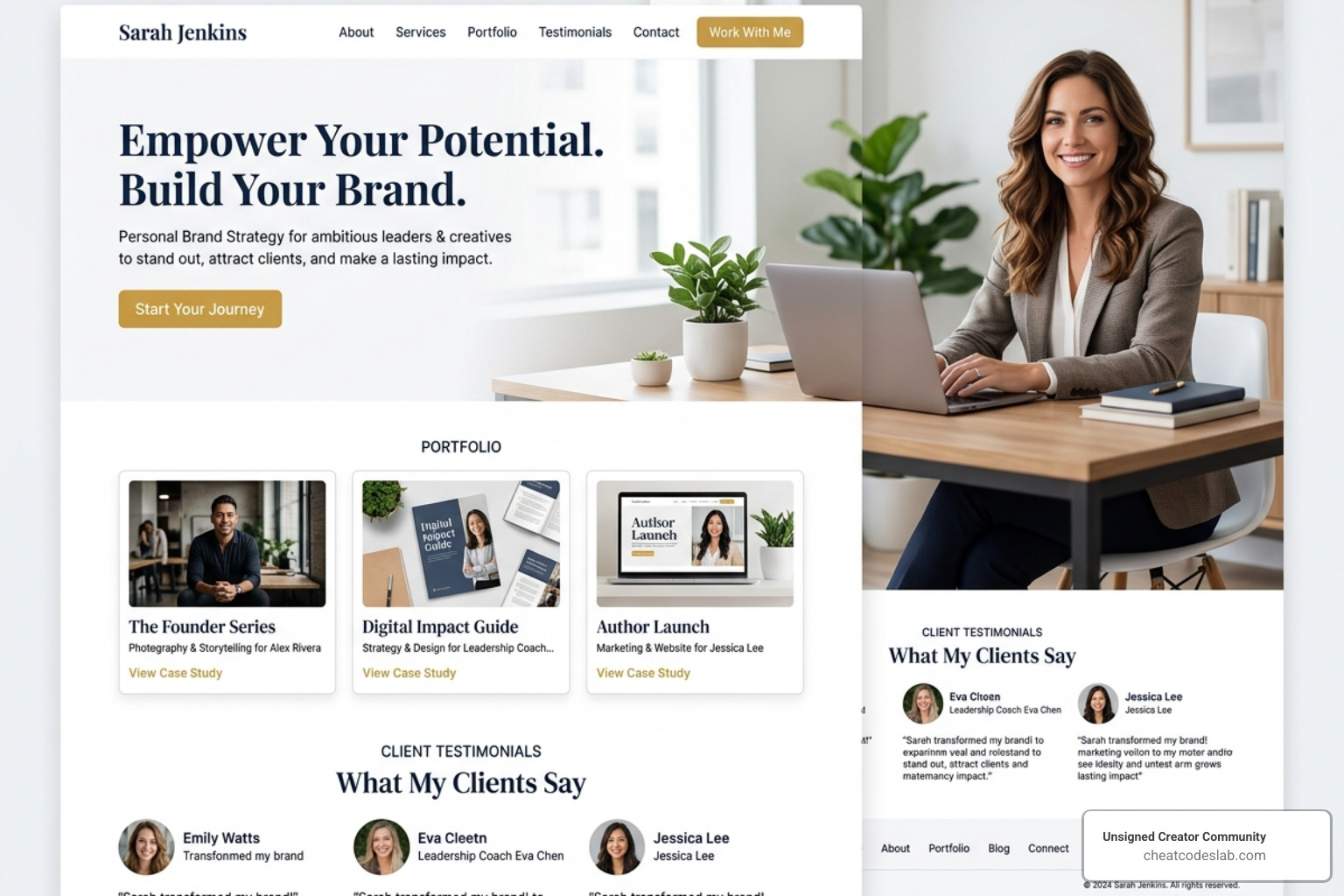
Visual Hierarchy and Storytelling
The human eye follows a specific path when landing on a page. We call this visual hierarchy. You have approximately 0.05 seconds for users to form an opinion about your website. To make those milliseconds count, your design must lead with a powerful headline (the “What”) and a sub-headline (the “How”).
Storytelling isn’t just for novelists. In the context of your website, it’s about “humanizing” the brand. Use the first person (“I help…”) rather than the third person (“John Doe helps…”). This builds an immediate sense of intimacy and trust. Your “About Me” page shouldn’t just be a dry list of credentials; it should explain your “why.” Why do you do what you do? What makes you tick? This emotional connection is what separates a sterile resume from a vibrant personal brand.
Authentic Photography and Social Proof
Generic stock photos are the “drab” in our equation. Research shows that 86% of consumers value authenticity. We always recommend using professional, high-resolution headshots where you are “in action.” If you’re a speaker, show yourself on stage. If you’re a designer, show yourself at your drafting table. This provides immediate context to your expertise.
Social proof is the ultimate “credibility booster.” This includes client logos, media mentions, and testimonials. Don’t just bury these on a secondary page. Feature them prominently on your homepage to build instant trust. For more inspiration on how others have mastered this, check out these Personal Branding Examples.
Defining Your Unique Personal Brand Website Design Strategy
Before you pick a single color or font, you must define the foundation. We see many creators rush into design without a Self Branding Strategy, which usually leads to a site that looks pretty but says nothing.
- Unique Value Proposition (UVP): What is the specific problem you solve, and why should someone choose you over a competitor? A killer UVP sounds like: “I help enterprise B2B tech companies generate leads through data-driven content.”
- Target Audience: Who are you talking to? If you try to speak to everyone, you end up speaking to no one. Define their biggest pain point and address it directly.
- Brand Voice: Are you the “disruptive rebel” or the “trusted advisor”? Your copy should reflect this consistently.
- Mission Statement: Use a simple template: “I help [Audience] achieve [Result] by [Method].”
Visual Principles for Personal Brand Website Design
Design is the silent ambassador of your brand. It communicates your professionalism before a visitor reads a single word.
- Color Psychology: Colors evoke emotions. Blue suggests trust and stability (common for consultants), while orange or yellow suggests energy and creativity (great for artists). Stick to a palette of 2-3 primary colors to maintain a clean look.
- Typography: Readability is king. We recommend a font size of at least 16px for body text. Use a maximum of two different typefaces—one for headings and one for body copy.
- Whitespace: Don’t fear the “empty” space. Whitespace allows your content to breathe and prevents the visitor from feeling overwhelmed.
- Mobile Responsiveness: This is non-negotiable. With 64% of web traffic being mobile, your site must look just as good on a smartphone as it does on a 27-inch monitor.
To help you decide on a direction, look at this comparison:
| Feature | Simple Design Style | Creative Design Style |
|---|---|---|
| Best For | Consultants, Lawyers, Executives | Artists, Designers, Musicians |
| Focus | Clarity, Speed, Ease of Use | Originality, Visual Impact, Personality |
| Key Elements | Lots of whitespace, standard fonts | Custom illustrations, bold colors, animations |
| User Experience | Intuitive and predictable | Exploratory and engaging |
Building Credibility with Social Proof and Portfolios
Your portfolio is where you “show, don’t tell.” Instead of a simple gallery of images, we suggest creating “Results-Driven Case Studies.” Explain the challenge, the solution you provided, and the tangible result (e.g., “Increased revenue by 20%”).
If you’re just starting out and don’t have big-name clients yet, focus on your “Personal Brand Awareness” by sharing your process or personal projects. Proving your methodology is often just as valuable as showing a finished product. Learn more about Personal Brand Awareness to understand how to stay top-of-mind for your audience.
Launching and Optimizing Your Digital Presence
Once the design is polished, it’s time to think about the “Fab” launch. A website is not a “set it and forget it” project. It’s a living asset that needs constant optimization to drive results.
Technical SEO and Performance Essentials
Search Engine Optimization ensures that when someone Googles your name or your niche, you actually show up. In 2025, SEO is about more than just keywords; it’s about the user experience.
- Site Speed: Pages that load in 1-2 seconds have significantly lower bounce rates. Compress your images (keep them under 150KB) and use a fast hosting provider.
- Meta Descriptions & Titles: These are the snippets that appear in search results. Make sure every page has a unique, keyword-rich meta description that encourages clicks.
- Schema Markup: This is “code for search engines.” Using “Person” schema helps Google understand who you are and link your site to your social profiles.
- HTTPS: Security is a ranking factor. Ensure your site has an SSL certificate.
For those looking to move fast, we’ve put together a guide on How To Build Your Personal Brand With These 5 Quick Changes that can drastically improve your site’s performance in a weekend.
Content Strategy and Storytelling for Engagement
Content is the “voice” of your website. It proves you are an authority in your field.
- Blog Integration: Even if you aren’t a “writer,” sharing bi-weekly thoughts on industry trends helps with SEO and keeps your site fresh. Aim for “Content Pillars”—3 to 5 core topics you want to be known for.
- Video Intros: A 30-second video on your “About” page can increase conversion rates by up to 80%. It allows visitors to hear your voice and see your personality.
- Newsletter Signups: Your email list is your most valuable asset. Unlike social media followers, you own your email list. Offer a “lead magnet” (a free guide or checklist) to encourage signups.
- Authentic Photography: We cannot stress this enough—ditch the stock photos. Show the real you.
If you are a creator, your content strategy is your product. Dive deeper into the specifics with our guide for the Personal Branding Content Creator.
Optimization for 2025 and Beyond
As we move further into 2025, “Answer Engine Optimization” (AEO) is becoming vital. With the rise of AI search tools, your content needs to provide direct, clear answers to common questions in your niche. Use FAQ sections and structured data to ensure AI tools can easily “read” and recommend your expertise.
Conclusion: Scaling with CheatCodesLab
Building a personal brand website is a journey of Personal Brand Development. It starts with a single page and evolves as your career grows. Whether you are a freelancer, an executive, or a creative, your website is the foundation of your professional future.
At CheatCodesLab, we specialize in providing the certified AI tools and “cheat codes” you need to streamline this process. From SEO optimization to content marketing strategies, we help online creators and agencies skip the “drab” phase and go straight to “fab.”
Ready to take the next step? Explore our full Category/Personal Branding for more advanced strategies, tools, and insights to help you dominate your niche. Your digital headquarters is waiting—go build it!


About the author

How to Archive Posts on Instagram in 4 Easy Steps
Master archiving on Instagram in 4 easy steps to organize your profile and protect your content.

Beginner’s Guide to 10k free instagram followers app
Discover how a 10k free instagram followers app works, its risks, and safe organic growth strategies for real engagement in 2026.
Beginner’s Guide to Best Instagram Report App
Discover the best Instagram report app for real-time analytics, automated reports, and data-driven decisions in 2026.
How to Master Advanced SEO Search Techniques in 7 Steps
Master advanced search techniques in SEO with 7 proven steps to boost rankings, technical audits, and organic traffic.
Cheat Sheet to the Best Business Apps
Discover the best business apps to streamline operations, boost productivity, and scale your business in 2026.

How to Get Instagram Followers Free APK in 5 Steps
Discover how instagram followers free apk 2026 download works and learn safe organic growth strategies instead of risky third-party tools.
Related
How to Archive Posts on Instagram in 4 Easy Steps
Master archiving on Instagram in 4 easy steps to organize your profile and protect your content.
Beginner’s Guide to Best Search Engine Optimization SEO
Master best search engine optimization SEO with this beginner's guide covering on-page, technical, and AI strategies for higher rankings.

Ultimate Checklist for Social Media Marketing Agency
Discover the ultimate checklist for choosing a social media marketing agency that drives real ROI and growth.

Hot Summer Caption Ideas That Spark Engagement
Discover hot summer caption ideas that boost engagement, from short aesthetic lines to funny unhinged vibes and beach photo dumps.

How to Add Text to Instagram Story in 5 Easy Steps
Learn how to add text to Instagram Story in 5 easy steps with our native tips and creative text hacks for better engagement.

How to Add Audio to Instagram Story the Right Way
Learn how to add audio clip in Instagram Story using built-in music or your own file with this step-by-step guide.