

SEO Content Calendar: 5 Steps to Dominate 2025
Why Your SEO Content Calendar is the Foundation of Organic Success
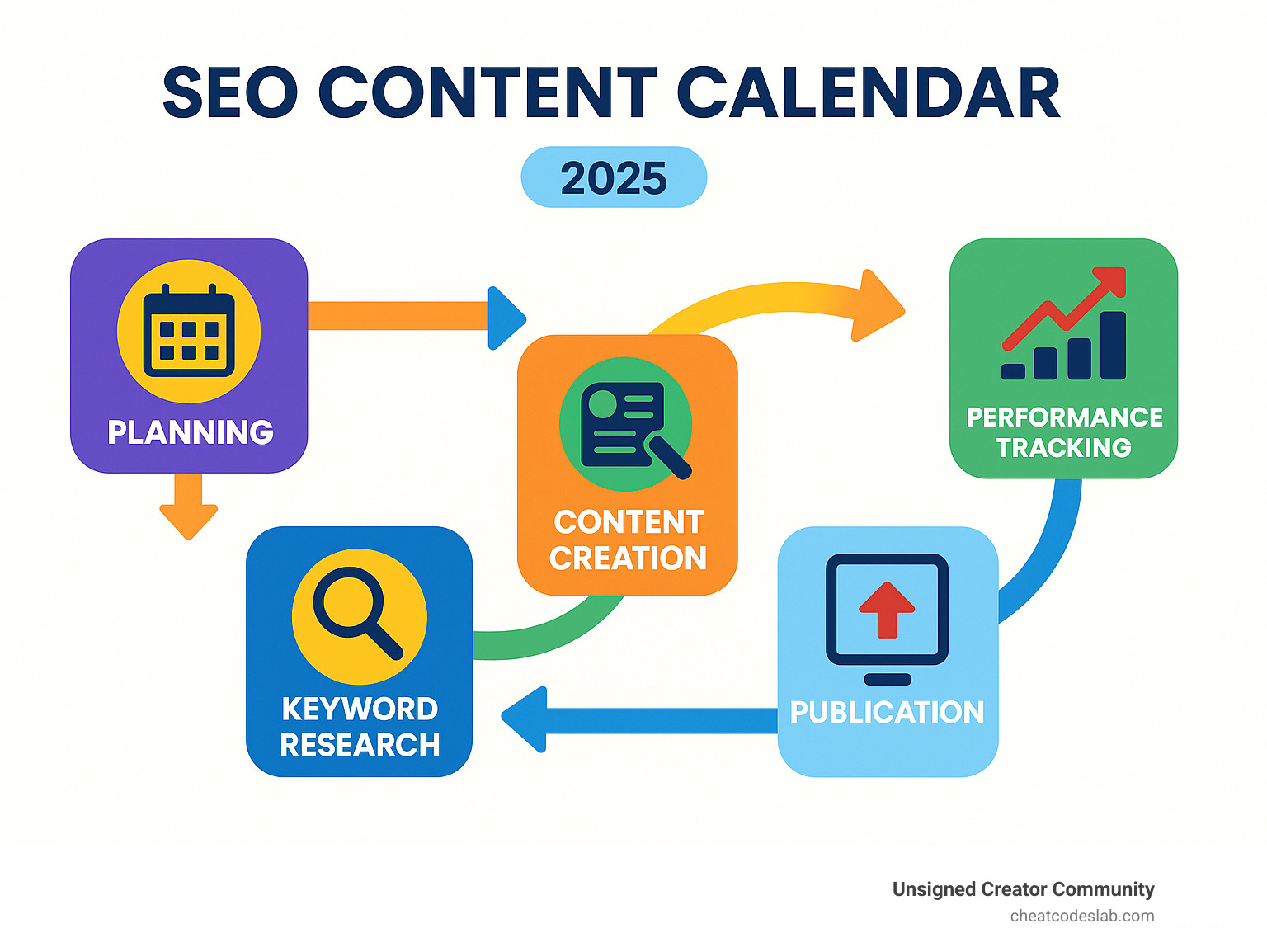
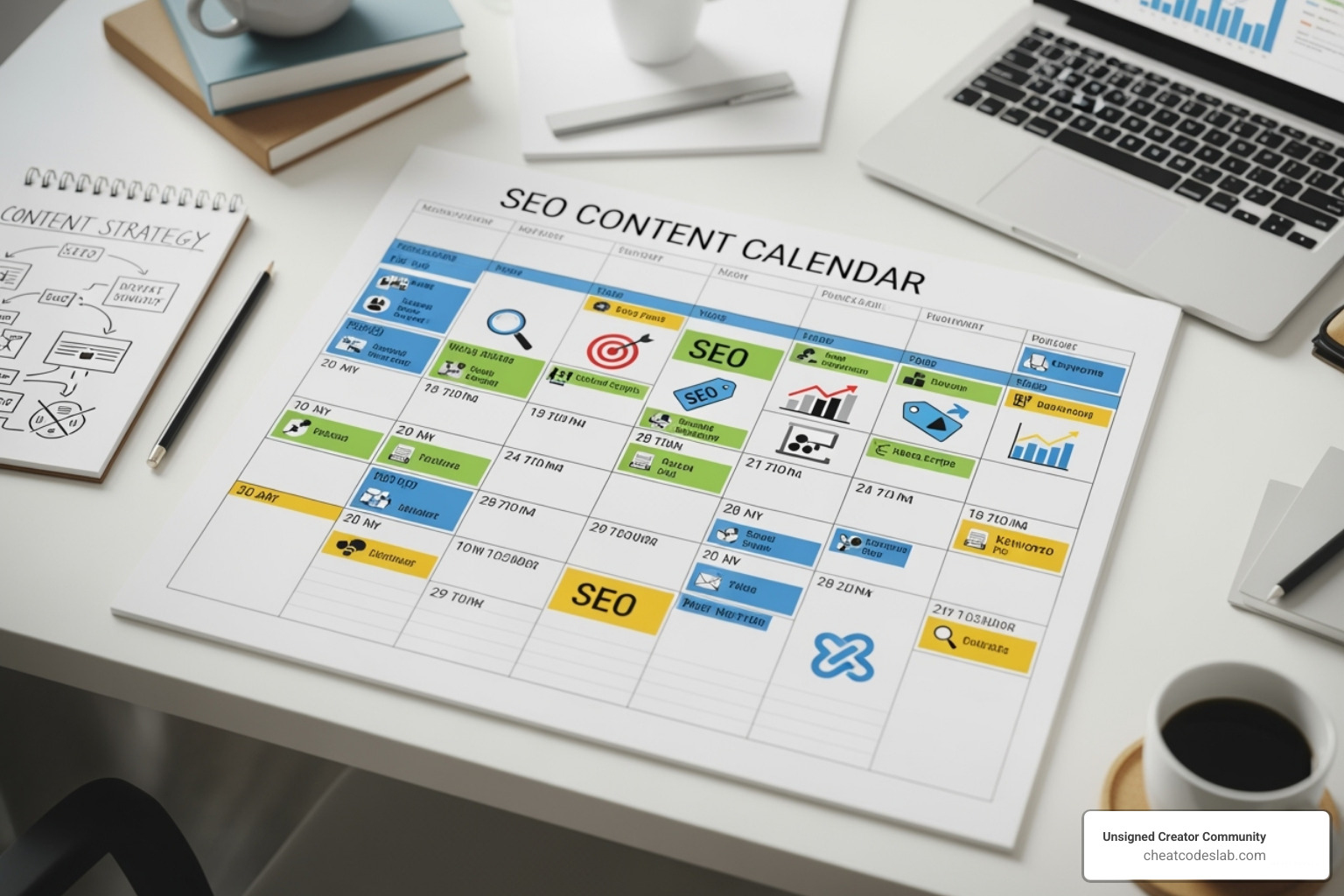
An SEO content calendar is a strategic planning tool that organizes your content creation around target keywords, search intent, and publication schedules to maximize organic search performance. For anyone new to the discipline, think of it as the operational side of search engine optimizationworking day to day to turn strategy into measurable results.
Core Components:
- Publication dates and content titles
- Target keywords and search intent mapping
- Content types (blog posts, guides, videos)
- Author assignments and status tracking
- Meta descriptions and internal linking plans
Key Benefits:
- Ensures consistent publishing schedule
- Aligns content with SEO strategy
- Improves team collaboration and accountability
- Tracks content performance over time
- Builds topical authority systematically
Planning Timeline:
- Content takes at least 100 days to mature in search engines
- Plan content 36 months in advance
- Account for seasonal trends and business cycles
If your content marketing feels chaotic and your organic traffic isn’t growing, the solution isn’t just more contentit’s the right content, created with a strategic approach. A well-structured SEO content calendar transforms random efforts into a systematic process that builds topical authority, improves search rankings, and drives sustainable organic growth. It provides a clear roadmap, guiding every piece of content toward your SEO goals.
With over 20 years in digital media and content strategy, I’ve seen that a strategic SEO content calendar is the difference between scattered efforts and systematic success. It’s the key to scaling your online presence and achieving measurable results.
Know your SEO content calendar terms:
- Advanced keyword research
- Content gap analysis
- Competitive analysis tools
- Search engine optimization
Building Your High-Performance SEO Content Calendar
Creating an SEO content calendar that drives results isn’t just about filling in dates. It’s about building a strategic system that transforms your content into a coordinated effort that climbs search rankings.
Think of your content calendar as the command center for your content operation. Every piece should have a purpose, a target, and a clear path to success. Let me walk you through the steps to build a content calendar that consistently delivers organic growth.
Step 1: Laying the Foundation with Key Components
Your SEO content calendar is your content’s mission control center—the single source of truth that keeps everyone aligned. Upfront planning saves countless hours later and dramatically improves results.
Your calendar should capture these essential elements for every piece of content: publication date, content title, and target keywords (2-3 primary and secondary keywords). You’ll also want to map search intent—understanding whether users want to learn, buy, or research.
The funnel stage tells you where this content fits in your customer’s journey, shaping everything from your tone to your call-to-action.
Don’t forget operational details: content type (blog post, guide, video), author assignment, and status tracking. I recommend status labels like “Idea,” “Drafting,” “In Review,” “Approved,” and “Published.”
Your meta title (under 60 characters) and meta description (under 160 characters) are crucial for search results, so optimize them for both clicks and keywords.
Target word count should be informed by competitor analysis, as comprehensive coverage often wins. Finally, plan your internal link suggestions from the start to build topical authority and help search engines understand how your content connects.
Managing these pieces is why your calendar functions like a project management system, keeping everyone accountable and ensuring consistent, high-quality output.
For a smooth content creation process, consider our Content Creation Workflow.
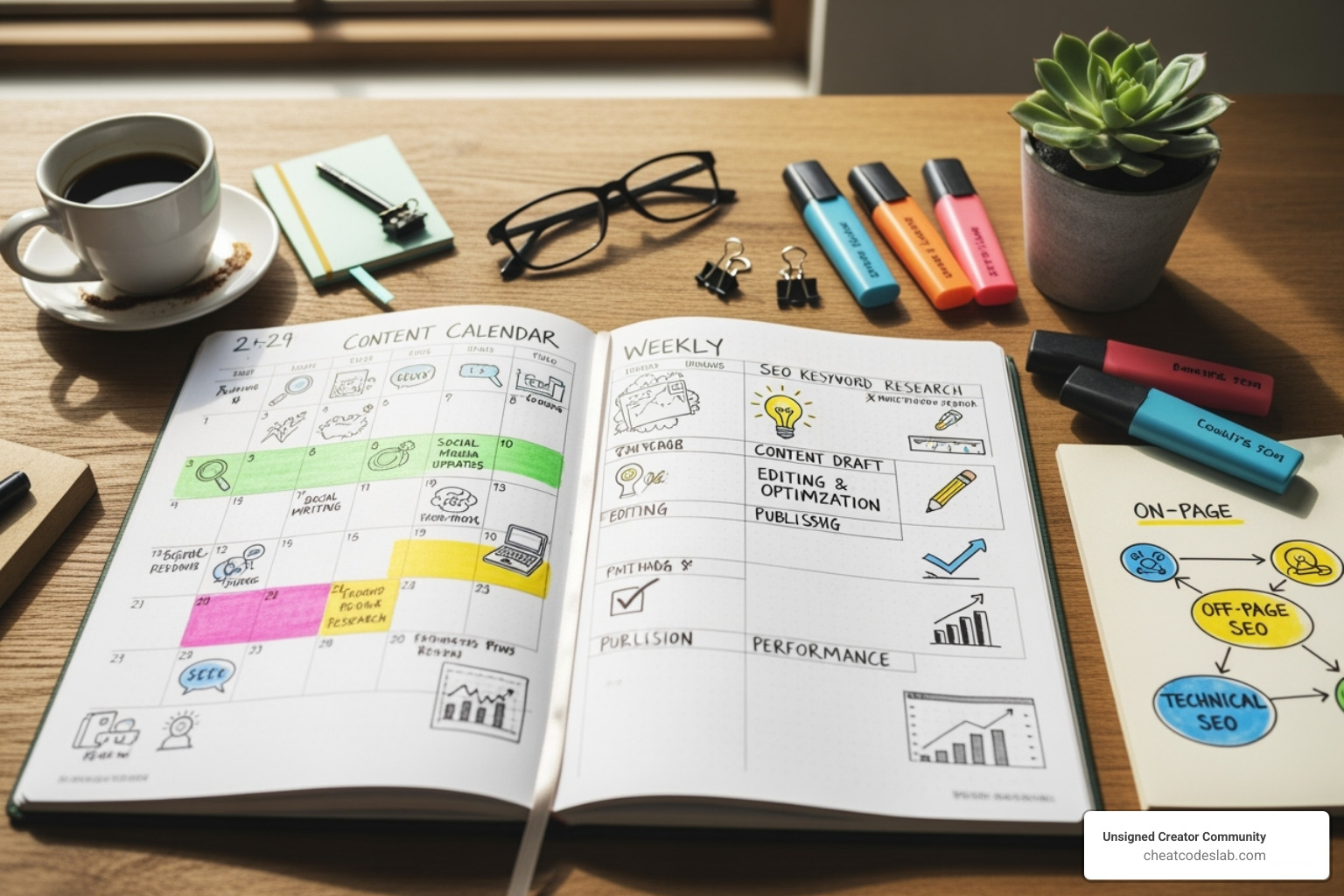
Step 2: Fueling Your Calendar with Strategic Keyword Research
Without solid keyword research, your SEO content calendar is like a car without fuel. This is where strategy meets execution.
Start with a mix of primary keywords (high volume), secondary keywords (contextual terms), and long-tail keywords (specific, high-conversion phrases). For a primary keyword like “best running shoes,” a long-tail variation could be “best running shoes for marathon training with high arches.”
The game-changer is understanding search intent. Your content type must match what users want. Someone searching “how to tie running shoes” wants a tutorial, not a product page. Misaligning intent kills your chances.
Instead of targeting individual keywords, think in topic clusters and pillar pages. Create one comprehensive pillar page covering a broad topic, then support it with detailed cluster content on specific subtopics.
Imagine a pillar page called “Complete Running Shoe Guide” supported by cluster content like “Best Trail Running Shoes” and “Understanding Pronation in Running.” This approach builds serious topical authority and signals to search engines that you’re a comprehensive resource.
I also leverage competitor analysis and paid search data to find content gaps. Sometimes your paid campaigns reveal high-converting keywords where your organic visibility is weak—pure gold for content planning.
Google values E-E-A-T (Expertise, Experience, Authoritativeness, Trustworthiness). By systematically covering topics, you build topical authority and demonstrate your team’s expertise.
Our Advanced Keyword Research guide dives deeper into these techniques, while our Long-Tail Keyword Tools can help you uncover valuable keyword opportunities.
Step 3: Structuring Your Content for Maximum Impact
Once you’ve identified keywords and intent, it’s time to structure your content. This is where your SEO content calendar becomes a content creation powerhouse.
Content briefs are your secret weapon. A solid brief includes your suggested title and meta description, primary and secondary keywords, and target word count. Your brief should also specify target audience and tone, key takeaways, and search intent confirmation. Don’t forget internal and external linking opportunities.
Include explicit E-E-A-T considerations in your briefs, instructing writers to use data, studies, or expert opinions to demonstrate authority and trustworthiness, which is essential for ranking.
Your titles make or break your content. Optimize them with target keywords while keeping them engaging. For instance, research shows blog posts with “Guide” in the title get significantly more organic traffic. “How To” articles also perform well because they clearly signal value.
Internal linking strategy is incredibly powerful. Planning internal links in your briefs or calendar helps search engines crawl your site, builds topical authority, distributes SEO value, and improves user experience.
The goal isn’t just producing content—it’s producing content that ranks, engages, and converts. Structuring each piece strategically from the start dramatically increases your chances of success.
For more detailed optimization guidance, explore our On-Page SEO Tips.
Step 4: Choosing the Right Tools for Your SEO Content Calendar
Selecting the right tools for your SEO content calendar depends on your team size, budget, and goals. Understanding your options will help you make a smart choice.
Spreadsheets are a great starting point. They’re often free, highly customizable, and perfect for solo creators or small teams. You can track all your key components with complete flexibility.
The challenge with spreadsheets comes as you scale. When multiple people are involved, simple sheets can become unwieldy. That’s when project management software becomes essential.
| Feature | Spreadsheets | Project Management Tools |
|---|---|---|
| Cost | Often free or low-cost | Free tiers available, paid plans for advanced features |
| Collaboration | Good for small teams with real-time editing | Excellent with task assignment, notifications, approval workflows |
| Scalability | Can become unwieldy with complex workflows | Designed to scale with growing teams and content output |
| Features | Basic organization requiring manual updates | Advanced workflow management, integrations, automation |
Project management platforms transform your SEO content calendar from a static schedule into a dynamic, collaborative hub. They offer visual calendars, task assignments, automations, customizable views, and integrations with other essential tools. These tools excel at managing the assembly-line nature of content creation, ensuring consistency and efficiency.
All-in-one marketing suites and WordPress plugins also offer integrated calendar functionality that can streamline workflows if you’re already using their ecosystem.
Regardless of your chosen platform, integrate powerful AI Content Tools and Best SEO Tools into your process. These assist with keyword research, content optimization, and brief creation, making your calendar management more efficient.
Step 5: Managing and Optimizing Your SEO Content Calendar
Building your SEO content calendar is the foundation. The real magic is in the ongoing management and optimization that keeps your content relevant and high-performing.
Consistency is everything in content marketing. A regular cadence builds audience expectations and signals to search engines that your site is active. Your calendar is your accountability partner in maintaining this schedule.
Your calendar isn’t just for new content. Use it to plan content updates and site-wide audits. Content can “decay” over time. Regularly refreshing articles, especially high-performing ones, can give them new life in search results.
Performance tracking is where your calendar becomes a diagnostic tool. Monitor organic traffic, keyword rankings, engagement metrics, and conversions. If a post underperforms, your calendar provides the context needed to diagnose issues like search intent misalignment and adjust your strategy.
Remember: content takes at least 100 days to mature in search engines. This underscores why long-term planning and consistent monitoring matter. Your calendar helps you visualize this maturation period.
Content repurposing becomes strategic when planned through your calendar. A comprehensive guide can become multiple social media posts, a video script, or an infographic, maximizing its value.
Team collaboration improves when everyone can see what they need to do and when. Clear status labels and assigned roles foster accountability and ensure smooth workflows.
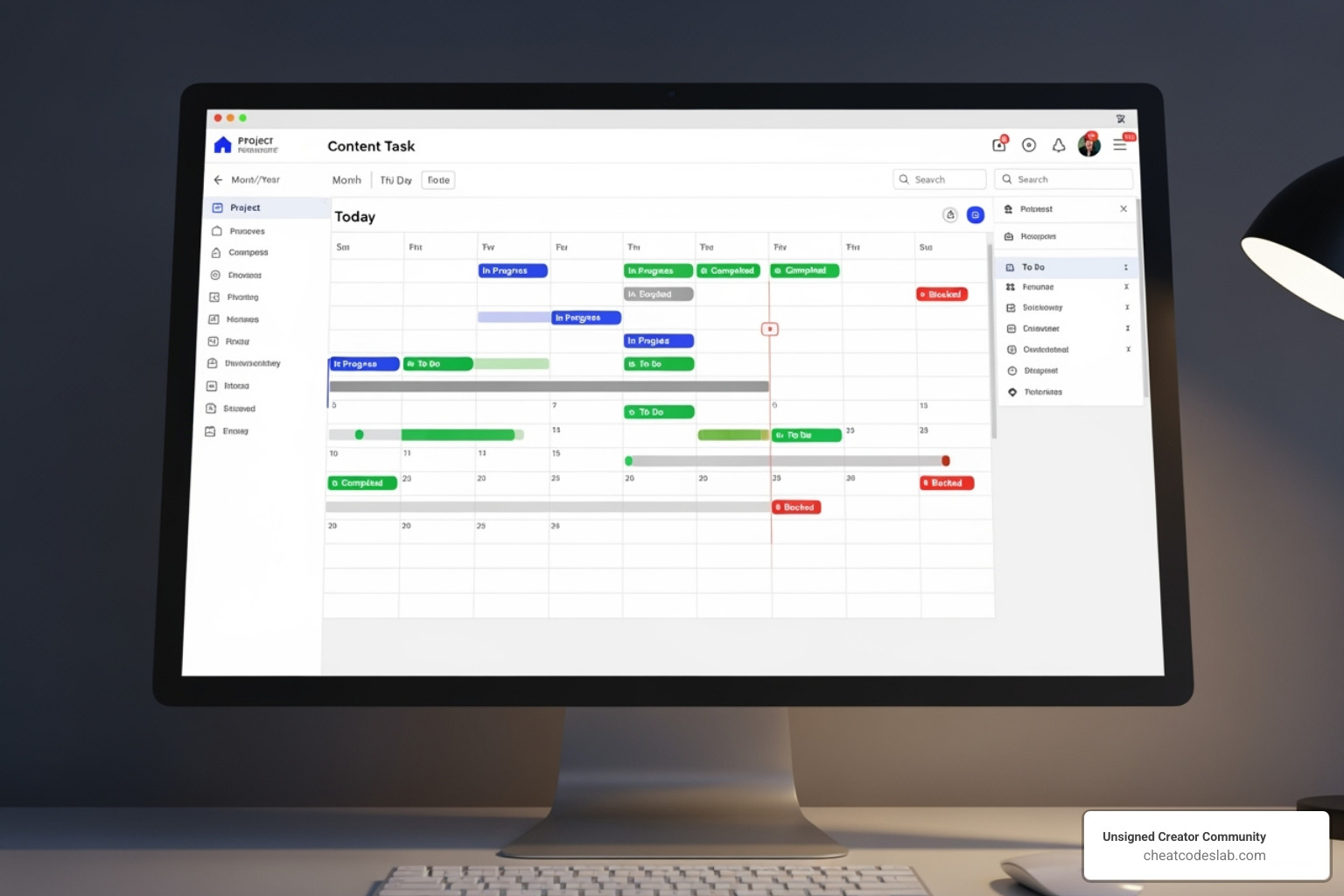
By consistently managing and optimizing your SEO content calendar, you transform content creation from reactive scrambling into a proactive, strategic engine for organic growth.
For deeper insights into content performance and optimization strategies, explore our Content Marketing Insights
Conclusion: From Planning to Ranking
We’ve covered how an SEO content calendar is more than a schedule—it’s your strategic asset for long-term organic success. From keyword research and content structure to tool selection and optimization, you now have a framework to drive results.
You have a clear roadmap to transform content chaos into a systematic approach that builds topical authority and drives real ranking growth. An effective SEO content calendar doesn’t just organize your content; it fundamentally changes how you approach SEO.
Instead of treating each blog post as an isolated effort, you’re now building a cohesive strategy where every piece works together. Your consistency improves, your team collaboration becomes seamless, and your content starts working harder for you because it’s strategically aligned with what your audience is searching for.
Content takes at least 100 days to mature in search engines. The calendar you build today is an investment in your organic traffic months from now. Every keyword you map and every internal link you plan lays the foundation for sustained ranking growth.
The beauty of this system is that it transforms your SEO from random tasks into a goal-oriented strategy. You’re no longer just creating content—you’re building an ecosystem that establishes your expertise and signals to search engines that you’re the authority in your space.
Ready to put everything you’ve learned into action? At CheatCodesLab, we’ve helped countless creators and agencies build content strategies that move the needle. Explore our SEO-ready solutions and find how our certified AI tools and proven frameworks can accelerate your journey from planning to ranking.
Your SEO content calendar isn’t just a planning tool—it’s your blueprint for dominating the SERPs. Now go build something amazing.


About the author


How to Archive Posts on Instagram in 4 Easy Steps
Master archiving on Instagram in 4 easy steps to organize your profile and protect your content.

Beginner’s Guide to 10k free instagram followers app
Discover how a 10k free instagram followers app works, its risks, and safe organic growth strategies for real engagement in 2026.

Beginner’s Guide to Best Instagram Report App
Discover the best Instagram report app for real-time analytics, automated reports, and data-driven decisions in 2026.
How to Master Advanced SEO Search Techniques in 7 Steps
Master advanced search techniques in SEO with 7 proven steps to boost rankings, technical audits, and organic traffic.

Cheat Sheet to the Best Business Apps
Discover the best business apps to streamline operations, boost productivity, and scale your business in 2026.

How to Get Instagram Followers Free APK in 5 Steps
Discover how instagram followers free apk 2026 download works and learn safe organic growth strategies instead of risky third-party tools.
Related
How to Archive Posts on Instagram in 4 Easy Steps
Master archiving on Instagram in 4 easy steps to organize your profile and protect your content.

Beginner’s Guide to Best Search Engine Optimization SEO
Master best search engine optimization SEO with this beginner's guide covering on-page, technical, and AI strategies for higher rankings.

Ultimate Checklist for Social Media Marketing Agency
Discover the ultimate checklist for choosing a social media marketing agency that drives real ROI and growth.

Hot Summer Caption Ideas That Spark Engagement
Discover hot summer caption ideas that boost engagement, from short aesthetic lines to funny unhinged vibes and beach photo dumps.

How to Add Text to Instagram Story in 5 Easy Steps
Learn how to add text to Instagram Story in 5 easy steps with our native tips and creative text hacks for better engagement.

How to Add Audio to Instagram Story the Right Way
Learn how to add audio clip in Instagram Story using built-in music or your own file with this step-by-step guide.