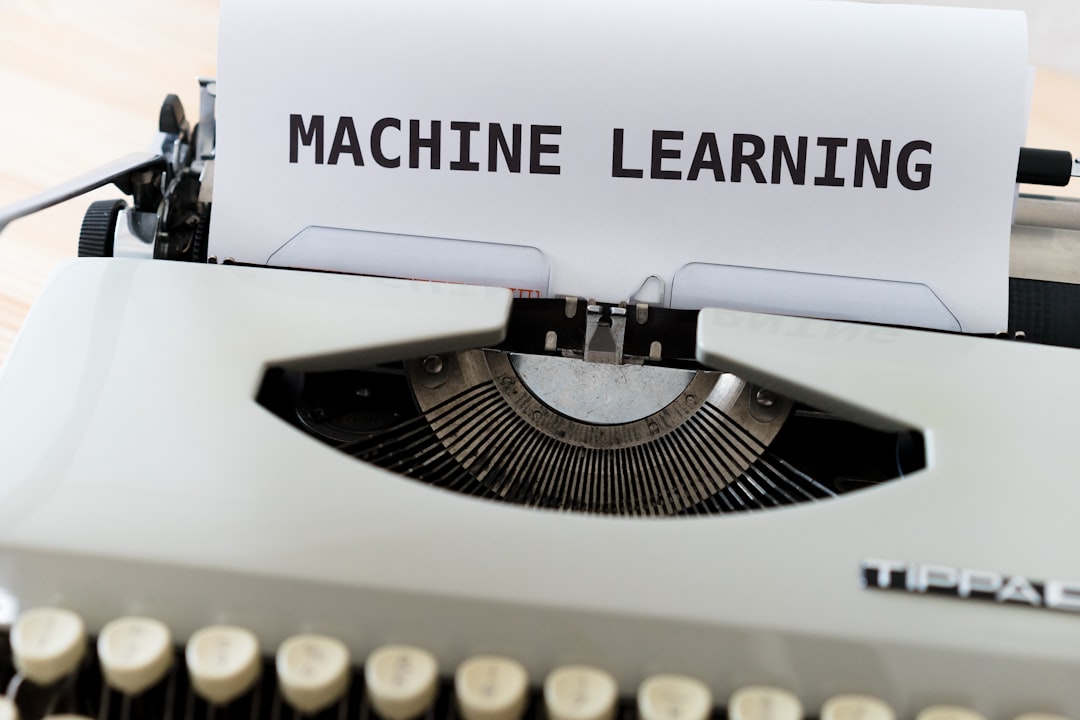

How Machine Learning is Teaching Old Ads New Tricks
Why Machine Learning in Digital Advertising Is Changing Everything
Machine learning in digital advertising is the use of algorithms that learn from data to automate and improve how ads are targeted, bid on, and personalized — in real time, at massive scale.
Here’s a quick breakdown of what it means in practice:
| What ML Does in Ads | How It Helps You |
|---|---|
| Analyzes user behavior patterns | Finds the right audience automatically |
| Optimizes bids in real time | Reduces wasted ad spend |
| Personalizes ad creative | Increases engagement and conversions |
| Predicts customer actions | Improves targeting without guesswork |
| Replaces manual rule-setting | Saves time and scales faster |
Think about it this way: without machine learning, making sense of the billions of ad signals generated every single day would be like trying to drink from a firehose with a thimble. There simply isn’t enough human bandwidth to process that volume of data manually.
That’s exactly why 83% of senior brand marketers (according to Statista) now use AI to target digital ads — and why campaigns powered by ML deliver up to 14% higher conversion rates compared to traditional manual optimization.
The shift isn’t coming. It’s already here.
I’m digitaljeff — digital media entrepreneur, tech futurist, and content strategist with 20+ years of experience watching technology reshape how brands connect with audiences, including the rise of machine learning in digital advertising across social, programmatic, and content platforms. Let’s break down exactly how this technology works and how you can use it to your advantage.
Similar topics to machine learning in digital advertising:
The Mechanics of machine learning in digital advertising
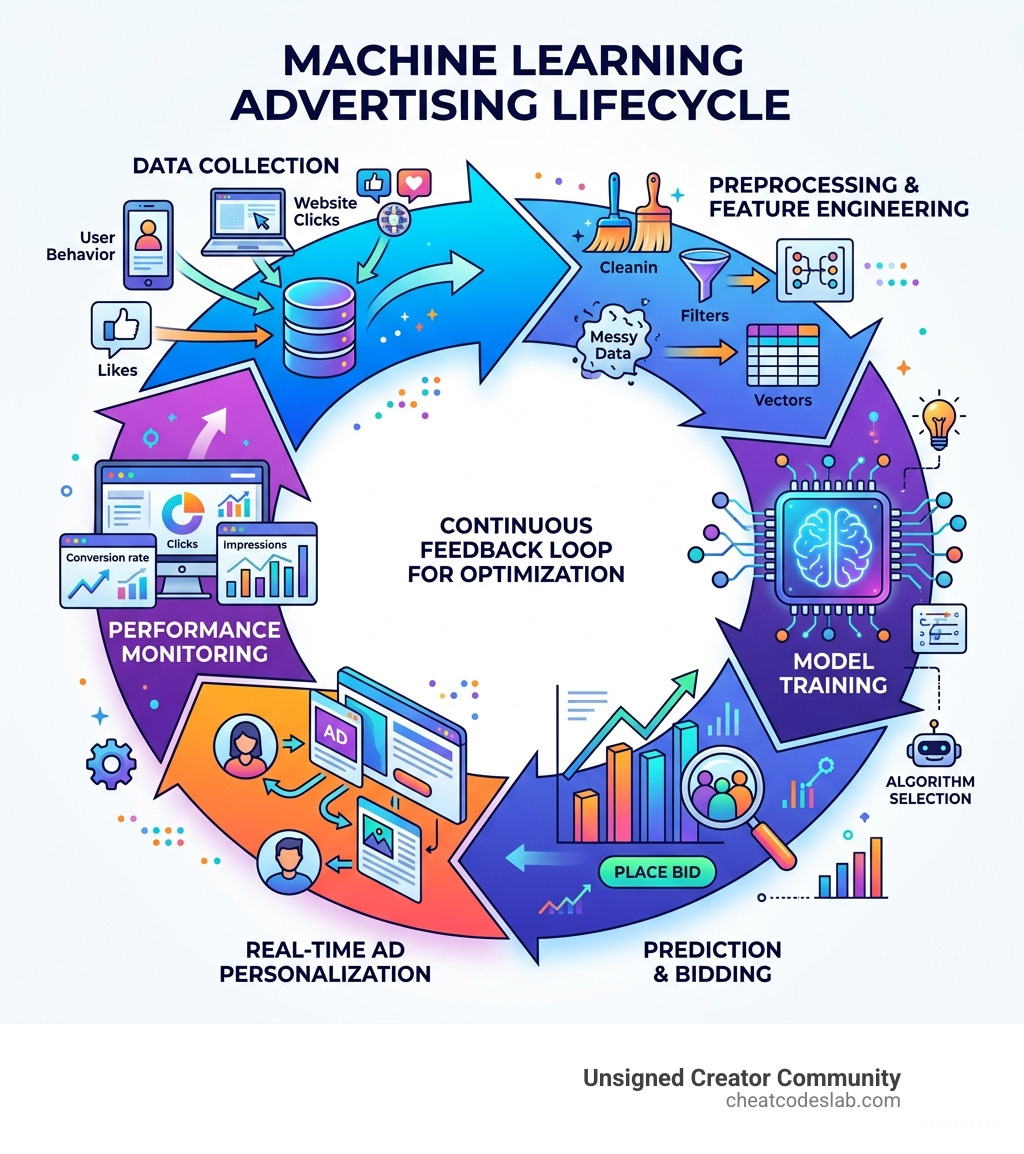
To understand how machine learning in digital advertising actually works, we first need to distinguish it from “traditional” AI. While traditional AI might follow a strict set of “if-then” rules created by a human, machine learning (ML) is a subset that learns to identify patterns on its own. It’s like the difference between giving a child a recipe and teaching them how to taste and adjust ingredients as they cook.
In the advertising world, we deal with a “firehose” of data. Some platforms process up to two petabytes of data daily—that is roughly equivalent to 80 years of continuous HD Netflix streaming! No human team, no matter how caffeinated, can sort through that to find the perfect customer.
Machine learning algorithms thrive in this environment. They ingest historical data (who clicked, who bought, what time it was, what device they used) and use it to build a predictive model. When a new opportunity arises, the model evaluates it against these learned patterns. The most fascinating part? These models are “self-healing.” If a campaign starts underperforming because consumer trends shift, the ML detects the change in the data and adjusts its strategy without us having to lift a finger.
How machine learning in digital advertising Powers Programmatic Bidding
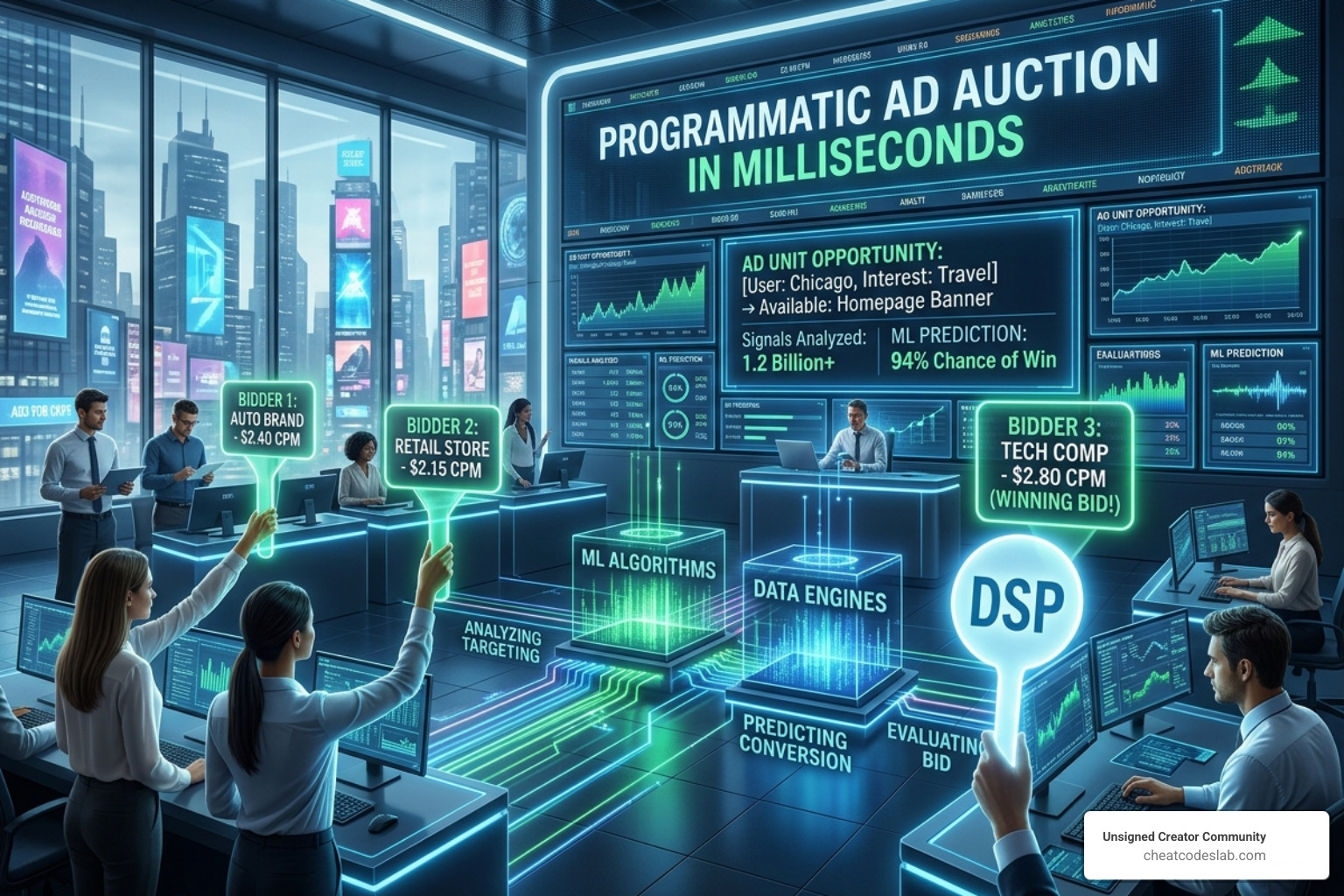
Programmatic advertising is the automated buying and selling of online ad space. At the heart of this is Real-Time Bidding (RTB). When you load a webpage, an auction happens in the milliseconds before the content appears.
Machine learning has turned this from a reactive process into a proactive one. In the past, we might set a manual bid of $2.00 for “users interested in fitness.” Today, machine learning in digital advertising uses bid optimization to look at the specific user, the site content, and the likelihood of a conversion. If the ML predicts a high probability of a sale, it might bid $2.50 to ensure we win; if the probability is low, it might bid $0.50 or skip the auction entirely.
This level of precision is why AI performance marketing has become the gold standard. We are no longer bidding on broad groups; we are bidding on the value of a specific impression. This reduces “waste” and ensures that every dollar spent is working toward a measurable goal.
Predictive Targeting and Audience Segmentation
Remember when we used to target people based just on age and zip code? Those days are long gone. Machine learning enables predictive targeting, which uses behavior patterns to find your next customer before they even know they want your product.
By analyzing “seed data” (your current best customers), ML creates lookalike audiences. It looks for thousands of subtle behavioral signals—often things a human would never notice—to find people who “act” like your buyers. This is called hyper-segmentation. Instead of one big “Sports Fans” bucket, we can have thousands of micro-segments, such as “Urban marathon runners who buy organic energy gels on Tuesday mornings.”
Crucially, modern ML is learning to do this while respecting privacy. By focusing on patterns and group behaviors rather than personally identifiable information (PII), we can still achieve incredible relevance. For more on how data transforms into strategy, check out our guide on AI-driven marketing insights.
Dynamic Creative Optimization and Personalization
Winning the bid is only half the battle; you still have to show an ad that actually resonates. This is where Dynamic Creative Optimization (DCO) comes in.
Imagine an e-commerce brand with 10,000 products. Using traditional methods, you’d pick one “hero” product to show everyone. With machine learning in digital advertising, the system can use recommendation engines to show the exact SKU (stock-keeping unit) a user is most likely to want.
This personalization goes beyond just “users who liked X also liked Y.” Modern models use implicit feedback—analyzing how long you hovered over an image or how quickly you scrolled past a video—to update your profile in real time. Generative AI is now being layered on top of this to automatically swap out headlines, background colors, and call-to-action buttons to match a user’s specific mood or preference.
To dive deeper into the technical side of how these “neural networks” mimic the human brain to predict behavior, read our deep learning digital marketing guide.
Overcoming Challenges and Measuring Success
While the benefits are clear, implementing machine learning in digital advertising isn’t as simple as flipping a switch. We often see businesses struggle with “expertise gaps” or “black box” syndrome—where they don’t understand why the machine is making certain decisions.
Data quality is the biggest hurdle. If you feed an ML model “dirty” data (inaccurate tracking, bot traffic, or siloed information), the results will be poor. As the saying goes: “Garbage in, garbage out.” We recommend consolidating your data into a single source of truth, like a CRM or a Customer Data Platform (CDP), before letting the algorithms loose.
Transparency is another concern. Marketers need to know that their ads are appearing in brand-safe environments. Fortunately, ML is also being used to solve this by scanning page content for sentiment and context, ensuring your luxury watch ad doesn’t appear next to a news story about a jewelry heist. For a broader look at these hurdles, see our article on ML in digital marketing.
Navigating Signal Loss and Privacy in machine learning in digital advertising
The advertising industry is currently facing a “signal loss” crisis. Between the deprecation of third-party cookies and privacy updates like iOS 14.5, the old ways of tracking users are disappearing.
However, machine learning in digital advertising is actually the solution to this problem. Instead of relying on invasive tracking, we are moving toward contextual targeting. ML can scan the text, images, and even the “vibe” of a webpage to determine if it’s a good fit for an ad. If someone is reading a high-end travel blog, we don’t need a cookie to know they might be interested in a suitcase.
By leveraging first-party data and privacy-safe “cohorts,” we can maintain performance while staying compliant with regulations like GDPR. This shift from “tracking people” to “predicting relevance” is a win for both marketers and consumers. Learn more about this transition in our deep dive into AI in digital advertising.
Key Metrics for Evaluating ML Performance
How do we know if the machine is actually doing a better job than we were? We use incremental lift testing. This involves showing ads to one group (the test) and no ads to a similar group (the control) to see the true “lift” generated by the ML.
Here is how manual optimization typically stacks up against ML-powered campaigns:
| Metric | Manual Optimization | Machine Learning Optimization |
|---|---|---|
| Optimization Frequency | Weekly or Daily | Every Millisecond |
| Data Points Considered | 5-10 (Age, Gender, etc.) | 1,000s (Time, Weather, Device, etc.) |
| Conversion Rate | Baseline | Up to 14% Higher |
| Customer Acquisition Cost | High (Human Labor + Waste) | Up to 52% Lower |
| Scalability | Limited by Team Size | Infinite |
Beyond just ROAS (Return on Ad Spend), we should look at Predictive Customer Lifetime Value (CLV). Instead of just asking “Did this person buy today?”, ML helps us ask “Is this person likely to be a loyal customer for the next three years?” This shifts our strategy from short-term wins to long-term growth.
Future Trends and Implementation with CheatCodesLab
The future of machine learning in digital advertising is incredibly bright. We are seeing the rise of vector databases, which allow for even deeper semantic matching—meaning the machine understands the meaning behind a user’s search or browse, not just the keywords.
Generative AI will continue to revolutionize the “creative” side, allowing brands to produce thousands of personalized video and image variations in seconds. We are also moving toward “real-time omnichannel” optimization, where the ML coordinates your message across your social ads, email, and even connected TV (CTV) simultaneously to ensure a seamless experience.
At CheatCodesLab, we specialize in providing the certified AI tools and “cheat codes” you need to navigate this complex landscape. Whether you are an independent creator or a growing agency, our mission is to help you implement these high-level solutions without needing a PhD in data science.
Ready to stop manual bidding and start scaling? Explore our curated list of AI tools for creators to find the perfect starting point for your machine learning journey.
The era of “guessing” in advertising is over. By embracing machine learning in digital advertising, we aren’t just teaching old ads new tricks—we are building a smarter, more efficient, and more personal way to connect with the world.

About the author


How to Archive Posts on Instagram in 4 Easy Steps
Master archiving on Instagram in 4 easy steps to organize your profile and protect your content.

Beginner’s Guide to 10k free instagram followers app
Discover how a 10k free instagram followers app works, its risks, and safe organic growth strategies for real engagement in 2026.

Beginner’s Guide to Best Instagram Report App
Discover the best Instagram report app for real-time analytics, automated reports, and data-driven decisions in 2026.
How to Master Advanced SEO Search Techniques in 7 Steps
Master advanced search techniques in SEO with 7 proven steps to boost rankings, technical audits, and organic traffic.

Cheat Sheet to the Best Business Apps
Discover the best business apps to streamline operations, boost productivity, and scale your business in 2026.

How to Get Instagram Followers Free APK in 5 Steps
Discover how instagram followers free apk 2026 download works and learn safe organic growth strategies instead of risky third-party tools.
Related

The Complete Guide to BrightLocal Local SEO
Master BrightLocal local seo with rank tracking, citation management, and review tools to boost visibility in 2026.

The Best AI Tools to Help Nonprofits Get Funded
Discover top AI tools for fundraising to boost nonprofit revenue, donor engagement, and efficiency with predictive & generative AI.

The AI Muse: A Writer’s Guide to ChatGPT
Unlock ChatGPT for writers: Master prompts, beat writer's block, build plots, characters & workflows ethically.

The Robots Are Writing Now and Other AI Content Marketing Software Secrets
Discover ai-driven saas-based content marketing software secrets. Boost SEO, scale workflows, and dominate 2026 trends now!

Ghost Murmur CIA
Ghost Murmur: The Quantum Blueprint for the Impossible Deep inside a fortified bunker in Tehran, an American soldier is breathing—and the CIA is watching that breath through a solid lead wall using a technology that technically shouldn’t exist. This isn't just a scene from a Tom Clancy novel; it’s the frontline of what CIA Director William J. Burns calls the "Technological Mission Center," a pivot where the agency is prioritizing quantum sensing to regain the edge in denied areas. We have officially entered the era of the Quantum Cold War, where physical barriers like concrete and distance are becoming obsolete. As the U.S. government pours $1.8 billion into the National Quantum Initiative to ensure "quantum supremacy," the line between hard science and the supernatural is blurring before our eyes. If you’re a solopreneur or a creator, you need to […]

Top 5 AI Risk Management Software for 2026
Discover top AI tools for risk management: MindBridge, RiskWise & more. Save 73% time, boost compliance with NIST AI RMF in 2026.