

AI Digital Advertising: Master 2025 Growth
The New Era of Advertising
AI digital advertising is reshaping how brands connect with audiences. It uses machine learning, data analytics, and automation to deliver personalized ads at scale, optimize campaigns in real-time, and predict customer behavior with unprecedented accuracy.
Quick Answer: What is AI Digital Advertising?
- Machine Learning: Algorithms analyze vast datasets to identify patterns in consumer behavior and optimize ad performance automatically.
- Predictive Analytics: AI forecasts customer actions, seasonal trends, and campaign outcomes.
- Hyper-Personalization: Delivers unique ad experiences to individual users based on their preferences and intent.
- Programmatic Advertising: Automates ad buying and placement using real-time bidding and audience targeting.
- Creative Optimization: Generates and tests multiple ad variations to find what resonates best.
- Efficiency Gains: Reduces manual work while improving ROI. Advertisers using AI-powered campaigns see 18% more conversions on average.
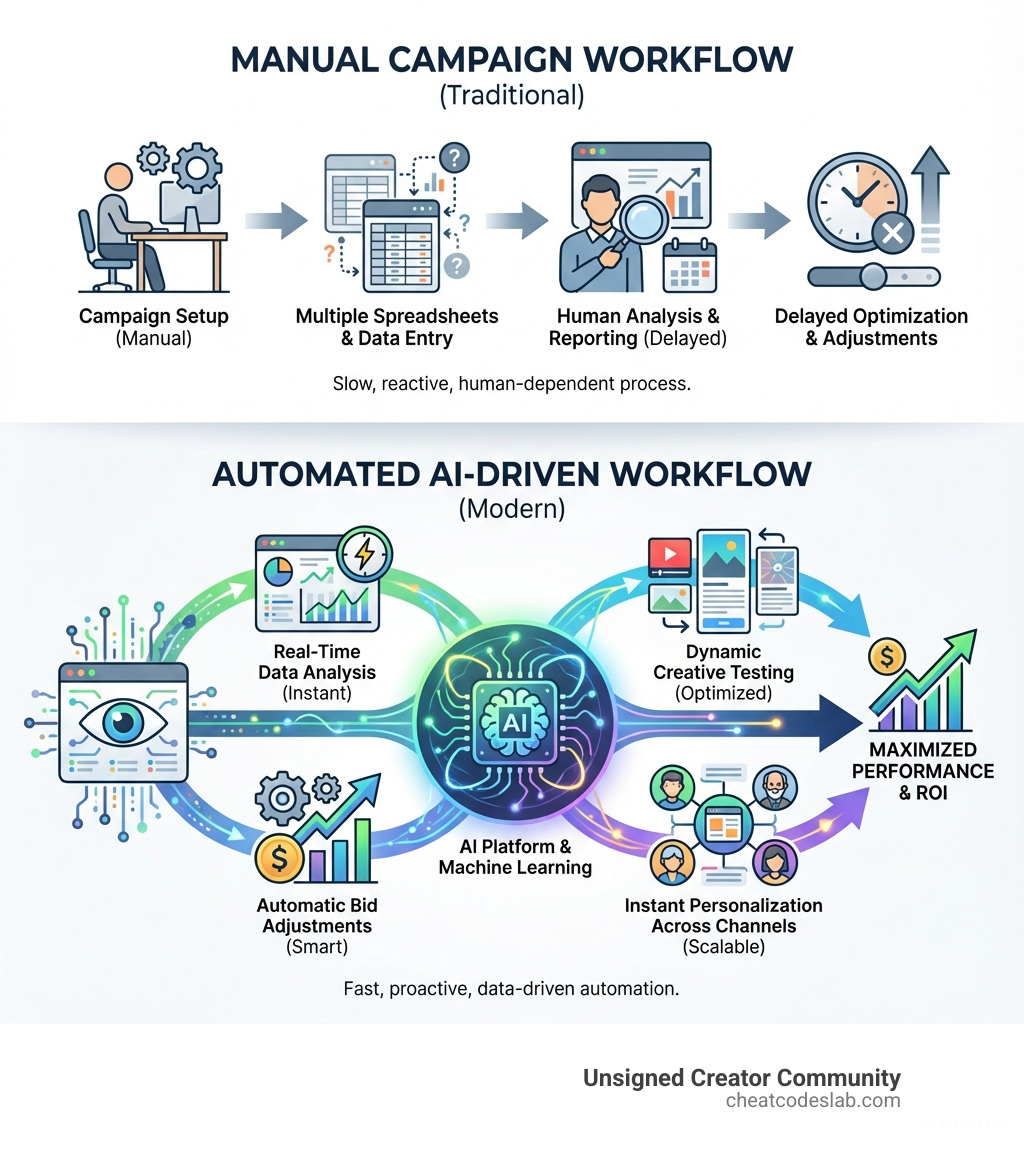
Traditional digital advertising relied on broad demographics and manual optimization, with adjustments made days or weeks later. AI changes everything. It processes billions of data points instantly, adjusts bids in milliseconds, and personalizes content for each viewer, allowing you to focus on strategy.
Think of it this way: traditional advertising is like fishing with a net. AI digital advertising is like having sonar that shows you exactly where the fish are and what bait they prefer.
At CheatCodesLab, we’ve seen how ai digital advertising transforms marketing from guesswork into a precision science, leveraging data to achieve remarkable results.
Ai digital advertising terms you need:
- artificial intelligence in marketing
- ai use cases in digital marketing
- how to use ai for digital marketing
The Core of AI Digital Advertising: How It Works and Why It Matters
AI digital advertising is a fundamental shift from broad strokes to surgical precision, making every advertising dollar work harder. It moves beyond human analysis of historical data by constantly learning and optimizing in real-time.
Core Technologies and Hyper-Personalization
At its heart, AI digital advertising is powered by technologies that understand, predict, and react to consumer behavior with incredible speed.
- Machine Learning (ML): The engine of AI advertising, ML algorithms analyze massive datasets to find patterns in consumer behavior that humans might miss. This allows AI to predict future actions and optimize ad delivery. For a deeper dive into the underlying concepts, see the overview of machine learning and our guide on ML in Digital Marketing.
- Data Analytics: AI processes vast amounts of data from billions of interactions to gain deep insights into consumer preferences and trends. This provides precise, actionable data to predict trends and adjust messages instantly. These AI Driven Marketing Insights are crucial for staying ahead.
- Programmatic Advertising: This is where AI automates the buying and selling of ad space. AI algorithms handle real-time bidding (RTB) to place ads before the right audience, on the right platform, at the optimal moment, and for the best price.
These technologies enable hyper-personalization. Instead of showing the same ad to a broad demographic, AI tailors campaigns to individual user behavior. Someone who browsed hiking boots sees an ad for trail shoes, while another who looked at camping gear sees a tent promotion. AI refines audience segmentation beyond demographics, anticipating customer needs based on browsing history, purchase patterns, and social media interactions.
The Tangible Benefits of AI Digital Advertising for Businesses
Integrating AI delivers concrete, measurable benefits that directly impact the bottom line through smarter spending and better results.
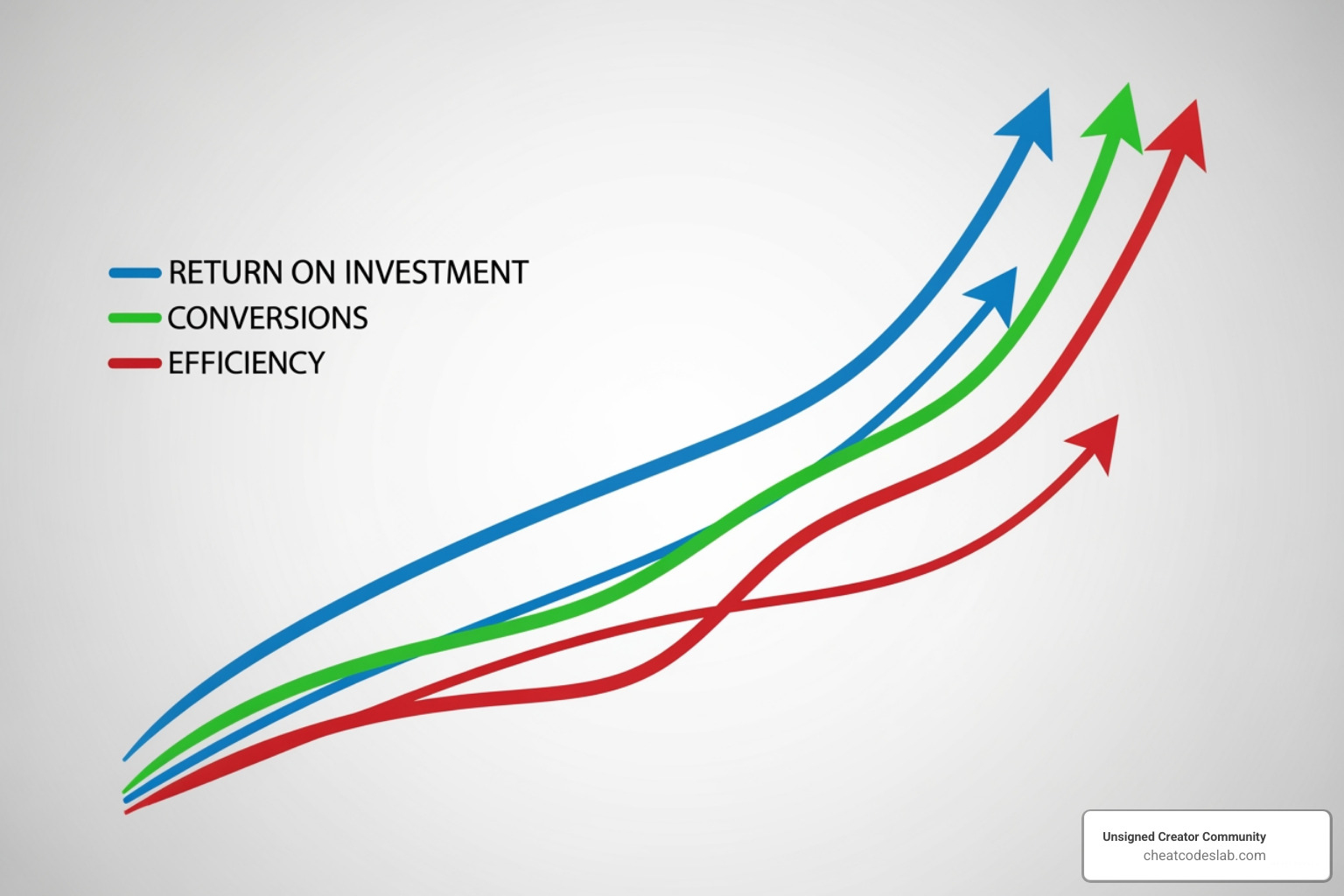
- Improved ROI: AI optimizes every campaign aspecttargeting, bidding, and creativeto ensure ad spend is used efficiently. For example, advertisers using Google’s Performance Max campaigns see over 18% more conversions at a similar cost. For strategies to maximize your ad spend, explore our insights on AI Performance Marketing.
- Increased Efficiency: AI automates repetitive tasks like bid management, audience segmentation, and A/B testing. This frees up marketers to focus on strategy, creativity, and high-level decision-making, enabling scalability and cost savings.
- Better Customer Engagement: Hyper-personalization leads to more relevant and engaging ad experiences. When ads resonate with an individual’s needs, they are more likely to engage, trust the brand, and convert.
- Improved Decision-Making: AI provides actionable insights, turning raw data into strategic intelligence. This data-driven approach means decisions are based on evidence, not guesswork. Our AI Tools for Analytics can help you harness this power.
- Proactive Optimization: AI systems constantly monitor metrics and make instantaneous changes to bids, targeting, and creative elements to maximize performance, ensuring campaigns are always running at their peak.
The Creative Revolution: AI-Powered Ad Content
AI digital advertising is revolutionizing creative production, enabling more effective and engaging ad content at unprecedented scale and speed.
- Generative AI for Ad Creation: Generative AI models create original content from raw data. This includes generating compelling ad copy, high-quality images, and even entire videos. For example, adding a vertical video to a campaign can deliver 10-20% more conversions per dollar on YouTube Shorts.
- Dynamic Creative Optimization (DCO): DCO systems use AI to automatically assemble and test thousands of ad variations (images, headlines, CTAs) in real-time. By learning what resonates with specific audience segments, AI ensures each user sees the most effective ad.
- Personalization at Scale: AI’s ability to create diverse assets allows for truly personalized ad experiences. This level of custom content vastly increases engagement and conversion rates.
At CheatCodesLab, we use tools that exemplify AI Driven Content Creation. The future of effective advertising lies in the seamless integration of creativity and AI. Learn more with our guide on AI Content Generation Tools.
Emerging Trends and Strategic Implementation
The landscape of AI digital advertising is constantly evolving. Understanding these trends and approaching implementation strategically is key.
Emerging Trends:
- AI-Driven Predictive Analytics: AI is increasingly forecasting future events, allowing for proactive campaign adjustments and resource allocation.
- Conversational AI: Sophisticated chatbots and virtual assistants are creating more engaging and personalized customer journeys.
- AI Overviews and New Ad Placements: AI-powered search results are creating new contexts for ads, positioning businesses as the immediate next step for users.
- Privacy-First Advertising: As third-party cookies are phased out, AI is crucial for delivering relevant ads while respecting user privacy, using privacy-preserving signals instead of individual tracking. For broader context on the shift toward data protection, see the principles behind the General Data Protection Regulation.
Effective Implementation of AI:
- Start with Clear Goals: Define what you want AI to achieve, whether it’s higher ROI, increased efficiency, or better personalization.
- Integrate AI Tools Gradually: Start by using AI tools for specific tasks like ad copy generation or bid optimization. Our guide on How to Use AI for Digital Marketing can help.
- Train Your Marketing Teams: Marketers need to understand how to leverage AI tools. Invest in training to focus on strategy and data interpretation.
- Prioritize Data Quality: AI is only as good as its data. Ensure your data is clean, accurate, and relevant.
Adopting a strategic approach will ensure your business harnesses the full power of AI digital advertising. Dive deeper with our article on AI Use Cases in Digital Marketing.
The Human Element: Strategy, Ethics, and the Future Workforce
While AI digital advertising brings unprecedented power, it also raises critical questions about ethics and the role of human marketers. AI should augment human capabilities, not replace them, and responsible implementation is paramount.
Ethical Considerations and Responsible AI in Digital Advertising
The rise of AI in advertising comes with significant ethical considerations that must be addressed.
- Data Privacy: AI thrives on data, raising concerns about how personal information is used. The shift to a privacy-first landscape, driven by regulations and the end of third-party cookies, means AI must respect user privacy. New technologies deliver relevant ads without tracking individuals, and platforms that give users control over their data are essential for building trust.
- Algorithmic Bias: If AI models are trained on biased data, they can perpetuate and amplify societal inequalities in ad targeting. This can lead to unfair representation or discrimination. Human oversight and regular auditing of AI systems are crucial to ensure fairness and prevent bias.
- Job Displacement: While AI automates repetitive tasks, it doesn’t necessarily mean job losses. The shift is towards new roles requiring strategic thinking, creative oversight, and the ability to manage AI outputs. As one expert puts it, “your job will not be taken by AI, but by a person who knows how to use AI.”
Best Practices for Using AI Responsibly:
- Transparency: Be clear with your audience about how AI is being used.
- Human Oversight: Maintain human review for critical decisions and AI-generated content.
- Data Stewardship: Implement robust data governance policies and collect data ethically.
- Bias Audits: Regularly audit your AI algorithms to identify and mitigate potential biases.
- User Control: Empower users with control over their ad experience.
- Privacy-by-Design: Integrate privacy into the design of your AI systems. Our work in AI SEO Automation also emphasizes ethical data handling.
Navigating a privacy-first landscape means using AI to deduce intent without relying on invasive personal data, ensuring innovation goes hand-in-hand with responsibility.
The Evolving Role of Marketers and Getting Started
AI is not replacing marketers but evolving their roles from manual execution to strategic oversight.
- Human-AI Collaboration: The future is a partnership where AI handles the heavy lifting (data analysis, optimization) while humans provide strategic direction, creative vision, and emotional intelligence.
- Strategic Thinking: With tactical tasks automated, marketers can focus on architecting customer journeys, interpreting AI insights, and ensuring brand consistency.
- Skill Development: The most successful marketers will be those who accept continuous learning, mastering AI concepts and tools. Organizations must invest in educating their workforce on AI implementation.
Will AI Replace Digital Marketers? No, but it will transform the role. The market will value “AI-powered marketers” who can effectively wield AI to amplify their skills. For a deeper discussion, read our article on Will AI Replace Digital Marketers?.
Getting Started with AI in Your Advertising Strategy:
- Identify Pain Points: Pinpoint where your current workflow has inefficiencies or missed opportunities that AI could solve.
- Explore AI Marketing Tools: There is a vast ecosystem of AI tools for content generation, ad optimization, and analytics. Experiment to find what works for your needs.
- Invest in Training: Encourage your team to learn about AI through courses and other resources.
- Start Small, Scale Up: Choose a pilot project, measure its success, and then gradually expand your AI integration.
The future of AI digital advertising is about leveraging technology to create meaningful connections and build a more responsible advertising ecosystem. At CheatCodesLab, we are committed to providing the resources and tools to help you steer this new era. Explore our full suite of AI resources and join us in building the future of marketing.


About the author


How to Archive Posts on Instagram in 4 Easy Steps
Master archiving on Instagram in 4 easy steps to organize your profile and protect your content.

Beginner’s Guide to 10k free instagram followers app
Discover how a 10k free instagram followers app works, its risks, and safe organic growth strategies for real engagement in 2026.

Beginner’s Guide to Best Instagram Report App
Discover the best Instagram report app for real-time analytics, automated reports, and data-driven decisions in 2026.
How to Master Advanced SEO Search Techniques in 7 Steps
Master advanced search techniques in SEO with 7 proven steps to boost rankings, technical audits, and organic traffic.

Cheat Sheet to the Best Business Apps
Discover the best business apps to streamline operations, boost productivity, and scale your business in 2026.

How to Get Instagram Followers Free APK in 5 Steps
Discover how instagram followers free apk 2026 download works and learn safe organic growth strategies instead of risky third-party tools.
Related

The Complete Guide to BrightLocal Local SEO
Master BrightLocal local seo with rank tracking, citation management, and review tools to boost visibility in 2026.

The Best AI Tools to Help Nonprofits Get Funded
Discover top AI tools for fundraising to boost nonprofit revenue, donor engagement, and efficiency with predictive & generative AI.

How Machine Learning is Teaching Old Ads New Tricks
Discover how machine learning in digital advertising revolutionizes bidding, targeting, and personalization for superior ROI.

The AI Muse: A Writer’s Guide to ChatGPT
Unlock ChatGPT for writers: Master prompts, beat writer's block, build plots, characters & workflows ethically.

The Robots Are Writing Now and Other AI Content Marketing Software Secrets
Discover ai-driven saas-based content marketing software secrets. Boost SEO, scale workflows, and dominate 2026 trends now!

Ghost Murmur CIA
Ghost Murmur: The Quantum Blueprint for the Impossible Deep inside a fortified bunker in Tehran, an American soldier is breathing—and the CIA is watching that breath through a solid lead wall using a technology that technically shouldn’t exist. This isn't just a scene from a Tom Clancy novel; it’s the frontline of what CIA Director William J. Burns calls the "Technological Mission Center," a pivot where the agency is prioritizing quantum sensing to regain the edge in denied areas. We have officially entered the era of the Quantum Cold War, where physical barriers like concrete and distance are becoming obsolete. As the U.S. government pours $1.8 billion into the National Quantum Initiative to ensure "quantum supremacy," the line between hard science and the supernatural is blurring before our eyes. If you’re a solopreneur or a creator, you need to […]