
Personal branding goals: Secret to 2026 Success
Why You Need Clear Personal Branding Goals (And How to Set Them)
Personal branding goals are specific, actionable objectives that define what you want to achieve with your professional identity and online presence. Here’s what you need to know:
Key Personal Branding Goals to Consider:
- Build an Audience – Grow your followers on platforms like LinkedIn, Twitter, or Instagram
- Establish Thought Leadership – Position yourself as an expert in your niche
- Attract Career Opportunities – Increase visibility to recruiters and hiring managers
- Generate Leads – Convert your audience into clients or customers
- Overcome Imposter Syndrome – Build confidence by consistently sharing your expertise
- Expand Your Network – Connect with industry peers and potential collaborators
- Monetize Your Brand – Create revenue streams through speaking, consulting, or digital products
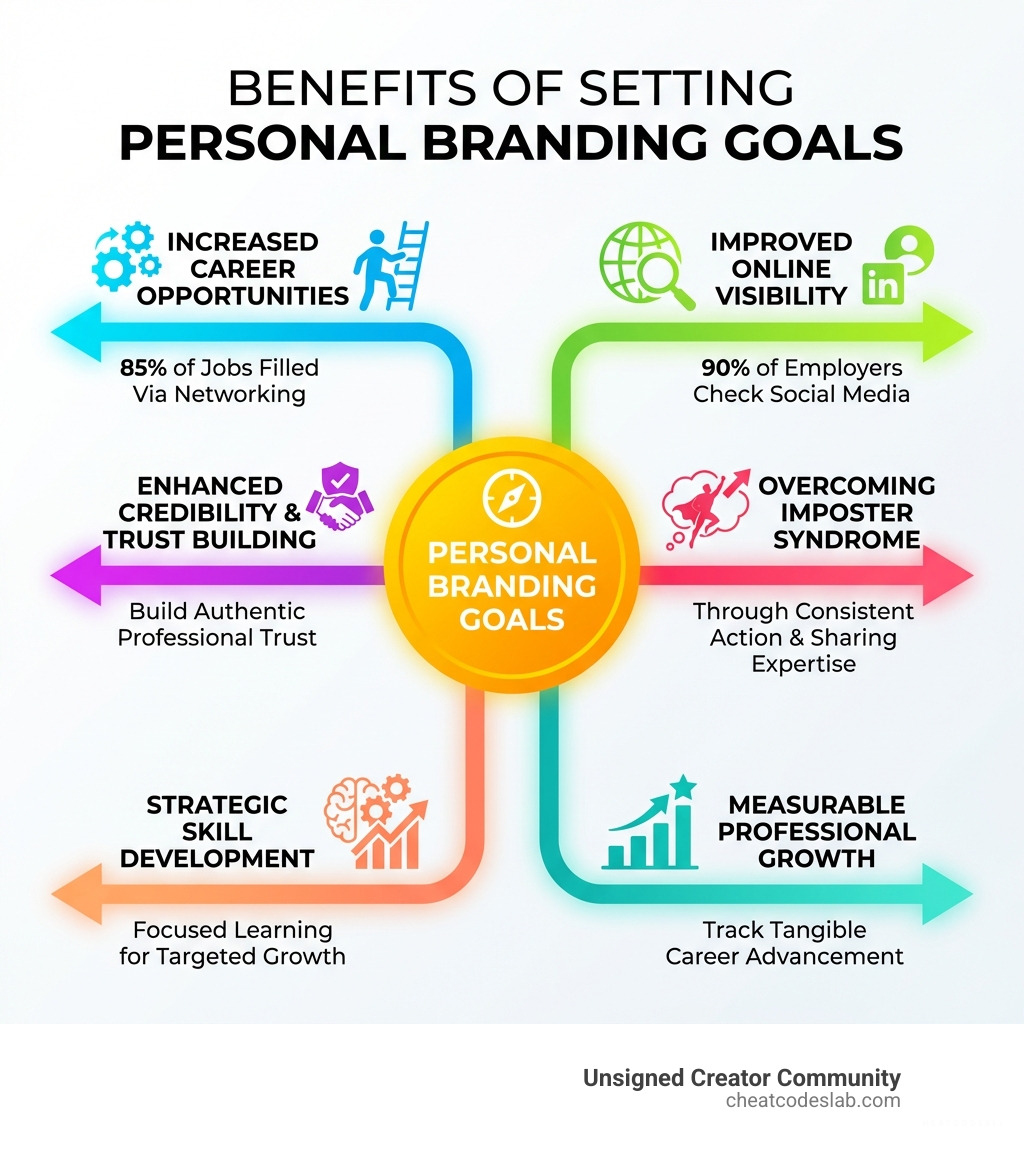
Much of professional and personal success depends on persuading others to recognize your value. The numbers back this up: 90% of employers check an applicant’s social activity during the hiring process, and 85% of all jobs are filled through networking. Yet many professionals struggle because they’re creating content without clear direction or measurable targets.
The difference between those who build influential personal brands and those who spin their wheels? Clear, strategic goals. Without them, you’re posting into the void. With them, every piece of content moves you closer to tangible outcomes like promotions, speaking opportunities, or new clients.
Setting personal branding goals isn’t just about vanity metrics. It’s about building credibility, opening doors, and creating a professional identity that works for you even when you’re not actively networking. Whether you’re a student building your first LinkedIn profile or a seasoned professional pivoting to a new industry, the right goals transform your personal brand from an afterthought into your most powerful marketing tool.
I’m digitaljeff, and over the past 20 years I’ve helped countless content creators and entrepreneurs formulate their personal branding goals and scale their online presence, generating over 1 billion views across social platforms. Throughout my career building brands and innovating content distribution strategies, I’ve seen how clear personal branding goals separate those who thrive from those who merely survive in today’s digital landscape.
Let’s break down exactly how to set goals that actually move the needle for your career.
Quick Personal branding goals definitions:
- Personal brand development
- personal brand statement examples
- self branding strategy
- For background on what a personal brand is and why it matters, see Personal branding.
The Primary Motivations: From Career Advancement to Confidence
Why do we even bother with personal branding goals? The motivations are as diverse as the individuals pursuing them, but they often boil down to two core desires: career advancement and personal growth.
First, let’s talk about career advancement. In today’s competitive landscape, your online presence is often your first impression. As we saw, a staggering 90% of employers check an applicant’s social activity during the hiring process. This isn’t just about avoiding red flags; it’s about actively showcasing your value. A well-defined personal brand signals to employers that you’re not just qualified, but also a good fit culturally and strategically. It helps you highlight your strengths, establish a strong reputation, and communicate your unique attributes effectively. This can directly influence hiring decisions and open doors to job interviews, promotions, and client relationships.
Consider the power of thought leadership. When you consistently share insights and expertise in your field, you become a recognized authority. This positions you as an expert, attracting opportunities you might not have even applied for. For instance, a software developer who regularly contributes to open-source projects and blogs about coding challenges can quickly establish themselves as a go-to person in their niche, leading to exciting career opportunities.
Beyond external recognition, setting personal branding goals also fuels significant internal growth. Many of us grapple with imposter syndrome or a lack of confidence, especially when stepping into new roles or industries. By deliberately defining and communicating our value, we start to internalize it. When we consistently share our expertise, document our learning journeys, and receive positive feedback, it builds a powerful sense of self-assurance. As one expert noted, personal branding offers “increased confidence and clarified goals, decreased imposter syndrome.”
Authenticity plays a crucial role here. Your personal brand should be an extension of who you genuinely are and what you stand for. Being authentic, “letting go of whom you’re supposed to be and embracing who you are,” is the fastest way to build trust and fulfillment. When your brand aligns with your true self, every action you take to promote it feels natural, not forced, further boosting your confidence. This journey of self-definition and consistent action is a powerful antidote to self-doubt, changing you into a Personal Branding Content Creator who knows their worth.
The Anatomy of a Powerful Goal: Using the SMART Framework
Setting an effective personal branding goal isn’t about vague aspirations like “get famous” or “be successful.” It requires precision and a clear path forward. This is where the SMART framework comes in handy, ensuring your goals are: Specific, Measurable, Achievable, Relevant, and Time-bound.

Let’s break down each component:
- Specific: A specific goal answers the 5 W’s: Who, What, Where, When, Why. Instead of “grow my audience,” aim for “grow my LinkedIn audience.”
- Measurable: How will you know if you’ve achieved your goal? You need quantifiable metrics. This could be follower count, engagement rate, website traffic, or leads generated.
- Achievable: Is the goal realistic given your resources and current capabilities? While it should challenge you, it shouldn’t be impossible. Setting ourselves up for failure is no fun!
- Relevant: Does this goal align with your broader career aspirations and personal values? It should contribute meaningfully to your overall vision.
- Time-bound: Every good goal needs a deadline. This creates urgency and helps you prioritize your efforts.
Let’s take an example directly from our outline: “Grow my LinkedIn audience by 20% in Q3 by posting one insightful article per week.”
- Specific: We’re focusing on LinkedIn, specifically audience growth.
- Measurable: We’ll track the 20% increase in followers.
- Achievable: Posting one article per week is a manageable commitment for most.
- Relevant: Growing a professional network on LinkedIn is highly relevant for career advancement.
- Time-bound: The deadline is the end of Q3.
This level of detail transforms a wish into an actionable plan. A well-defined goal also often starts with a clear personal brand statement – a concise 1-3 sentences that explains “what you do and why you are unique in your field,” summing up your experience, skills, and passion in a catchy and compelling way. This statement acts as the North Star for all your goal-setting.
Common Personal Branding Goals for Every Career Stage
Just as our careers evolve, so too should our personal branding goals. What’s crucial for a student might be less relevant for an experienced executive, though the underlying principles of visibility and value remain constant.
Here’s a breakdown of common personal branding goals across different career stages:
| Career Stage | Common Personal Branding Goals |
|---|---|
| Students & Recent Graduates | Build initial online presence on LinkedIn, create a portfolio website showcasing academic projects, connect with alumni and industry professionals, establish expertise through internships and volunteer work |
| Early-Career Professionals | Grow professional network by 30-50 connections quarterly, share industry insights to build thought leadership, attract recruiters through optimized profiles, develop a consistent posting schedule |
| Mid-Career Professionals | Position as subject matter expert through speaking engagements, generate leads for consulting opportunities, build email list of 500+ subscribers, create and monetize digital products or courses |
| Senior Leaders & Executives | Establish executive presence across multiple platforms, secure board positions or advisory roles, attract media opportunities and podcast interviews, mentor emerging professionals to expand influence |
| Career Changers | Rebrand professional identity for new industry, build credibility through certifications and case studies, network with professionals in target field, demonstrate transferable skills through content creation |


About the author

How to Archive Posts on Instagram in 4 Easy Steps
Master archiving on Instagram in 4 easy steps to organize your profile and protect your content.

Beginner’s Guide to 10k free instagram followers app
Discover how a 10k free instagram followers app works, its risks, and safe organic growth strategies for real engagement in 2026.
Beginner’s Guide to Best Instagram Report App
Discover the best Instagram report app for real-time analytics, automated reports, and data-driven decisions in 2026.

How to Master Advanced SEO Search Techniques in 7 Steps
Master advanced search techniques in SEO with 7 proven steps to boost rankings, technical audits, and organic traffic.

Cheat Sheet to the Best Business Apps
Discover the best business apps to streamline operations, boost productivity, and scale your business in 2026.

How to Get Instagram Followers Free APK in 5 Steps
Discover how instagram followers free apk 2026 download works and learn safe organic growth strategies instead of risky third-party tools.
Related
How to Archive Posts on Instagram in 4 Easy Steps
Master archiving on Instagram in 4 easy steps to organize your profile and protect your content.

Beginner’s Guide to Best Search Engine Optimization SEO
Master best search engine optimization SEO with this beginner's guide covering on-page, technical, and AI strategies for higher rankings.

Ultimate Checklist for Social Media Marketing Agency
Discover the ultimate checklist for choosing a social media marketing agency that drives real ROI and growth.

Hot Summer Caption Ideas That Spark Engagement
Discover hot summer caption ideas that boost engagement, from short aesthetic lines to funny unhinged vibes and beach photo dumps.

How to Add Text to Instagram Story in 5 Easy Steps
Learn how to add text to Instagram Story in 5 easy steps with our native tips and creative text hacks for better engagement.

How to Add Audio to Instagram Story the Right Way
Learn how to add audio clip in Instagram Story using built-in music or your own file with this step-by-step guide.