



Lsi keywords in seo: Demystify for 2025 Success
Why Understanding LSI Keywords in SEO Still Matters in 2025
LSI keywords in SEO are terms and phrases conceptually related to your main keyword. They aren’t direct synonyms but rather contextual words that frequently appear together, helping search engines grasp your content’s true topic. For example, for “Dog Training,” related terms would be “obedience,” “commands,” and “leash.”
| Primary Keyword | Synonym | Semantically Related Terms |
|---|---|---|
| Dog Training | Canine Training | Obedience, Commands, Behavior, Puppy, Leash |
| Apple (fruit) | – | Orchard, Pie, Harvest, Nutrition, Cider |
| Apple (tech) | – | iPhone, MacBook, iOS, Software, Innovation |
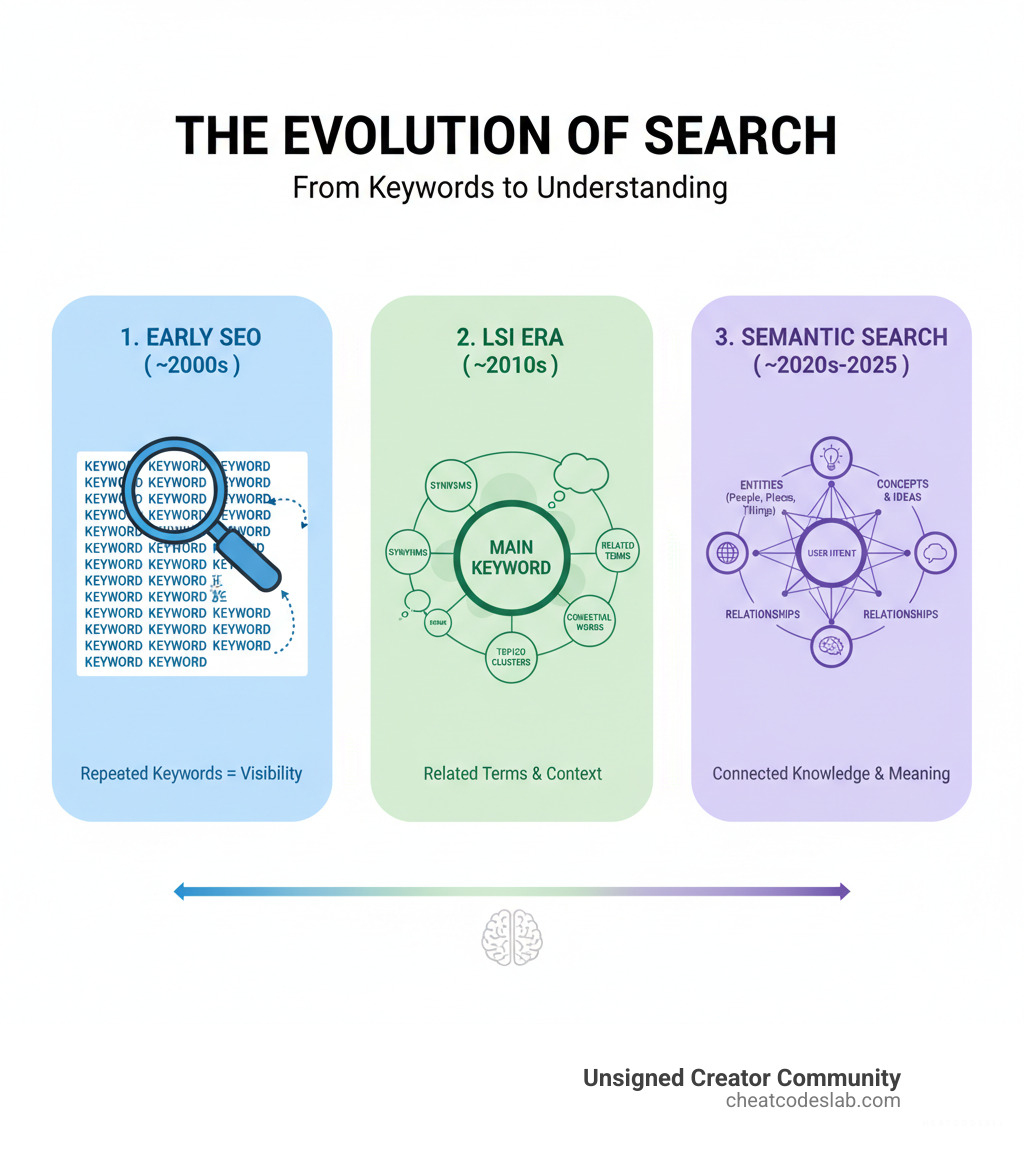
In the early days of SEO, websites stuffed their primary keyword into every paragraph. Search engines have evolved beyond this simple metric. While the term “LSI keywords” is industry shorthand, what truly matters is semantic relevance—creating content that naturally incorporates related concepts.
I’m digitaljeff, and with over 20 years in digital strategy, I’ve seen how mastering semantic relevance transforms content. Modern search engines don’t just count keywords; they understand topics, intent, and context, requiring a more sophisticated approach to content creation.
Lsi keywords in seo terms made easy:
The Truth About LSI Keywords in SEO and Why They Still Matter
The old SEO dilemma was real: repeat your main keyword enough for Google to notice, but not so much that you sound robotic and risk a penalty. This is where the concept of LSI keywords in SEO provides a solution, despite debates in the SEO community.
When you discuss “apples,” you naturally use related words like “orchards,” “crisp,” or “harvest season.” Search engines have learned to look for this same contextual richness. By focusing on topical relevance and content depth, you build the authority that modern search algorithms reward.

The secret is using semantic keywords to help search engines see your content as a comprehensive, authoritative resource.
What Are LSI Keywords (and What Aren’t They)?
LSI stands for Latent Semantic Indexing, a concept from a 1988 paper on information retrieval. It described a method for computers to find relationships between words that appear in similar contexts.
Crucially, LSI keywords are not synonyms. A synonym for “fast” is “quick.” Semantically related terms, however, are conceptually connected. For the keyword “jogging,” synonyms might be “running” or “trotting.” But semantically related terms would include “sneakers,” “cardio,” “endurance,” and “fitness tracker.” These words provide context.
This is especially powerful for homonyms—words with multiple meanings. The related terms you use tell search engines whether your article about “Java” is about coffee (“beans,” “roast”) or programming (“code,” “developer”).
| Primary Keyword | Synonym (if applicable) | Semantically Related Keywords |
|---|---|---|
| Digital Camera | Photographic Device | Megapixels, zoom lens, battery life, DSLR, mirrorless, photography, aperture, shutter speed, image sensor, video recording |
| Home Brewing | DIY Beer Making | Fermentation, hops, yeast, malt, craft beer, bottling, kegging, brewing equipment, recipe, ingredients |
As you can see, these keywords create a comprehensive picture that goes beyond just finding different ways to say the same thing.
The Great Debate: How Search Engines Understand Content Today
Does Google actually use LSI? In 2019, Google’s John Mueller stated, “There’s no such thing as LSI keywords.” This is because Google’s technology is far more advanced than the original 1988 LSI model.
Modern search engines use sophisticated AI for semantic analysis. Google uses Natural Language Processing to identify entities and understand context, nuance, and intent. Technologies like BERT and its massive Knowledge Graph allow it to map words to concepts, understanding content as a cohesive whole.
So, while Google doesn’t use the outdated “LSI” technology, the core principle is more important than ever. A Google research paper confirms they use “words frequently occurring together” to understand a topic. This is precisely what we aim for when using semantically related terms.
By incorporating these terms, you clarify your topic’s context, match a wider range of user intents, and demonstrate expertise. You’re not trying to game an algorithm; you’re helping it understand your content so it can serve it to the right people.
Key Benefits: From Avoiding Penalties to Boosting Visibility
Implementing semantic SEO principles delivers tangible benefits for your content strategy.

- Avoid Keyword Stuffing: Using related terms allows you to signal relevance without unnaturally repeating your main keyword, protecting you from penalties for over-optimization.
- Improve Search Visibility: Comprehensive content ranks for a wider array of queries, including long-tail and voice searches you didn’t explicitly target.
- Improve Content Quality: Focusing on related concepts naturally leads to creating richer, more detailed, and more helpful content. This improves user experience, leading to higher engagement and lower bounce rates.
- Establish Topical Authority: Consistently covering topics in-depth signals expertise to both users and search engines, positioning your site as a go-to resource.
- Future-Proof Your SEO: Aligning your strategy with semantic understanding makes your content more resilient to future algorithm updates, which will only become more reliant on AI and NLP.
A Practical Guide to Finding and Using LSI Keywords in SEO
Finding and using semantically related terms is easier than you think. Many of the best sources are built right into Google.
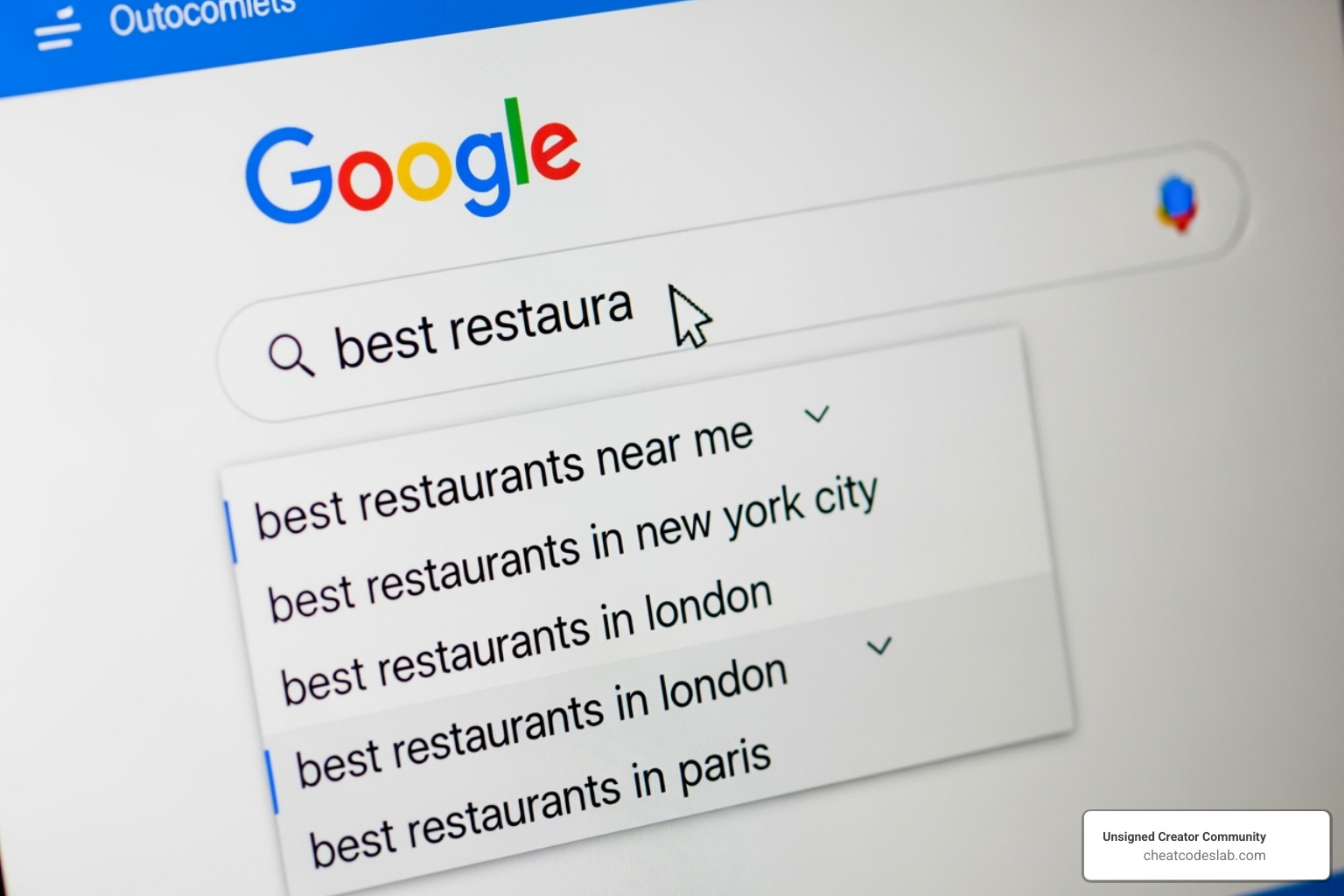
Here are effective methods for finding related keywords:
- Google Search Features: Use Autocomplete, “People Also Ask” boxes, and the “Related searches” at the bottom of the results page. These are direct insights into what users are searching for.
- Google Images Tags: Search for your keyword in Google Images and look at the suggested filter tags for related concepts.
- Competitor Analysis: Review the top-ranking pages for your keyword to see what subtopics they cover and what related terms they use.
- Keyword Research Tools: The Google Keyword Planner is a solid free option for generating related keyword ideas.
- Audience Language: Explore customer reviews and forums to find the natural language your audience uses.
Once you have your list, the key is natural integration. Write for humans first, search engines second.
- Titles and Meta Descriptions: Incorporate related terms to signal relevance and improve click-through rates.
- Headings (H2, H3): Use LSI keywords in subheadings to structure your content and improve readability.
- Body Text: Weave terms naturally throughout your paragraphs. Don’t force them.
- Image Alt Text: Include descriptive, related keywords to help search engines understand your visuals.
By following these steps, you can create content that is both optimized for search and genuinely valuable to your readers.
Conclusion: Elevating Your Content Strategy with Semantic SEO
The journey from keyword stuffing to semantic search shows one clear truth: while the term “LSI keywords” may be debated, the principle of semantic relevance is the cornerstone of modern SEO.
Think of related terms as the supporting cast that makes your main keyword—the star—shine. They provide the context that helps both search engines and users understand your content’s depth and value. Google’s advanced AI and Knowledge Graph are built to reward this comprehensive approach.
When you focus on covering a topic thoroughly instead of just repeating a keyword, you create higher-quality content. This leads to better engagement, wider search visibility, and stronger topical authority.
The future of SEO is semantic. As AI evolves, creating contextually rich content will become even more critical. Your goal is not to game the system, but to create genuinely helpful resources that answer real user questions.
Here at CheatCodesLab, we specialize in helping creators master this evolving landscape. Our certified AI tools and cheat codes for content marketing and SEO are designed to make semantic optimization effective and straightforward.
By embracing semantic SEO, you’re not just optimizing for an algorithm; you’re building a lasting resource that your audience will value. Ready to transform your content strategy? Learn more about our advanced SEO techniques and find how to make semantic SEO work for you.


About the author


How to Archive Posts on Instagram in 4 Easy Steps
Master archiving on Instagram in 4 easy steps to organize your profile and protect your content.

Beginner’s Guide to 10k free instagram followers app
Discover how a 10k free instagram followers app works, its risks, and safe organic growth strategies for real engagement in 2026.

Beginner’s Guide to Best Instagram Report App
Discover the best Instagram report app for real-time analytics, automated reports, and data-driven decisions in 2026.
How to Master Advanced SEO Search Techniques in 7 Steps
Master advanced search techniques in SEO with 7 proven steps to boost rankings, technical audits, and organic traffic.

Cheat Sheet to the Best Business Apps
Discover the best business apps to streamline operations, boost productivity, and scale your business in 2026.

How to Get Instagram Followers Free APK in 5 Steps
Discover how instagram followers free apk 2026 download works and learn safe organic growth strategies instead of risky third-party tools.
Related
How to Archive Posts on Instagram in 4 Easy Steps
Master archiving on Instagram in 4 easy steps to organize your profile and protect your content.

Beginner’s Guide to Best Search Engine Optimization SEO
Master best search engine optimization SEO with this beginner's guide covering on-page, technical, and AI strategies for higher rankings.

Ultimate Checklist for Social Media Marketing Agency
Discover the ultimate checklist for choosing a social media marketing agency that drives real ROI and growth.

Hot Summer Caption Ideas That Spark Engagement
Discover hot summer caption ideas that boost engagement, from short aesthetic lines to funny unhinged vibes and beach photo dumps.

How to Add Text to Instagram Story in 5 Easy Steps
Learn how to add text to Instagram Story in 5 easy steps with our native tips and creative text hacks for better engagement.

How to Add Audio to Instagram Story the Right Way
Learn how to add audio clip in Instagram Story using built-in music or your own file with this step-by-step guide.