

List of modern stoics: Ultimate Guide 2025
Why Stoicism is Making a 21st-Century Comeback
The list of modern stoics includes influential figures like Ryan Holiday, Donald Robertson, Tim Ferriss, William B. Irvine, and Massimo Pigliucci, who have transformed ancient Greek philosophy into practical tools for contemporary life.
Key Modern Stoics:
- Ryan Holiday – Author of “The Obstacle Is the Way” and founder of The Daily Stoic
- Donald Robertson – Psychotherapist combining Stoicism with cognitive-behavioral therapy
- Tim Ferriss – Entrepreneur integrating Stoic principles into productivity and lifestyle design
- William B. Irvine – Philosophy professor who wrote “A Guide to the Good Life”
- Massimo Pigliucci – Biologist and philosopher behind “How to Be a Stoic”
- Phil Van Treuren – Modern interpreter creating accessible Stoic content for beginners
From Silicon Valley executives to NFL coaches, ancient Stoic wisdom is experiencing an unprecedented revival. What once guided Roman emperors now helps modern professionals steer corporate culture, social media anxiety, and information overload.
The philosophy’s appeal is simple: it offers practical tools for what you can control while teaching acceptance of what you cannot. In our hyperconnected world, this ancient framework provides clarity, focus, and emotional resilience.
Influential leaders from Bill Clinton to Jack Dorsey have credited Stoicism for their success and mental clarity, proving its timeless relevance.
Related Stoicism Resources:
The Definitive List of Modern Stoics and Their Philosophies
The resurgence of Stoicism is a testament to how ancient wisdom can address modern challenges. A new group of thinkers has adapted Stoic principles for our overwhelming lives, bridging the gap between ancient texts and 21st-century realities like email overload and social media pressures. Through bestselling books, podcasts, and online communities, they translate dense philosophy into practical advice for productivity, resilience, and living a fulfilling life. This section introduces the most prominent figures on the list of modern stoics and their unique contributions.
The Trailblazers: A list of modern stoics popularizing the philosophy
Several key individuals have brought Stoicism into the mainstream by demonstrating its practical application in diverse fields.
Ryan Holiday is arguably the most recognizable name on the list of modern stoics. His books, including The Obstacle Is the Way, show how to turn adversity into advantage. Through his prolific writing and The Daily Stoic platform, Holiday has created an empire of accessible Stoic wisdom, distilling complex ideas into actionable insights.
Next is Donald Robertson, a cognitive-behavioral psychotherapist who links Stoic practices with contemporary therapeutic techniques. His book, Stoicism and the Art of Happiness, explores the pursuit of eudaimonia (human flourishing) and shows how Stoicism can foster mental resilience, often aligning with modern psychology. You can explore his work in Stoicism and the Art of Happiness.
Tim Ferriss, known for The 4-Hour Workweek, has been a major proponent of Stoicism, weaving its principles into his discussions on productivity and lifestyle design. While not a traditional philosopher, his massive platform has introduced Stoicism to a vast audience interested in life optimization. His influence extends into Silicon Valley, with figures like Jack Dorsey and David Heinemeier Hansson also admiring the Stoics. To learn more, check out Famous Modern-Day Stoics.
The Academics and Practitioners: A deeper list of modern stoics

William B. Irvine, a philosophy professor, was instrumental in the modern revival with his book, A Guide to the Good Life: The Ancient Art of Stoic Joy. He presents Stoic strategies for minimizing negative emotions in a clear, engaging manner, making it an excellent entry point. We recommend his work, found here: A Guide to the Good Life: The Ancient Art of Stoic Joy.
Massimo Pigliucci, a philosopher and former biologist, brings a unique scientific and philosophical lens to Stoicism. His book, How to Be a Stoic, explores how the philosophy can serve as a “personal operating system” for navigating modern life, and he is known for his nuanced discussions on the topic.
Phil Van Treuren makes Stoicism accessible for beginners and even children with books like The Stock Horse and the Stable Cat. His Urban Enchiridion is a brilliant modernization of Epictetus’s lessons, making ancient wisdom digestible for a new audience. Check out his modern take here: Urban Enchiridion.
Nancy Sherman, a philosophy professor, applies ancient philosophy to modern military contexts in her book Stoic Warriors. She explores how Stoicism’s emphasis on resilience, duty, and emotional control has resonated with military personnel throughout history. For more on this, explore Mastering the Stoic Way of Life.
The list of modern stoics is extensive and includes figures like James Stockdale, a former POW who used Stoicism to endure captivity, as well as Lawrence Becker, Sharon Lebell, Chris Fisher, Kai Whiting, Leonidas Konstantakos, Meredith Kunz, Tim LeBon, Chuck Chakrapani, Greg Sadler, and Karen Duffy. They all contribute to a dynamic and relevant modern Stoic movement.
A Fun Look at the “Types” of Modern Stoics
Modern Stoicism is not monolithic. A humorous categorization reveals the diverse ways people apply the philosophy today.
- The Orthodox: Sticks rigidly to ancient texts, admiring the original sources.
- The Drill Stoic: Wakes at 4:30 AM for cold showers and arduous routines, building stress tolerance through self-imposed hardship.
- The Eclectic: Views Stoicism as one of many tools for living well, blending its principles with other practices like yoga or mindfulness.
- The First-World Stoic: Keeps everyday inconveniences in perspective but may occasionally downplay legitimate concerns.
- Dilbert the Stoic: Uses Stoic principles to cope with corporate culture and the monotony of the 9-to-5 grind.
- The One We Hope For: Acknowledges the diversity of interpretations and strives to move the philosophy forward, ensuring it remains a dynamic guide for living.
These types highlight the many ways people engage with Stoicism, reminding us there is no single “right” way to be a Stoic. See where you fit in by exploring the Stoic Way of Life.
Your Stoic Starter Pack: Essential Readings and Practices

Here are the essential core texts:
- Marcus Aurelius’s Meditations: The private reflections of a Roman Emperor. The Gregory Hays translation is highly recommended for its modern, accessible language. Find it here: Meditations.
- Epictetus’s Discourses and Handbook (Encheiridion): A former slave who taught philosophy as a way of life. The Handbook is a concise summary of his teachings, perfect for quick reference. Dig into his wisdom here: Discourses.
- Seneca’s Letters to Lucilius and On the Shortness of Life: His Letters offer practical advice on everything from grief to wealth. On the Shortness of Life is a powerful essay on how we waste our time. Start with his Letters here: Letters of a Stoic.
For a general overview, check out An introduction to Stoicism on Wikipedia.
Practical Applications (How to Do Stoicism):
- Journaling: A tool for self-reflection to examine your thoughts and actions.
- Negative Visualization: Appreciate what you have by imagining its loss. This practice helps counter the constant desire for more.
- Dichotomy of Control: Differentiate between what is in your control (your judgments, actions) and what is not (external events, others’ opinions). Focus your energy accordingly.
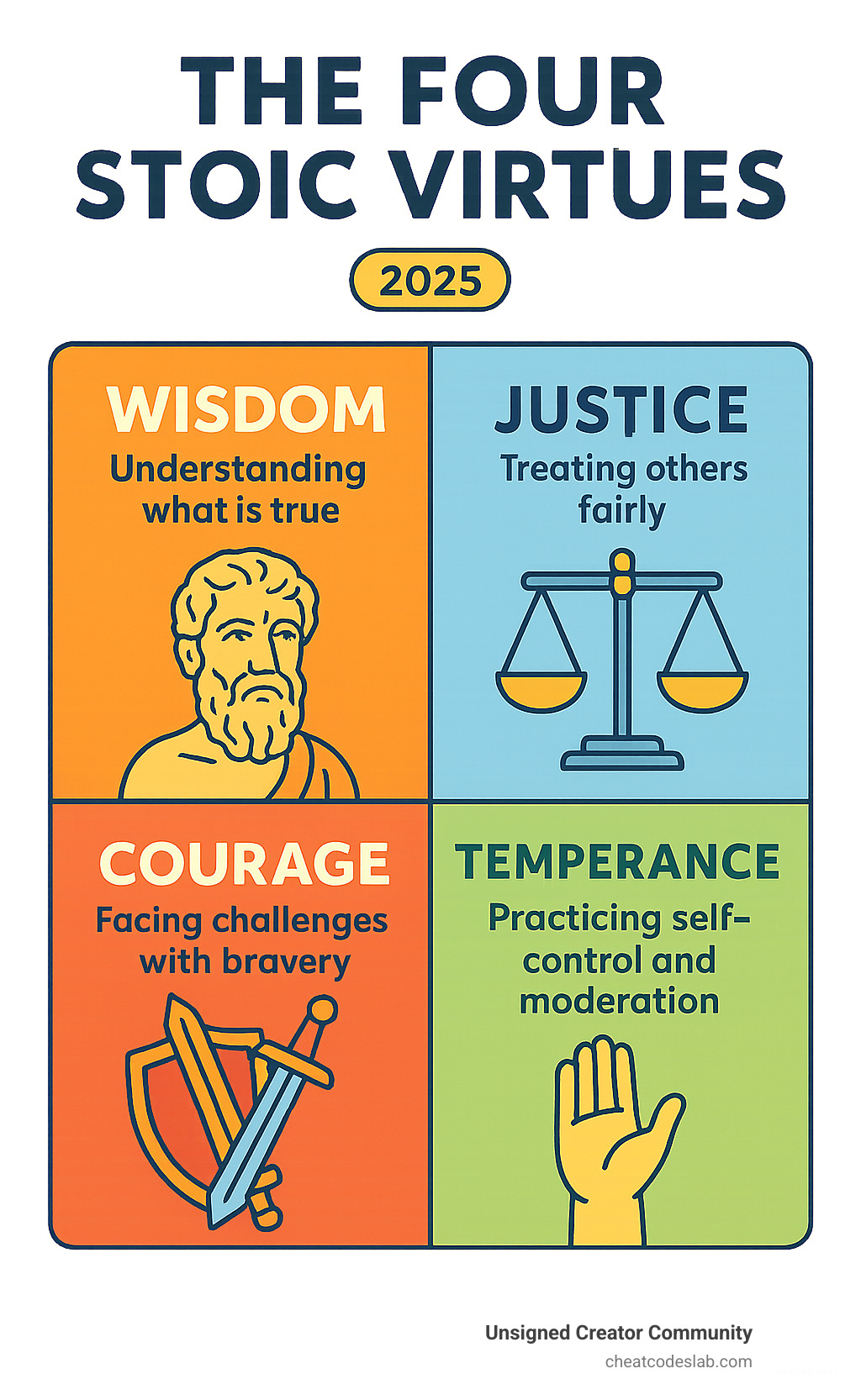
- Accept the Virtues: Use Courage, Temperance, Wisdom, and Justice as practical guides for your decisions.
- Progress, Not Perfection: The goal is continuous progress, not to become a perfect, unfeeling sage. Acknowledge slips and keep striving.
These practices, along with resources like Every Day Stoic, form a robust starter pack for applying ancient wisdom to modern life.
Conclusion: Embracing Ancient Wisdom in a Modern World

As our exploration of the list of modern stoics shows, this ancient philosophy is not a museum piece but a living, breathing guide for our chaotic world. Thinkers like Ryan Holiday, Donald Robertson, and William B. Irvine have adapted 2,000-year-old ideas for today’s challenges, from workplace stress to digital overwhelm.
Stoicism’s power lies in its adaptability, serving as a personal operating system for the mind. It provides a timeless philosophy that helps us focus on what we can control while accepting what we cannot. This isn’t about becoming an emotionless robot; it’s about developing the wisdom to respond thoughtfully rather than react impulsively.
At CheatCodesLab, we believe in using the right tools to achieve clarity and purpose. Just as our certified AI tools and cheat codes help creators succeed, Stoicism serves as a practical tool for life. Both approaches share a core principle: focus on what matters and execute with purpose.
Starting your Stoic journey is simple. Begin with a core text like Marcus Aurelius’s Meditations and try practices like negative visualization or the dichotomy of control. The list of modern stoics continues to grow because this philosophy works, providing strength in adversity and peace in chaos.
In a world that often feels overwhelming, Stoicism reminds us that we have the power to choose our responses, shape our character, and find meaning in the journey. Progress matters more than perfection.
Explore more on Stoicism and find how these timeless principles can guide you through the challenges and opportunities ahead.


About the author


How to Archive Posts on Instagram in 4 Easy Steps
Master archiving on Instagram in 4 easy steps to organize your profile and protect your content.

Beginner’s Guide to 10k free instagram followers app
Discover how a 10k free instagram followers app works, its risks, and safe organic growth strategies for real engagement in 2026.

Beginner’s Guide to Best Instagram Report App
Discover the best Instagram report app for real-time analytics, automated reports, and data-driven decisions in 2026.

How to Master Advanced SEO Search Techniques in 7 Steps
Master advanced search techniques in SEO with 7 proven steps to boost rankings, technical audits, and organic traffic.

Cheat Sheet to the Best Business Apps
Discover the best business apps to streamline operations, boost productivity, and scale your business in 2026.

How to Get Instagram Followers Free APK in 5 Steps
Discover how instagram followers free apk 2026 download works and learn safe organic growth strategies instead of risky third-party tools.
Related

Get Your Feed Right with These Black Owned Social Media Companies
Discover top black owned social media agency options for 2026. Boost ROI, engagement & authentic storytelling with Clutch-rated leaders like Verbatim.
Stoicism Meets Jungian Psychology: A Powerful Pairing for Mental Fortitude
Unlock mental fortitude & self-understanding with carl jung stoicism. Integrate ancient wisdom and modern psychology for resilience.

Stoic Explained: More Than Just a Stiff Upper Lip
Want to define stoic? Uncover ancient Stoic philosophy, core principles, and practical wisdom for emotional resilience today.

Where to Find The Daily Stoic at Fully Booked Stores
Find The Daily Stoic even if it's daily stoic fully booked. Discover why this bestseller is so popular & where to get your copy now!

Beginner’s Guide to Understanding Stoicism Basics
Unlock Stoicism's wisdom: master emotions, build resilience, and live virtuously. Your beginner's guide to a practical philosophy.

The Ancient Roots: How Stoicism Shaped Early Christianity
Explore stoicism in early christianity: uncover shared virtues, key differences, and its lasting historical influence.