
The Ultimate Guide to Best Local SEO Tools
Why the Best Local SEO Tools Matter More Than Ever in 2026
If you’re trying to cut through the noise and find the best local SEO tools available right now, here’s a quick answer:
| Tool | Best For |
|---|---|
| BrightLocal | All-in-one: citations, reviews, rank tracking |
| LocalRank.so | Agencies, AI visibility monitoring |
| Localo | Automated GBP optimization |
| Paige | Fully autonomous AI SEO agent |
| RankLocal | Agency-scale citation building |
| Localith | Geo-heatmap tracking + AI audits |
| Semrush Local | Organic SEO + local combined |
| Moz Local | Simple citation management |
| Google Business Profile | Free foundation for any local strategy |
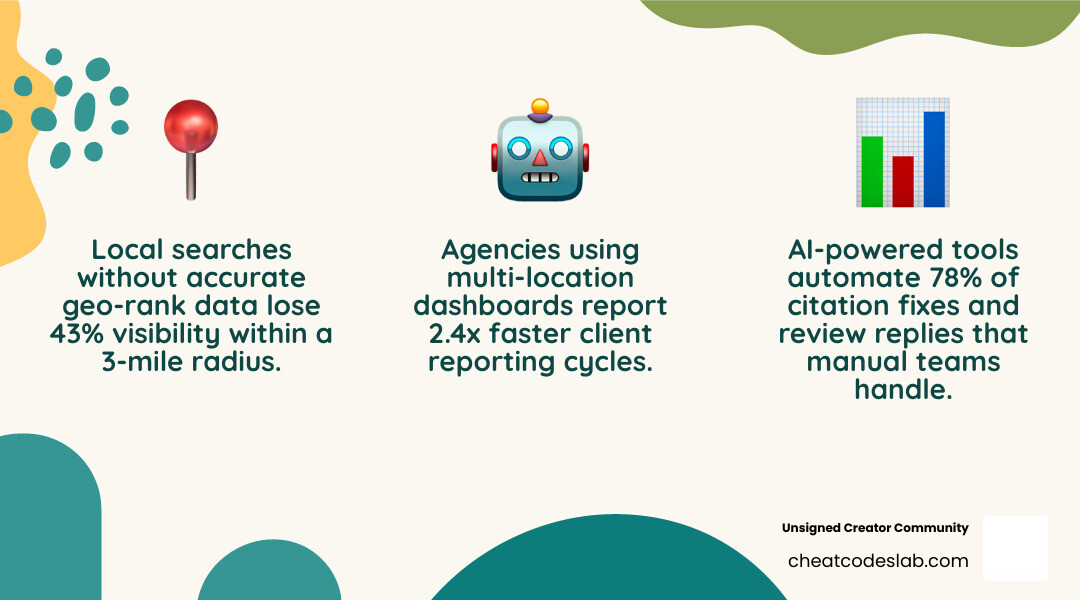
Managing local search visibility in 2026 is genuinely hard. You’re juggling Google Business Profile updates, citation consistency across dozens of directories, review responses, and rank tracking — often across multiple locations at once.
The problem? Most platforms claim to do it all. Few actually do.
Some tools nail rank tracking but leave you manually fixing citations. Others automate review responses but miss the geo-level data you need to see where you’re actually losing visibility. And if you’re running an agency, the stakes are even higher — your clients expect results, not dashboards.
Here’s the reality: local SEO is not the same as general SEO. A keyword ranking tool built for national campaigns won’t show you how you rank three blocks away from your storefront. That gap is exactly where the right local SEO tool pays for itself.
“Managing citations, tracking local rankings, and responding to reviews manually is time-consuming — the best local SEO software automates these processes and provides insights that help you outrank competitors.”
I’m digitaljeff — over the past 20 years I’ve built and scaled brands across digital media, content strategy, and emerging tech, giving me a front-row seat to how the best local SEO tools have evolved from basic directory submitters into full AI-powered visibility engines. That experience shapes everything I cover below, so let’s get into it.
Best local seo tools terms you need:
Essential Features of the best local seo tools in 2026
The fastest way to compare local SEO platforms is to ignore the marketing fluff and focus on five capabilities:
- rank tracking accuracy
- citation management
- Google Business Profile optimization
- review automation
- competitor insights
If a tool is weak in two or more of those areas, it is probably not one of the best local SEO tools for serious growth.

In practice, the strongest platforms now blend traditional local SEO with AI support. That means features like automated posting, review reply drafting, natural-language recommendations, and stronger visibility into how your brand appears not only in Google Maps, but also in AI-generated answers.
For agency workflows, platforms such as RankLocal stand out because they combine directory submission, NAP audits, local pack tracking, and white-label reporting in one place. That matters because local SEO gets messy very quickly when you are managing multiple clients.
Hyper-Local Rank Tracking and Geo-Heatmap Accuracy
This is the feature we would prioritize first.
Traditional rank tracking checks one point in a city and pretends that tells the whole story. It does not. A business can rank well on one street corner and poorly a few neighborhoods away. That is why geo-heatmaps have become essential in 2026.
The best tools now support:
- map-grid or geo-heatmap tracking
- neighborhood-level visibility checks
- mobile or GPS-style location simulation
- local pack and organic result separation
- service-area scans instead of just citywide averages
Tools built around geo-grids are better at showing reality. A 3-pack ranking at a single pin is nice. A heatmap that reveals dead zones in nearby neighborhoods is useful.
Platforms like Local SEO Software Pro lean into this idea with daily grid-style monitoring and granular map visibility. We also recommend pairing this kind of tracking with a broader search engine monitoring workflow, especially if rankings fluctuate by device type or service area.
Bottom line: geo-heatmaps matter more than old-school single-point rank tracking because local search is hyper-local by nature. Zip code averages are often too blunt. Street-level insight wins.
AI-Driven GBP Optimization and Review Automation
AI is now either a huge time-saver or an expensive distraction. The difference is whether it leads to action.
Useful AI features include:
- drafting Google Business Profile posts
- suggesting category and attribute fixes
- generating review response drafts
- surfacing missing photos, Q&A gaps, or profile weaknesses
- recommending what to do next in plain English
This is where newer platforms are changing the game. Localith focuses on AI-guided GBP audits and geo-heatmap tracking, while other tools emphasize full workflow automation for posts, replies, and recurring optimization tasks.

Our view is simple: AI should reduce manual busywork, not create more dashboard tourism. If a tool can help your team reply faster, publish consistently, and identify the next best fix, that is a real advantage. If it just adds a chatbot with vibes, hard pass.
For a deeper look at what useful automation should actually do, see our guide to AI SEO automation.
Comparing the best local seo tools for Single Locations vs. Agencies
What works for one storefront often breaks at agency scale.
A single-location business usually needs:
- citation cleanup
- review monitoring
- local rank tracking
- Google Business Profile optimization
- simple reporting
An agency usually needs all of that plus:
- client workspaces
- bulk actions
- white-label reports
- multi-location dashboards
- scalable user permissions
- easier onboarding
Here is the practical difference:
| Business Type | Best Tool Style | What to Prioritize |
|---|---|---|
| Single location | Simple all-in-one platform | Ease of use, core local features, fast setup |
| Small multi-location brand | Flexible local suite | Bulk updates, location grouping, review workflows |
| Agency | Agency-first platform | White-label reporting, isolated client accounts, automation |
| Enterprise local brand | Scalable listings system | Directory control, governance, large-scale reporting |
BrightLocal is often the most balanced all-in-one choice for businesses that want a broad feature set without stacking multiple subscriptions. Semrush Local makes more sense when local and broader organic SEO need to live under one roof. Agency-first platforms such as LocalRank.so and RankLocal are stronger when client management and reporting are core needs.
If reporting is a bottleneck, our automated SEO reporting tool guide can help you think through the workflow side, not just the software side.
Citation Management and NAP Consistency Across Directories
Citation management is not glamorous, but neither is losing visibility because your phone number is wrong on half the internet.
NAP consistency remains one of the foundational trust signals in local SEO. The strongest tools help with:
- finding inconsistent listings
- distributing correct business data
- auditing major directories
- spotting duplicate listings
- identifying citation gaps compared with competitors
The key directories still include Google Business Profile, Yelp, Apple Maps, Bing Places, Facebook Pages, and industry-specific sites. Some platforms syndicate across dozens of directories; others focus on auditing and manual cleanup support.
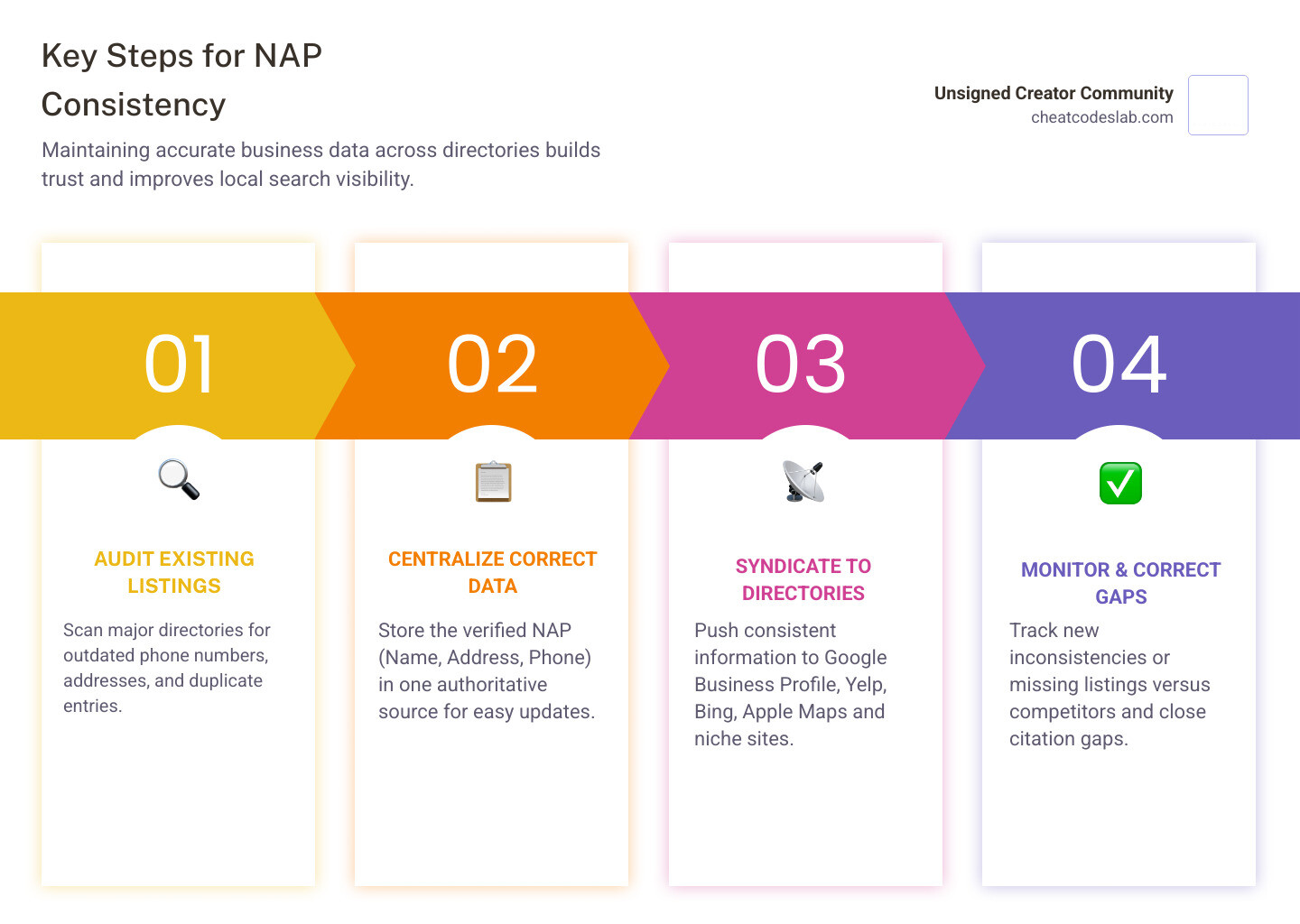
This is where specialized local tools usually beat general SEO suites. General platforms may tell you that your rankings dropped. Local SEO software is more likely to show that Apple Maps has outdated business hours, Yelp has the wrong suite number, and a duplicate listing is muddying your authority signals.
If you want the strategic basics behind this, review our guide to local SEO techniques.
Optimizing for AI Search Platforms like ChatGPT and Gemini
This is the newest layer, and it matters more than many businesses realize.
Some local SEO platforms now track or optimize for AI search visibility across systems like ChatGPT, Gemini, Claude, and Perplexity. The idea is not that AI replaces Google Maps. It is that customers increasingly ask AI assistants for recommendations like “best dentist near me” or “top plumber in downtown Chicago.”
The tools ahead of the curve help with:
- monitoring brand mentions in AI answers
- finding gaps in AI recommendation coverage
- improving local entity consistency
- building citations that support both search and AI discovery
- identifying listicle and roundup opportunities that LLMs often cite
That last point is sneaky but important. AI systems often pull from comparison pages, local roundups, and business listings with strong consistency signals. So good local SEO now supports both classic search and emerging AI surfaces.
For businesses curious about that overlap, our piece on ChatGPT and Google SEO is a useful next read.
How to Select the best local seo tools for Your Business
The right tool depends less on hype and more on workflow fit.
When we evaluate the best local SEO tools, we ask:
- Is the rank tracking truly local?
- Does it manage citations across the directories that matter to us?
- Can it improve Google Business Profile activity without heavy manual work?
- Does review automation save time without sounding robotic?
- Can it scale from one location to many?
- Does it support clean client reporting if we need it?
- Is it helping us with both Google visibility and AI search visibility?
A practical shortlist looks like this:
- Choose BrightLocal if you want the strongest all-around balance.
- Choose Localith if geo-heatmaps and AI-guided GBP fixes matter most.
- Choose LocalRank.so if you run an agency and want AI visibility tracking included.
- Choose RankLocal if citation building and agency-scale directory workflows are central.
- Choose Semrush Local if your team already lives inside a larger SEO stack.
- Choose Moz Local if your main problem is listings simplicity.
- Start with Google Business Profile if budget is tight and you are still building your foundation.
And yes, free or low-cost starting points still matter. Before paying for a platform, businesses should absolutely lock down Google Business Profile, use free local result checkers where available, and run a manual citation audit on top directories. Paid tools become much more valuable once you are managing more than one location, more than one person, or more than one headache.
If you are comparing software beyond local-only platforms, our roundup of best SEO tools can help you frame the trade-offs.
Conclusion: Mastering Local Search in 2026
The best local SEO tools in 2026 do more than show rankings. They help us act on them.
That means:
- accurate geo-level tracking
- reliable citation control
- smarter GBP optimization
- faster review workflows
- agency-friendly reporting
- better visibility across both Google and AI search platforms
For most teams, the winning choice will be the tool that removes the most manual friction while still giving trustworthy local data. Fancy features are great, but only if they help us rank better, respond faster, and keep our listings clean.
At CheatCodesLab, we focus on practical systems, certified AI tools, and no-nonsense SEO workflows that creators and agencies can actually use. If you want to build a smarter local growth stack from here, start with our pillar guide on SEO strategy tools.
In local SEO, the businesses that win are not always the biggest. They are usually the ones with the cleanest data, the fastest follow-up, and the clearest picture of where they really rank. Which, honestly, is less glamorous than “growth hacking” and far more effective.


About the author

How to Archive Posts on Instagram in 4 Easy Steps
Master archiving on Instagram in 4 easy steps to organize your profile and protect your content.

Beginner’s Guide to 10k free instagram followers app
Discover how a 10k free instagram followers app works, its risks, and safe organic growth strategies for real engagement in 2026.

Beginner’s Guide to Best Instagram Report App
Discover the best Instagram report app for real-time analytics, automated reports, and data-driven decisions in 2026.
How to Master Advanced SEO Search Techniques in 7 Steps
Master advanced search techniques in SEO with 7 proven steps to boost rankings, technical audits, and organic traffic.
Cheat Sheet to the Best Business Apps
Discover the best business apps to streamline operations, boost productivity, and scale your business in 2026.

How to Get Instagram Followers Free APK in 5 Steps
Discover how instagram followers free apk 2026 download works and learn safe organic growth strategies instead of risky third-party tools.
Related
Beginner’s Guide to Best Instagram Report App
Discover the best Instagram report app for real-time analytics, automated reports, and data-driven decisions in 2026.
Cheat Sheet to the Best Business Apps
Discover the best business apps to streamline operations, boost productivity, and scale your business in 2026.

The Ultimate Guide to AI Generated SEO Content Tools
Master ai generated seo content with proven tools, Google guidelines, and GEO strategies that boost rankings and drive real results.

The Complete Guide to 1k Followers App
Discover how a 1k followers app can help you reach TikTok Live and boost Instagram growth fast with safe, organic strategies.

Backlink Building Tool Survival Guide
Discover top backlink building tool strategies: Compare Ahrefs, Semrush, AI outreach like Linkee, free options, and penalty recovery tips for 2026 SEO success.

Automate SEO Reporting to Save Your Sanity
Automate SEO reporting to slash 45 hours of manual work to 30 minutes. Save costs, boost accuracy, and scale with AI dashboards in 2026.