

AI tools for online marketing: Top Superpowers
Why AI Tools Are Changing Online Marketing
AI tools for online marketing are software solutions that use artificial intelligence to automate, optimize, and improve various marketing tasks—from content creation and SEO to customer engagement and campaign management.
Key categories of AI marketing tools include:
- Content Creation & SEO – Generate blog posts, product descriptions, and optimize for search engines
- Data Analysis – Predict customer behavior, segment audiences, and uncover market insights
- Campaign Automation – Automate email sequences, social posts, and cross-channel marketing
- Customer Engagement – Deploy chatbots, personalize recommendations, and improve support
- Pricing & Inventory – Optimize pricing strategies and forecast demand (for e-commerce)
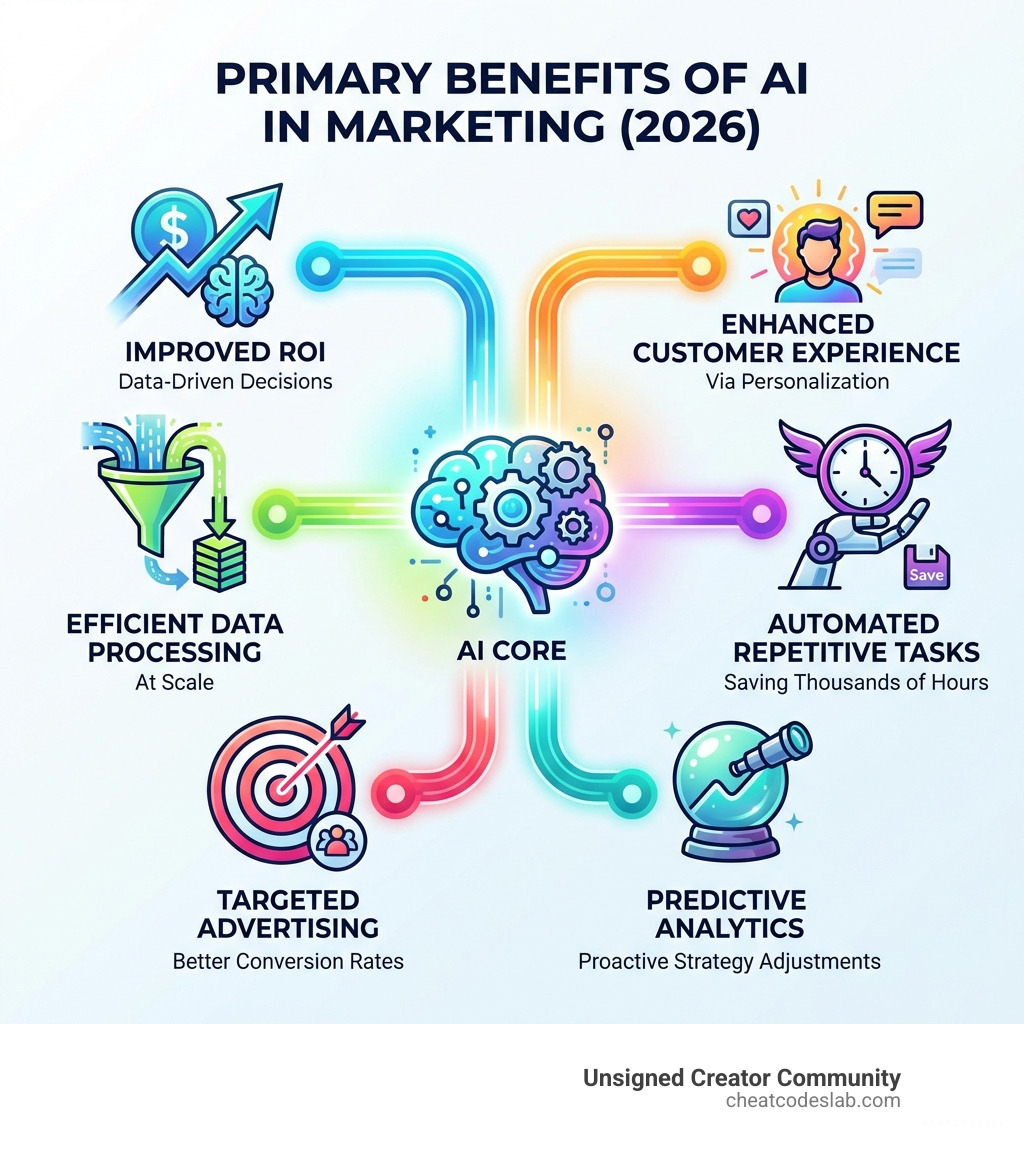
Marketing is evolving faster than ever. While you’re manually crafting email campaigns or analyzing spreadsheets, AI-powered platforms are generating personalized content at scale, predicting which customers will convert, and optimizing ad spend in real-time. The data backs this up: marketing teams using AI report 10,000+ hours saved annually, 3x content production increases, and 60% of SEO tasks now automated.
But here’s the reality—AI won’t replace your creativity or strategic thinking. Think of these tools as your personal marketing assistant, handling repetitive tasks so you can focus on what matters: building authentic connections with your audience and crafting strategies that drive real growth.
The business case is clear. AI-driven analytics help you make smarter decisions with your budget. Personalized content recommendations boost customer satisfaction. Predictive analytics let you stay ahead of trends instead of reacting to them. And automated workflows free your team from hours of manual reporting and data entry.
I’m digitaljeff, and over the past 20 years building brands and generating over 1 billion social media views, I’ve tested hundreds of AI tools for online marketing to help creators and marketers scale their impact. I’ve seen how the right AI stack transforms struggling content strategies into engagement machines.
AI tools for online marketing terms to remember:
A Guide to the Best AI Tools for Online Marketing
The digital landscape is busy, and standing out means having the right tools in your arsenal. We’ve explored countless AI tools for online marketing and distilled their essence into categories that align with your daily marketing endeavors. Let’s explore how these intelligent assistants can boost your efforts.
Content Creation & SEO Optimization
In the field of content, AI is no longer a futuristic concept; it’s our co-pilot. Generative AI is rapidly advancing, allowing us to create rich content like videos, images, and text with unprecedented speed. We’re talking about drafting blog posts, crafting compelling product descriptions, and even generating social media captions in minutes. This isn’t just about speed; it’s about scaling our content production by up to 3x, freeing up valuable time for strategic thinking and creative refinement.

One of the most profound impacts of AI tools for online marketing in this area is on SEO (Search Engine Optimization), AEO (Answer Engine Optimization), and GEO (Generative Experience Optimization). Certain tools, some of which boast 60% SEO automation, are designed to help us optimize content for search engines, ensuring it ranks higher and attracts more traffic. They assist in keyword research, content outlining, and even providing real-time feedback on readability and originality. By analyzing vast amounts of data, these tools can help map keyword landscapes that reflect real customer behavior, identifying clusters of related terms and search phrases. This enables us to create content that supports visibility, relevance, and long-term growth by aligning with customer search patterns across their buying journey.
Ensuring brand voice consistency is another critical aspect where AI writing assistants shine. Many platforms are purpose-built for AI Content Automation, allowing us to maintain our unique tone and style across all marketing assets. This means whether we’re writing a press release, an email campaign, or a landing page, the AI can be trained on our brand guidelines to produce compliant, high-quality, and localized marketing content at scale. This capability is invaluable for large teams or businesses operating in multiple markets, ensuring every piece of content reinforces our brand identity.
For example, some tools help us optimize our content strategy through AI-driven insights, identifying gaps and opportunities. Others assist with AI-driven market research, validating business ideas and predicting trends. There are even platforms to help build, deploy, and manage AI-powered apps and assistants for marketing, ensuring our content is brand-aligned. And for those seeking to refine their written output, many solutions provide sophisticated content writing and optimization features, with some even integrating with SEO data for full-length, optimized articles in multiple languages.
Data Analysis & Actionable Insights
Imagine having a crystal ball that shows you exactly what your customers want, what they’ll do next, and how your marketing spend truly impacts your bottom line. That’s the power of AI tools for online marketing when it comes to data analysis and actionable insights.
Predictive analytics, a cornerstone of AI in this domain, crunches historical and real-time data to forecast customer behaviors, helping us identify who’s about to buy or unsubscribe. This allows for proactive strategy adjustments, keeping us ahead of the curve. It’s becoming essential for customer segmentation, lead scoring, and campaign optimization, ensuring we target the right audience with the right message at the right time.
Customer segmentation becomes incredibly precise with AI. We can divide our contacts into targeted groups based on their behaviors, interests, or demographics, leading to highly personalized campaigns. This level of granularity helps us understand our audience better and tailor our approaches, resulting in improved engagement and conversion rates.
AI-driven market research tools dig deep into data to validate business ideas and identify market trends, providing us with invaluable insights for strategic planning. Sentiment analysis tools monitor customer feedback, reviews, and social mentions in real-time, allowing us to understand emotions and spot trends related to our brand and industry. This helps us gauge brand perception and respond effectively.
The ability of AI machine learning tools to process vast amounts of data quickly is a game-changer. They uncover insights that would take humans much longer to find, making our data processing incredibly efficient. Furthermore, Causal AI helps us understand the real impact of our spending by focusing on cause-and-effect relationships, ensuring our marketing dollars are spent more effectively and contribute to improved ROI. Some platforms are prime examples, offering unified marketing data analysis through their built-in AI features, helping teams become truly data-driven.
Campaign Automation & Efficiency
One of the most immediate and tangible benefits of AI tools for online marketing is their ability to automate repetitive tasks and dramatically improve efficiency. We’re talking about saving thousands of hours annually, freeing our teams to focus on strategic, creative, and high-impact work.
Campaign automation transforms the way we manage our marketing efforts. AI-driven marketing automation platforms enable us to design, execute, and optimize multichannel campaigns with workflow visualization. This means setting up drip campaigns, triggered messages, or scheduled posts that run on autopilot, ensuring consistent communication without constant manual oversight.
For instance, some platforms excel in AI-powered project and marketing automation, helping us eliminate repetitive tasks and streamline workflows. This leads to faster time-to-market for our end-to-end campaigns. Specialized tools for lead management and email marketing allow us to create personalized email campaigns and automate B2B campaigns to nurture leads effectively. An AI sales email assistant, for example, can automate cold email drip campaigns and score leads, removing much of the drudgery from constructing standard email responses.
Cross-channel marketing automation is crucial for a unified customer experience. Certain tools help manage and optimize digital ad campaigns across various platforms, ensuring our messaging is consistent and effective wherever our audience might be. Integration platforms, often called the “Lego of tech stack and process integration,” are pioneers in AI agent platforms, allowing us to build connections and marketing automations between thousands of different systems. This saves time, promotes efficiency, reduces repetitive tasks, and leads to significant cost savings.
A/B testing, a vital component of campaign optimization, is also improved by AI. Many tools assist with feature experimentation and A/B testing, allowing us to run experiments with different subject lines, images, or calls to action to determine the most effective elements for our campaigns. By automating these tests and analyzing the results, AI helps us make data-informed decisions that continuously improve our campaign performance.
Customer Engagement & Personalization
In today’s competitive landscape, customer experience is paramount. AI tools for online marketing are revolutionizing how we engage with our audience, making interactions more personal, relevant, and effective.
Conversational AI and chatbots are at the forefront of this revolution. Many tools provide instant, context-aware support and recommendations to website visitors 24/7 via AI chatbots. These intelligent agents can autonomously resolve common inquiries with accurate, empathetic responses and even take actions within e-commerce systems, like checking order status or processing refunds. This significantly improves customer service and engagement, ensuring our customers feel heard and valued around the clock.
Personalized recommendations are no longer a luxury but an expectation. AI algorithms analyze individual browsing behavior, purchase history, and preferences in real-time to serve up custom content, products, or experiences. Leading personalization platforms use AI to deliver highly relevant product recommendations on e-commerce sites. Similarly, AI capabilities embedded in commerce platforms improve sites with features like personalized product recommendations and automated merchandising. Other tools also excel in delivering personalized site search results, product grids, and marketing campaigns, learning from shopper behavior across channels.
Omnichannel customer engagement is made seamless with AI. Certain platforms enable us to deliver custom customer experiences across various channels like email, SMS, and digital ads, ensuring a consistent and personalized journey. This integrated approach ensures that every interaction, regardless of the platform, contributes to a cohesive and positive customer experience.
Dynamic creative optimization (DCO) is another powerful AI application. AI automatically assembles and serves up the best combination of images, text, and calls to action for each user, maximizing engagement and conversion rates. This level of personalization at scale ensures that our marketing messages resonate deeply with individual customers, leading to improved customer satisfaction and loyalty.

Integrating AI into Your Marketing Strategy
Adopting AI tools for online marketing is more than just buying software; it’s about strategically integrating these powerful assistants into our existing workflows and continuously refining our approach.
Measuring Success and Navigating Risks with AI tools for online marketing
When we implement AI tools for online marketing, it’s crucial to define how we’ll measure their success. We typically track KPIs (Key Performance Indicators) that align with our business goals, such as conversion rates, customer acquisition cost (CAC), lift in engagement, and attributed revenue. For example, we might use A/B testing and segment reporting to compare AI-driven outcomes to prior campaigns, allowing us to quantify the impact. AI-driven lead scoring and personalized content recommendations for B2B teams have shown to deliver high ROI, and we can measure this through pilot projects that track MQLs, pipeline velocity, or deal value.
However, with great power comes great responsibility. The use of AI in marketing is not without its risks and ethical considerations. Data privacy is a paramount concern. We must choose vendors with strong compliance certifications and ensure we anonymize sensitive data. Creating transparent data usage policies and training our team on regulations like GDPR and CCPA is essential to protect our brand and our audience.
Algorithmic bias is another significant risk. AI models can inadvertently perpetuate or amplify existing biases present in the data they are trained on. To mitigate this, we need to review vendor documentation on algorithm training and bias mitigation. Running sample campaigns and auditing results for skewed patterns or anomalies is vital to ensure fairness and prevent unintended discrimination.
Over-automation can lead to a loss of brand voice or a disconnect with our audience. While AI excels at repetitive tasks, human creativity and strategic oversight remain indispensable. We must keep humans in creative review loops, especially for content creation, to ensure brand safety and maintain authenticity. As Forbes notes, the future of marketing relies on data-powered creativity, emphasizing the collaborative role of AI and human ingenuity. AI should augment, not replace, our good marketing judgment.
Choosing and Implementing the right AI tools for online marketing
Choosing the right AI tools for online marketing can feel like navigating a vast ocean, but by focusing on key features and our specific needs, we can make informed decisions. We look for tools that offer robust core functionality, unique standout features, ease of use, and excellent customer support. Scalability is vital; we need solutions that can grow with our business. Integrations are equally important; the best tools seamlessly connect with our existing marketing technology stack through APIs (Application Programming Interfaces) or pre-built connectors.
When integrating AI, we start by auditing our current tools for AI compatibility and then select platforms with robust APIs or pre-built integrations. Pilot projects in one channel, like email or ad targeting, help us measure impact before a broader rollout. This iterative approach allows us to learn and adapt.
Emerging trends in AI marketing are constantly pushing boundaries. Generative AI is creating content from text to video, enabling unprecedented creative output. Autonomous AI Agents are performing tasks independently, automating complex processes without human intervention by connecting thousands of different systems. Causal AI helps us understand the true impact of our marketing spend by focusing on cause-and-effect relationships. Conversational AI is moving beyond simple chatbots to offer more natural and relevant communication, while predictive analytics continues to evolve for even more precise customer segmentation and lead scoring.
To maximize the value from AI marketing platforms, we need the right team skills. This often means having data-literate marketers, someone responsible for analytics, and a tech-savvy project owner. Upskilling existing team members or hiring for roles like marketing technologist or AI product owner helps bridge the gap between data science and marketing execution.
The goal is to equip ourselves with the best technology to achieve our marketing objectives. For those seeking certified and top-tier solutions, CheatCodesLab specializes in providing certified AI tools and cheat codes for content marketing and SEO. If you’re ready to lift your marketing game, you can find certified AI tools for your online business there.


About the author


How to Archive Posts on Instagram in 4 Easy Steps
Master archiving on Instagram in 4 easy steps to organize your profile and protect your content.

Beginner’s Guide to 10k free instagram followers app
Discover how a 10k free instagram followers app works, its risks, and safe organic growth strategies for real engagement in 2026.

Beginner’s Guide to Best Instagram Report App
Discover the best Instagram report app for real-time analytics, automated reports, and data-driven decisions in 2026.
How to Master Advanced SEO Search Techniques in 7 Steps
Master advanced search techniques in SEO with 7 proven steps to boost rankings, technical audits, and organic traffic.

Cheat Sheet to the Best Business Apps
Discover the best business apps to streamline operations, boost productivity, and scale your business in 2026.

How to Get Instagram Followers Free APK in 5 Steps
Discover how instagram followers free apk 2026 download works and learn safe organic growth strategies instead of risky third-party tools.
Related
Beginner’s Guide to Best Instagram Report App
Discover the best Instagram report app for real-time analytics, automated reports, and data-driven decisions in 2026.
Cheat Sheet to the Best Business Apps
Discover the best business apps to streamline operations, boost productivity, and scale your business in 2026.

The Ultimate Guide to AI Generated SEO Content Tools
Master ai generated seo content with proven tools, Google guidelines, and GEO strategies that boost rankings and drive real results.

The Complete Guide to 1k Followers App
Discover how a 1k followers app can help you reach TikTok Live and boost Instagram growth fast with safe, organic strategies.

The Ultimate Guide to Best Local SEO Tools
Discover the best local seo tools to boost visibility, manage citations, and optimize your Google Business Profile in 2026.

Backlink Building Tool Survival Guide
Discover top backlink building tool strategies: Compare Ahrefs, Semrush, AI outreach like Linkee, free options, and penalty recovery tips for 2026 SEO success.