



Automated Content Generation: Master 3x Growth
The Dawn of Automated Content: What It Is and How It Works
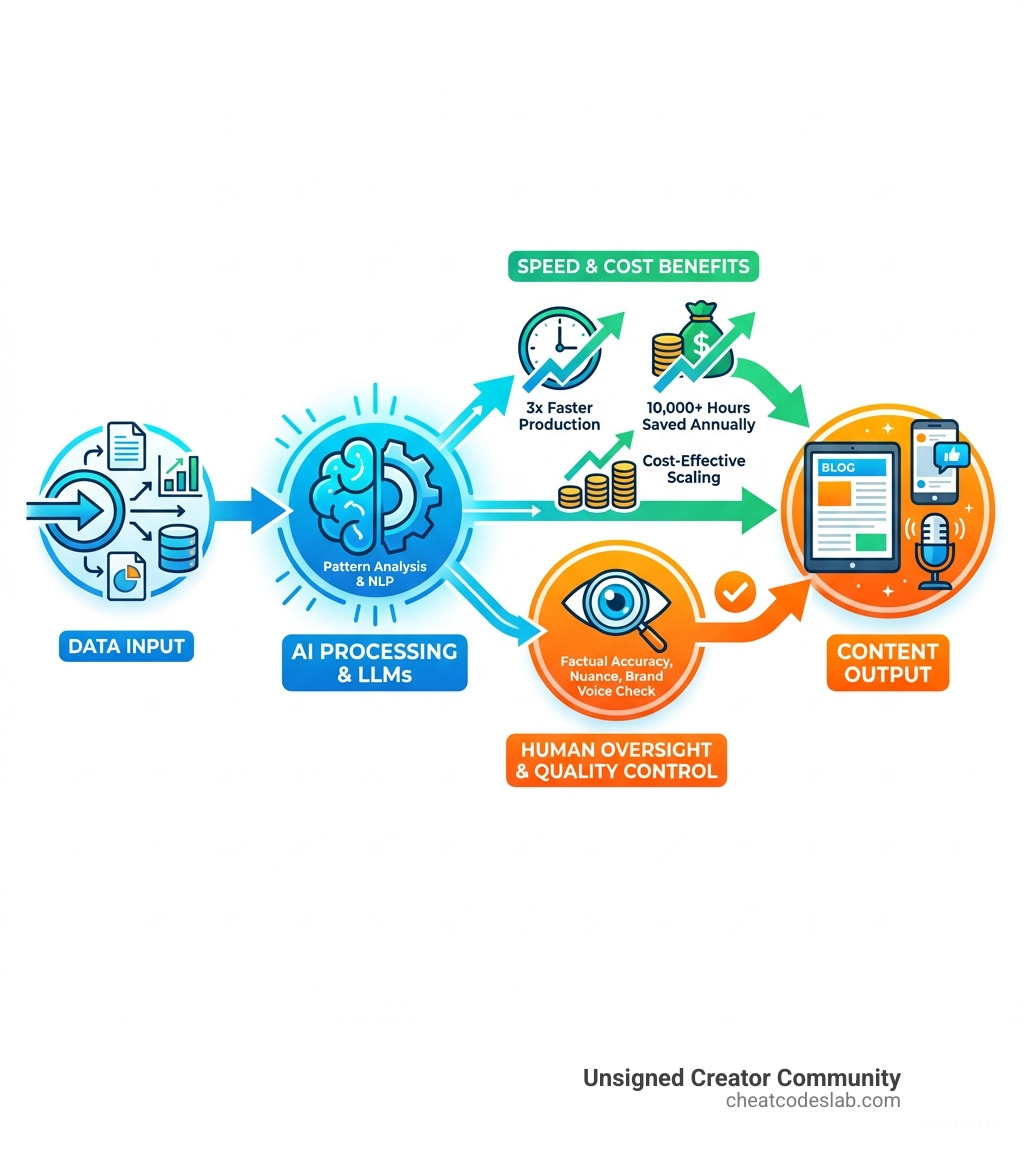
Automated content generation is the process of using artificial intelligence to create written, visual, or audio content with minimal human intervention. It’s powered by technologies like Machine Learning (ML), Natural Language Processing (NLP), and advanced Large Language Models (LLMs). These systems analyze vast amounts of data to learn patterns, understand context, and generate new content—from blog posts and social media updates to product descriptions—based on simple prompts.
The key benefits are undeniable: businesses can achieve up to 3x content production speed, save over 10,000+ hours annually, and maintain a consistent brand voice across all platforms. It’s a cost-effective way to scale content without hiring large teams.
However, it’s not a magic bullet. AI can struggle with nuance and factual accuracy, and it can’t replicate human creativity or emotional intelligence. The true power of automated content generation lies in augmenting human capabilities—letting AI handle repetitive tasks while you focus on strategy and storytelling.
I’m digitaljeff, and with over 20 years of experience in scaling content strategies, I’ve seen how a balanced approach of AI and human expertise can transform workflows and generate massive engagement.
Similar topics to automated content generation:
Your Strategic Playbook for Automated Content Generation
Implementing automated content generation requires a thoughtful strategy. At CheatCodesLab, we view AI as a powerful co-pilot designed to improve—not replace—human ingenuity. Success starts with clear goals and detailed audience personas to ensure content resonates. Maintaining a consistent brand voice by training the AI with style guides is also key.
Perhaps the most critical aspect is human oversight. While AI can draft content at lightning speed, human expertise is indispensable for quality control, fact-checking, and ensuring originality. This responsible use of automated content generation is key to long-term success.

Choosing the Right Tools and Use Cases
Selecting the right tools is like choosing the perfect instruments for an orchestra. Focus on what aligns with your marketing needs.
Common Tool Categories & Use Cases:
- SEO & Content Optimization: Use AI for keyword research, structuring articles, and generating SEO-friendly product descriptions or blog post outlines.
- Copywriting & Social Media: Generate compelling ad copy, social media captions, and personalized email campaigns to boost engagement.
- Multimedia & Support: Create simple explainer videos, localize website content with AI translation, or power chatbots for instant customer service.
Best Practices for Effective Automated Content Generation
To truly harness the power of AI, adopt best practices that prioritize quality, authenticity, and strategic alignment.

- Set Clear Guidelines: Provide the AI with detailed prompts, style guides, and templates. Quality input equals quality output.
- Prioritize Human Oversight: Never skip the human review. An editor must fact-check, refine the tone, and verify originality.
- Inject Personal Insights: Add your unique perspective and experiences. AI provides the framework; you provide the soul.
- Integrate SEO Best Practices: Leverage AI for keyword ideas but ensure a human touch for natural integration and strategic alignment.
- Monitor Performance and Iterate: Track KPIs to see what’s working. Use that data to refine your prompts and improve future content.
The Human vs. AI Equation: Finding the Perfect Balance
The question isn’t whether AI will replace human creators, but how they can best collaborate. The ideal balance lies in augmentation, where AI handles repetitive tasks, freeing you to focus on what only humans can do: strategize, empathize, and innovate.
| Task | Human Strength | AI Strength |
|---|---|---|
| Strategy & Ideation | Deep audience understanding, creativity, unique angles. | Analyzing data for trends, generating topic ideas at scale. |
| First Draft Creation | Storytelling, emotional connection, complex narratives. | Speed, generating structured text and summaries quickly. |
| Data Analysis | Interpreting data with context, strategic decision-making. | Processing vast datasets and identifying hidden patterns. |
| Editing & Refinement | Nuance, brand voice, fact-checking, ethical judgment. | Grammar/spelling correction, basic style consistency. |
| Personalization | Empathy, building genuine customer relationships. | Scaling personalized messages based on user data. |
Your Strategic Playbook for Automated Content Generation
Implementing automated content generation requires a thoughtful strategy. At CheatCodesLab, we view AI as a powerful co-pilot designed to improve—not replace—human ingenuity. Success starts with clear goals and detailed audience personas to ensure content resonates. Maintaining a consistent brand voice by training the AI with style guides is also key.
Perhaps the most critical aspect is human oversight. While AI can draft content at lightning speed, human expertise is indispensable for quality control, fact-checking, and ensuring originality. This responsible use of automated content generation is key to long-term success.
Choosing the Right Tools and Use Cases
Selecting the right tools is like choosing the perfect instruments for an orchestra. Focus on what aligns with your marketing needs.
Common Tool Categories & Use Cases:
- SEO & Content Optimization: Use AI for keyword research, structuring articles, and generating SEO-friendly product descriptions or blog post outlines.
- Copywriting & Social Media: Generate compelling ad copy, social media captions, and personalized email campaigns to boost engagement.
- Multimedia & Support: Create simple explainer videos, localize website content with AI translation, or power chatbots for instant customer service.
Best Practices for Effective Automated Content Generation
To truly harness the power of AI, adopt best practices that prioritize quality, authenticity, and strategic alignment.
- Set Clear Guidelines: Provide the AI with detailed prompts, style guides, and templates. Quality input equals quality output.
- Prioritize Human Oversight: Never skip the human review. An editor must fact-check, refine the tone, and verify originality.
- Inject Personal Insights: Add your unique perspective and experiences. AI provides the framework; you provide the soul.
- Integrate SEO Best Practices: Leverage AI for keyword ideas but ensure a human touch for natural integration and strategic alignment.
- Monitor Performance and Iterate: Track KPIs to see what’s working. Use that data to refine your prompts and improve future content.
The Human vs. AI Equation: Finding the Perfect Balance
The question isn’t whether AI will replace human creators, but how they can best collaborate. The ideal balance lies in augmentation, where AI handles repetitive tasks, freeing you to focus on what only humans can do: strategize, empathize, and innovate.
| Task | Human Strength | AI Strength |
|---|---|---|
| Strategy & Ideation | Deep audience understanding, creativity, unique angles. | Analyzing data for trends, generating topic ideas at scale. |
| First Draft Creation | Storytelling, emotional connection, complex narratives. | Speed, generating structured text and summaries quickly. |
| Data Analysis | Interpreting data with context, strategic decision-making. | Processing vast datasets and identifying hidden patterns. |
| Editing & Refinement | Nuance, brand voice, fact-checking, ethical judgment. | Grammar/spelling correction, basic style consistency. |
| Personalization | Empathy, building genuine customer relationships. | Scaling personalized messages based on user data. |


About the author


How to Archive Posts on Instagram in 4 Easy Steps
Master archiving on Instagram in 4 easy steps to organize your profile and protect your content.

Beginner’s Guide to 10k free instagram followers app
Discover how a 10k free instagram followers app works, its risks, and safe organic growth strategies for real engagement in 2026.

Beginner’s Guide to Best Instagram Report App
Discover the best Instagram report app for real-time analytics, automated reports, and data-driven decisions in 2026.
How to Master Advanced SEO Search Techniques in 7 Steps
Master advanced search techniques in SEO with 7 proven steps to boost rankings, technical audits, and organic traffic.

Cheat Sheet to the Best Business Apps
Discover the best business apps to streamline operations, boost productivity, and scale your business in 2026.

How to Get Instagram Followers Free APK in 5 Steps
Discover how instagram followers free apk 2026 download works and learn safe organic growth strategies instead of risky third-party tools.
Related
How to Archive Posts on Instagram in 4 Easy Steps
Master archiving on Instagram in 4 easy steps to organize your profile and protect your content.

Beginner’s Guide to Best Search Engine Optimization SEO
Master best search engine optimization SEO with this beginner's guide covering on-page, technical, and AI strategies for higher rankings.

Ultimate Checklist for Social Media Marketing Agency
Discover the ultimate checklist for choosing a social media marketing agency that drives real ROI and growth.

Hot Summer Caption Ideas That Spark Engagement
Discover hot summer caption ideas that boost engagement, from short aesthetic lines to funny unhinged vibes and beach photo dumps.

How to Add Text to Instagram Story in 5 Easy Steps
Learn how to add text to Instagram Story in 5 easy steps with our native tips and creative text hacks for better engagement.

How to Add Audio to Instagram Story the Right Way
Learn how to add audio clip in Instagram Story using built-in music or your own file with this step-by-step guide.