

Automate Content Creation: 7 Essential Steps for Success 2025
Why Every Creator Needs to Automate Content Creation Now
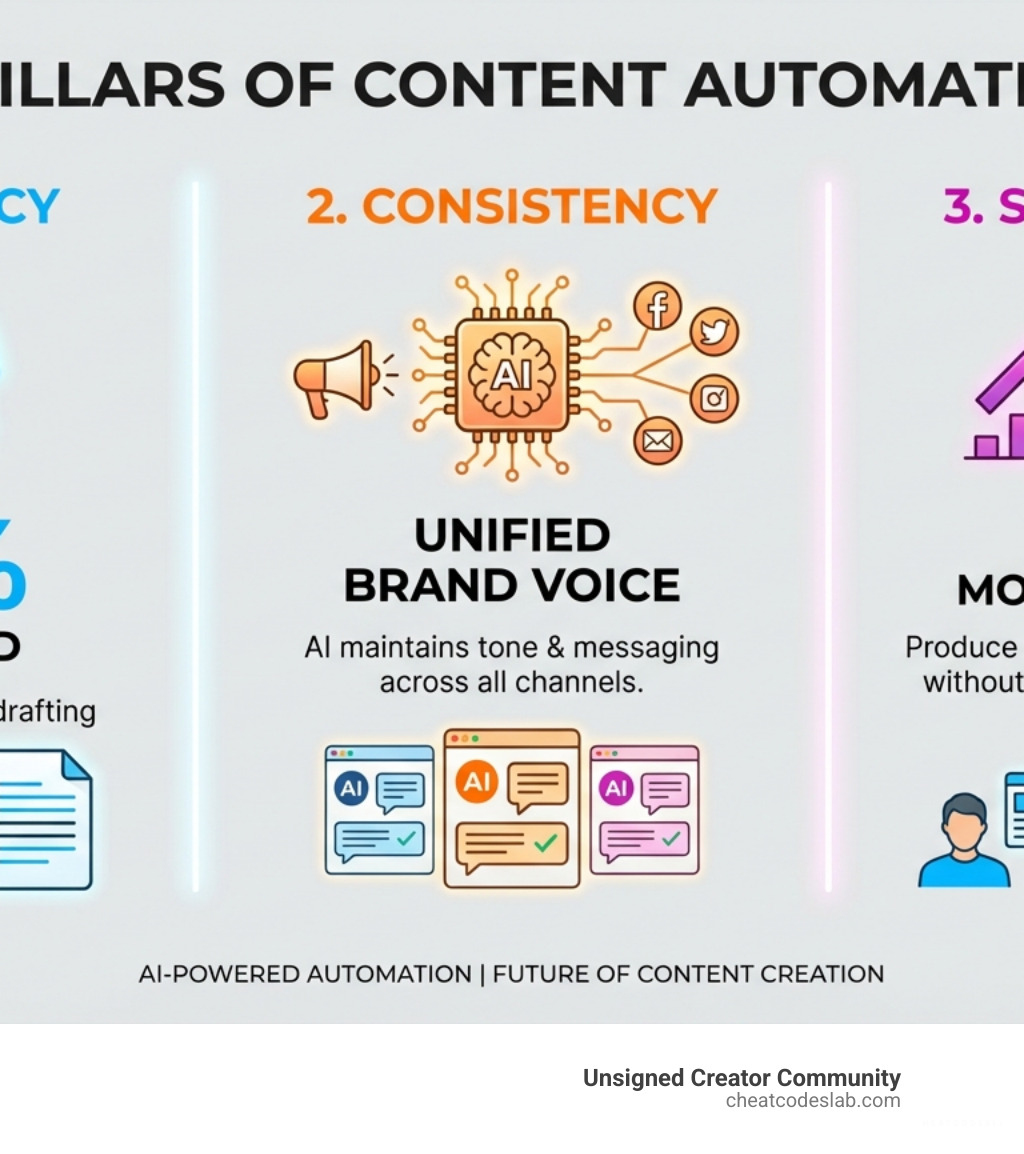
Automate content creation is no longer a luxury—it’s essential for scaling your digital presence. It means using AI and software to streamline everything from ideation to distribution, and the benefits are clear: 91.3% of businesses save significant time, improve consistency, and scale output without adding team members.
The demand for fresh content across blogs, social media, and video channels is relentless. Manual creation is unsustainable. This is where automation changes the game. It’s not about replacing creativity; it’s about freeing you from repetitive tasks so you can focus on strategy. Think of AI as a creative partner that handles the grunt work.
The numbers tell the story. The generative AI market for content creation is projected to grow from $11.6 billion in 2023 to $175.3 billion by 2033. Creators are already seeing results:
- 91.3% report reduced content creation time
- 77% see improved efficiency
- 75% produce more content than ever before
However, automation without strategy just creates noise. You need a smart approach that balances AI efficiency with human creativity.
I’m digitaljeff, and with over 20 years of experience building brands and generating over 1 billion social media views, I’ve learned that strategic automation is key. Through my work with Unsigned Creator Community and CheatCodesLab, I’ve helped thousands of creators implement systems that amplify their voice, not replace it. This guide will show you how.
Automate content creation terms you need:
A Practical Guide to Automate Content Creation
The point of content automation is simple: let technology handle the repetitive stuff so you can focus on creative decisions. It’s about working smarter, not harder.
How Content Automation Streamlines Your Workflow
Think about your current process: brainstorming, research, drafting, editing, repurposing, and publishing. Automation streamlines each step.
- Ideation: AI content idea generators analyze trends and keywords to give you dozens of topic ideas in seconds.
- Research: AI can summarize search results and pull relevant data in minutes, saving you hours of reading.
- Drafting: Natural Language Generation (NLG) tools create first drafts of blog posts, social media updates, and emails, giving you a solid foundation to build upon.
- Editing: AI checks for grammar, spelling, and readability, letting you focus on your message and tone.
- Repurposing: AI can instantly turn a blog post into social media captions, email snippets, or video scripts, multiplying your output.
- Distribution: Scheduling tools can automatically publish your content at optimal times across different platforms.
Two core technologies make this possible: Natural Language Processing (NLP), which helps AI understand human language, and Natural Language Generation (NLG), which enables AI to produce human-like text.
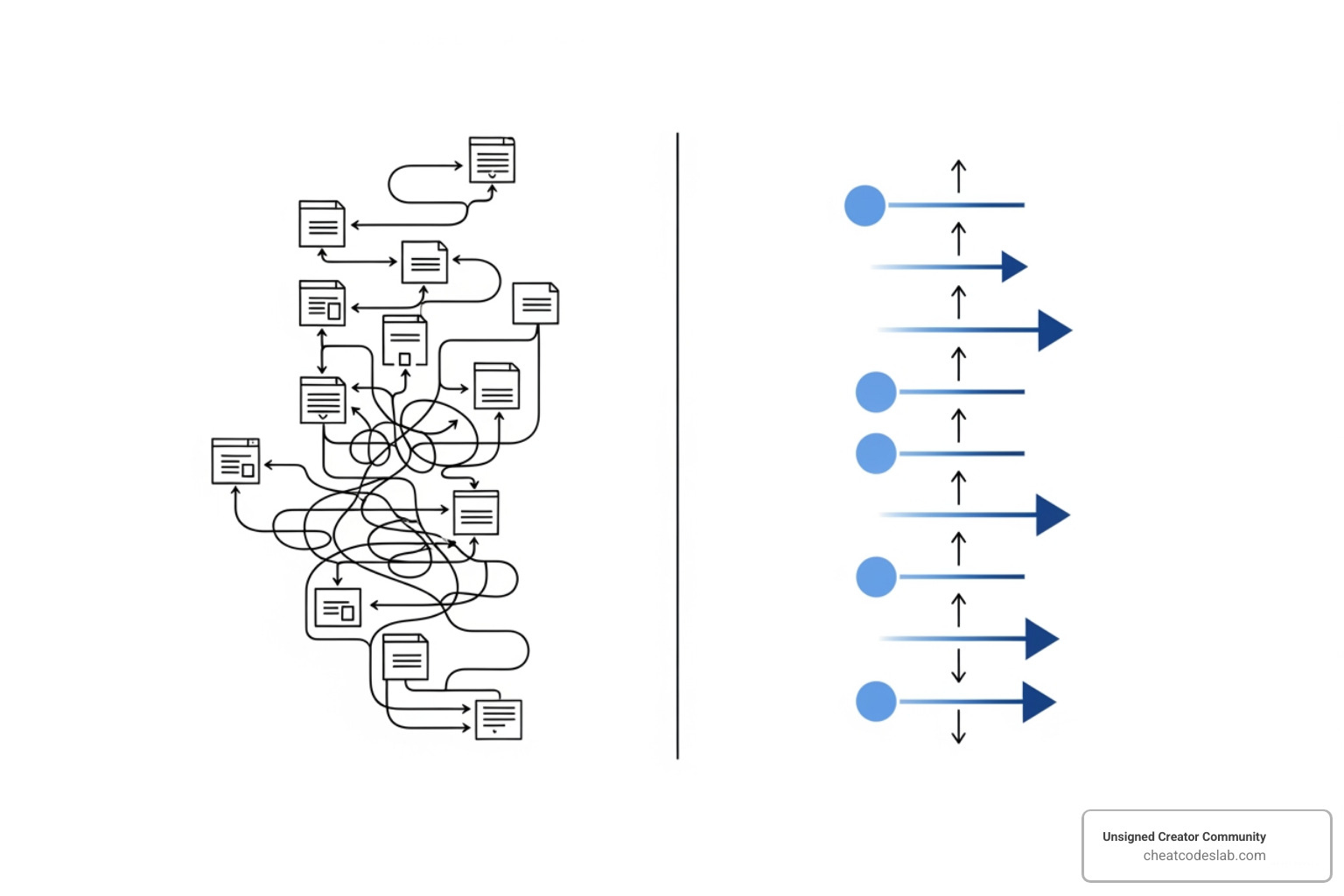
When you automate content creation, remember the golden rule: AI is your assistant, not your replacement. Use clear prompts, let AI handle the repetitive work, and then add your unique personality and insights. This hybrid approach is what separates content that converts from content that just exists.
Types of Content You Can Automate
Almost any content that follows a structure can be automated to some degree.
- Text-based content: This is the most common starting point. AI can draft blog posts, articles, social media captions, email newsletters, ad copy, and product descriptions. This saves hours and ensures consistency.
- Visual content: AI image generators can create custom graphics and illustrations from text prompts. You can also use templates to maintain brand consistency and automatically resize images for different platforms.
- Video content: Automation makes video more accessible. AI can help draft video scripts and outlines, assist with editing, and create simple animations or slideshows.
- Personalized content: AI can analyze user data to deliver custom messaging in emails, on your website, or through chatbots, leading to higher engagement.
Here’s a practical list of what you can automate: blog posts, articles, social media posts, email newsletters, ad copy, product descriptions, website copy, AI-generated images, video scripts, automated video editing, personalized messages, and chatbot responses.
Essential Steps to Automate Content Creation
Implementing automation is a gradual process. Here’s how to do it right.
- Define Your Goals: Be clear on what you want to achieve. Increase content volume? Improve efficiency? Boost ROI? Your objectives will guide your strategy.
- Identify Repetitive Tasks: Look for bottlenecks in your current workflow. Start by automating a single, time-consuming task, like writing social media captions or blog outlines.
- Choose the Right Tools: Select tools that fit your needs, integrate with your systems, and can scale with you. For certified AI tools and strategies, CheatCodesLab offers resources designed for creators.
- Develop a Content Strategy: Automation amplifies strategy, it doesn’t replace it. Define your target audience, brand voice, and how automated content fits into your marketing funnel.
- Create Templates and Prompts: AI is only as good as your instructions. Develop detailed prompts and content templates to ensure high-quality, consistent output.
- Set Up Workflows: Connect your tools to create a smooth production line. For example, a workflow could move from keyword research to an AI-generated draft, then to human review, and finally to automated scheduling.
- Integrate and Refine: Automation isn’t “set it and forget it.” Continuously monitor performance, gather feedback, and refine your prompts and workflows to ensure you’re meeting your quality standards.
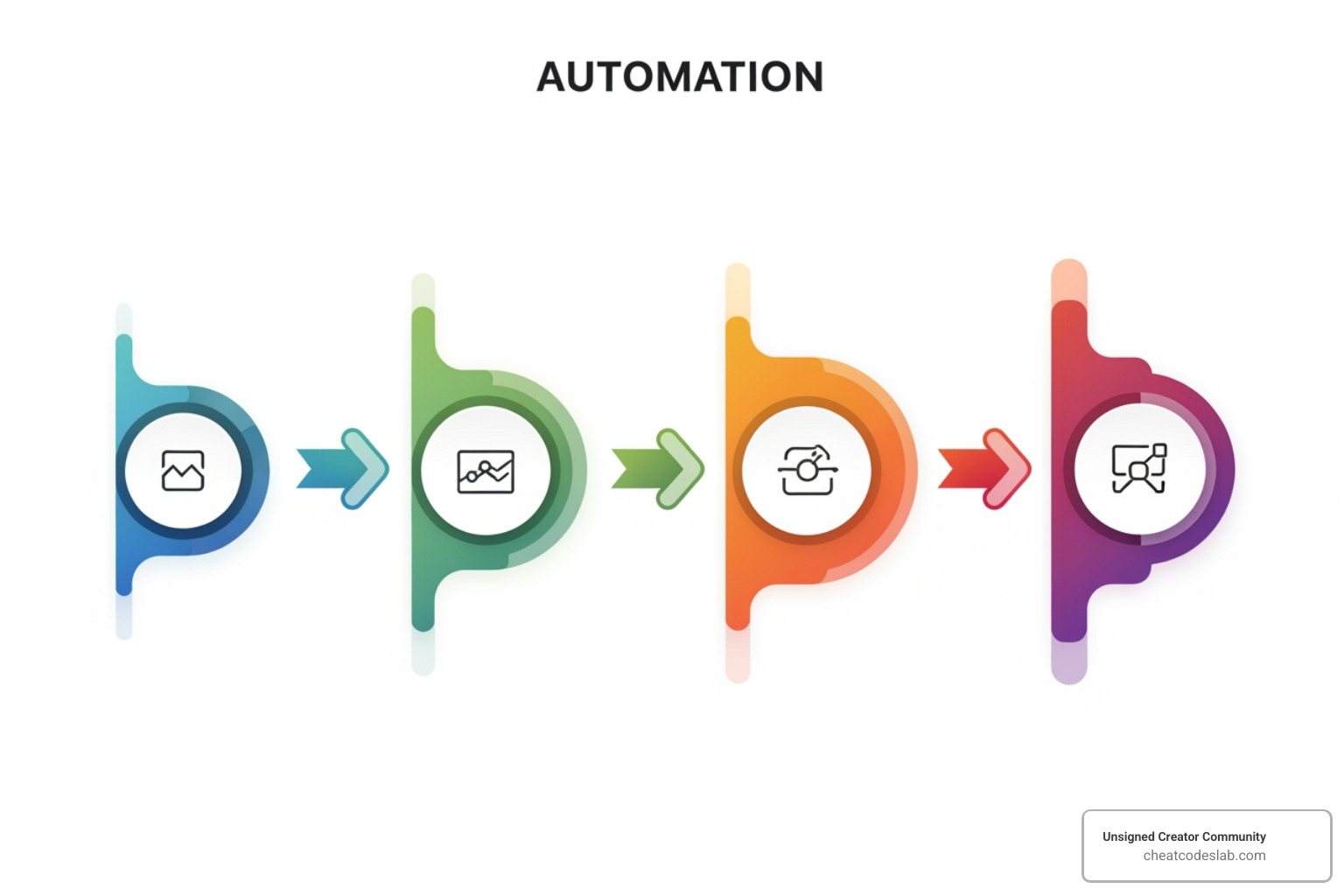
Following these steps will transform content production into a streamlined, scalable operation. That’s the power of learning to automate content creation the right way.
Mastering AI-Powered Content: Best Practices and Future Outlook
The power to automate content creation comes with responsibility. The difference between AI content that falls flat and content that connects is a strategic approach focused on quality, originality, and ethics.
Ensuring Quality and Originality in AI Content
Not all AI content is created equal. To avoid robotic, generic text, follow these best practices.
- Adopt a Human-in-the-Loop Approach: Think of AI as an efficient assistant. A human should always review, edit, and fact-check AI-generated content before publishing. This is the core of the hybrid model, where AI handles repetitive tasks and humans provide the creativity, strategy, and final polish.
- Fact-Check Everything: AI models can “hallucinate” or present outdated information as fact. It’s your responsibility to verify all claims to maintain credibility.
- Use Plagiarism Detectors: Even with tools that claim high originality, it’s wise to run text through a plagiarism checker to ensure your content is unique.
- Maintain Brand Voice Consistency: Train your AI tools on your specific style and tone by providing clear guidelines and examples. This ensures your automated content sounds like your brand.
- Humanize Your Content: Infuse AI drafts with your brand’s personality. Add storytelling, real-life examples, and personal insights to make your content relatable.
- Master Prompt Engineering: The quality of AI output depends on your input. Write clear, detailed prompts that include context, tone, audience, and keywords for better results.
Navigating Challenges and Ethical Considerations
Being aware of potential pitfalls helps you avoid them.
- Over-Reliance: Leaning too heavily on AI without human oversight can lead to generic, inaccurate content that lacks an emotional connection.
- Inaccuracies and Misinformation: AI can generate factual errors. Rigorous fact-checking is non-negotiable to maintain trust with your audience.
- Job Displacement: AI is shifting roles, not eliminating them. The demand is growing for skilled professionals who can strategize, manage AI tools, and ensure quality control.
- Transparency and Data Privacy: Be thoughtful about disclosing AI use where appropriate. When using AI tools, ensure they comply with data privacy regulations to protect sensitive information.
- Ethical Norms: Commit to using AI responsibly. Avoid generating harmful, biased, or misleading content. Robust quality control is essential to protect your brand’s reputation.
The Future of AI to Automate Content Creation
The content creation landscape is evolving rapidly, driven by AI. The market for generative AI in content creation is projected to explode to $175.3 billion by 2033, signaling a revolution.
Key trends to watch include:
- Hyper-personalization: AI will enable content that adapts to individual user preferences and behaviors in real-time, dramatically improving engagement.
- Real-time Content Generation: AI will create relevant content instantly in response to breaking news or user interactions.
- Predictive Analytics: AI will analyze data to predict which content topics will perform best, allowing for a more data-driven strategy.
- Seamless Integration: AI tools will integrate deeply with other platforms, creating frictionless content ecosystems from ideation to analysis.
- Multimodal AI: Capabilities across text, image, audio, and video will become more sophisticated, opening up new creative possibilities.
At Unsigned Creator Community, we’re dedicated to helping creators steer this landscape. We believe AI tools, used strategically, amplify human creativity. Through CheatCodesLab, we provide certified AI tools and resources designed for creators and agencies who want to stay ahead.
Explore certified AI tools and resources available on CheatCodesLab to find solutions that can transform your content creation process.
The future isn’t about AI replacing creators—it’s about AI empowering us to achieve more. By embracing smart strategies to automate content creation, we can reach new levels of efficiency, creativity, and impact.


About the author


How to Archive Posts on Instagram in 4 Easy Steps
Master archiving on Instagram in 4 easy steps to organize your profile and protect your content.

Beginner’s Guide to 10k free instagram followers app
Discover how a 10k free instagram followers app works, its risks, and safe organic growth strategies for real engagement in 2026.

Beginner’s Guide to Best Instagram Report App
Discover the best Instagram report app for real-time analytics, automated reports, and data-driven decisions in 2026.

How to Master Advanced SEO Search Techniques in 7 Steps
Master advanced search techniques in SEO with 7 proven steps to boost rankings, technical audits, and organic traffic.

Cheat Sheet to the Best Business Apps
Discover the best business apps to streamline operations, boost productivity, and scale your business in 2026.

How to Get Instagram Followers Free APK in 5 Steps
Discover how instagram followers free apk 2026 download works and learn safe organic growth strategies instead of risky third-party tools.
Related
How to Archive Posts on Instagram in 4 Easy Steps
Master archiving on Instagram in 4 easy steps to organize your profile and protect your content.

Beginner’s Guide to Best Search Engine Optimization SEO
Master best search engine optimization SEO with this beginner's guide covering on-page, technical, and AI strategies for higher rankings.

Ultimate Checklist for Social Media Marketing Agency
Discover the ultimate checklist for choosing a social media marketing agency that drives real ROI and growth.

Hot Summer Caption Ideas That Spark Engagement
Discover hot summer caption ideas that boost engagement, from short aesthetic lines to funny unhinged vibes and beach photo dumps.

How to Add Text to Instagram Story in 5 Easy Steps
Learn how to add text to Instagram Story in 5 easy steps with our native tips and creative text hacks for better engagement.

How to Add Audio to Instagram Story the Right Way
Learn how to add audio clip in Instagram Story using built-in music or your own file with this step-by-step guide.