


ChatGPT for e-commerce: Unlock Potential 2025
Why ChatGPT for E-commerce is Changing Online Business
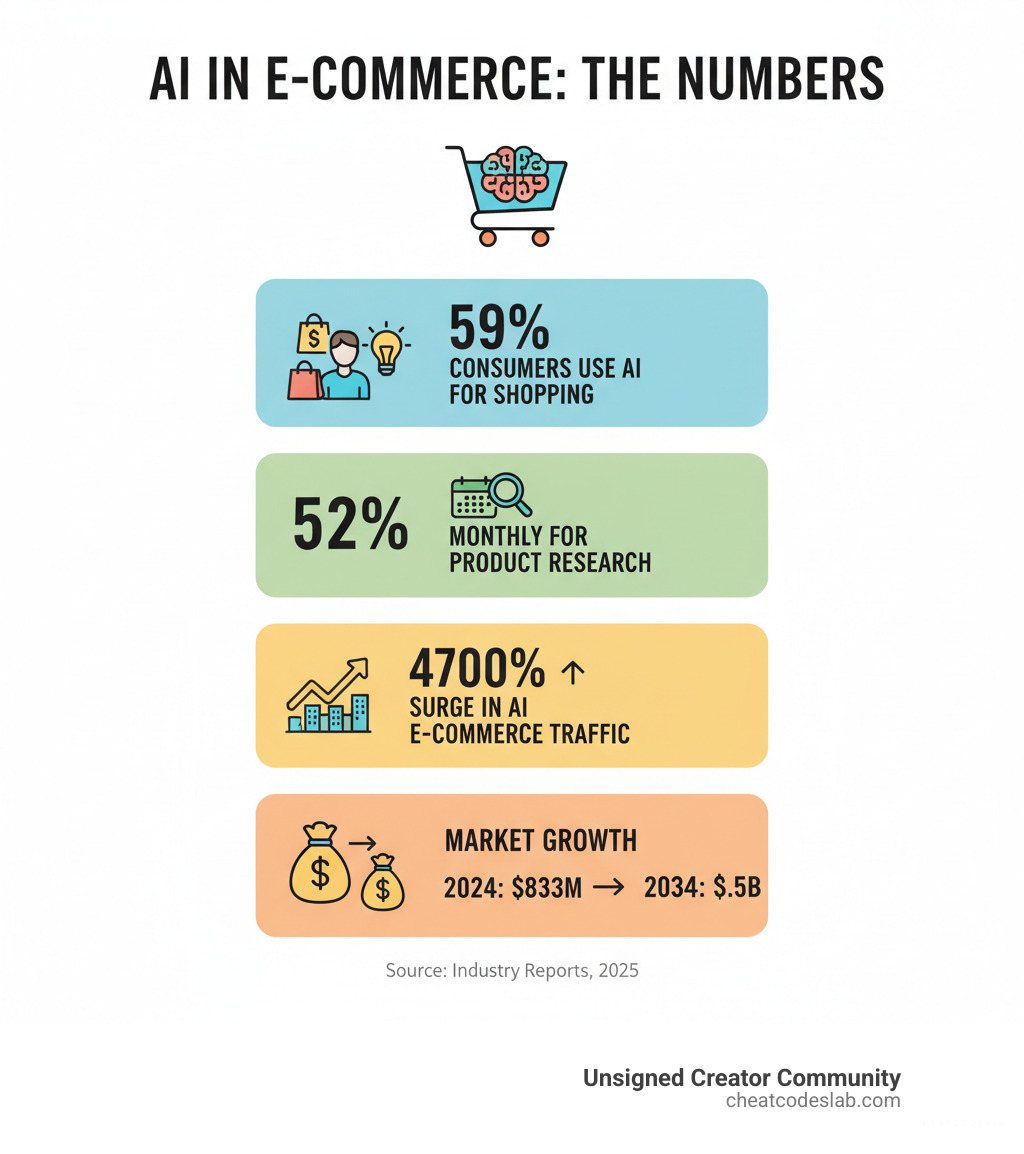
ChatGPT for e-commerce is revolutionizing online business, with 59% of U.S. consumers using generative AI for shopping. This AI tool helps businesses automate content, improve customer service, and boost conversions by up to 30%.
Key ways ChatGPT transforms e-commerce:
- Product descriptions – Generate compelling, SEO-optimized product copy at scale.
- Customer service – Provide 24/7 automated support and personalized recommendations.
- Marketing content – Create email campaigns, social media posts, and ad copy.
- SEO optimization – Improve product titles, descriptions, and content for search engines.
- Inventory insights – Analyze customer feedback to optimize operations.
The numbers are compelling: one in four consumers now prefer ChatGPT over Google for product research. A 4,700% surge in AI-driven traffic to U.S. e-commerce sites has been recorded, and the global generative AI e-commerce market is projected to grow from $833 million in 2024 to over $3.5 billion by 2034.
Younger shoppers lead this change. Gen Z and millennials show 70% adoption rates for AI in e-commerce, using it for price comparisons, outfit ideas, and home decor suggestions.
This shift isn’t just about consumer behavior; it’s changing business operations. With ChatGPT Shopping allowing users to search, compare, and buy within the AI, traditional e-commerce strategies require an update.
I’m digitaljeff, and with 20 years of experience building digital brands, I’ve seen how ChatGPT for e-commerce can strategically transform businesses, from product findy to customer engagement.
ChatGPT for e-commerce word guide:
Core Applications of ChatGPT for E-commerce
Think of ChatGPT for e-commerce as a tireless, intelligent assistant. At its core, ChatGPT is a Large Language Model from OpenAI trained on vast text data. For e-commerce, its strength lies in understanding context and generating human-like, relevant responses for your business.
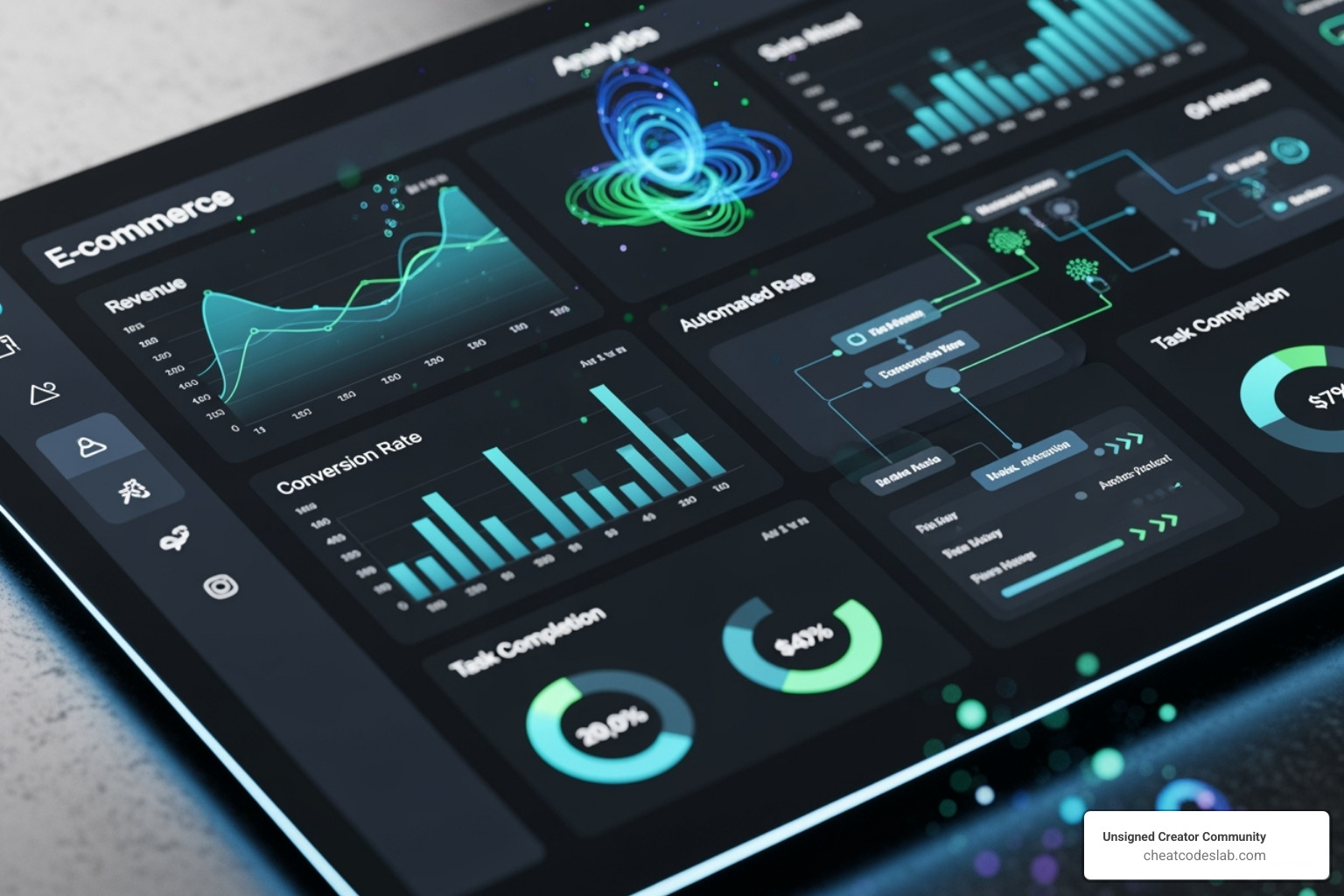
Integrating ChatGPT into daily operations saves hours. Instead of manually crafting copy, you can generate compelling product descriptions, engaging email campaigns, and helpful customer service responses in minutes. The time savings are significant, freeing your team for strategic growth. Beyond speed, it ensures consistency and quality across all customer touchpoints.
SEO optimization becomes easier as ChatGPT naturally weaves keywords into content. This can lead to conversion rate increases of up to 30% as customers encounter persuasive copy. Plus, its personalization capabilities make each customer feel seen. Through workflow integration, ChatGPT adapts to your brand voice, making it a tool that understands and grows your business.
For deeper insights into leveraging AI strategically, check out our comprehensive guide on AI in Content Marketing.
Here are 5 essential best practices for getting the most out of ChatGPT:
- Give detailed context – The more specific you are about your product, audience, and goals, the better the results.
- Define your brand voice – Tell ChatGPT your desired tone, whether it’s professional, playful, or luxurious.
- Specify format and length – Be clear if you need bullet points, paragraphs, or social media captions.
- Include SEO keywords naturally – Mention target keywords for better search rankings.
- Refine and iterate – Treat it like a conversation; if the first response isn’t perfect, ask for adjustments.
Automating Content and Marketing with ChatGPT for E-commerce
Content creation and marketing automation with ChatGPT transforms how you connect with customers. It simplifies product description generation, creating stories that help customers envision products in their lives. This improved content creation ensures quality across your entire catalog.
Upgrade email marketing campaigns by using ChatGPT for welcome sequences, abandoned cart recovery, and seasonal promotions that drive engagement. Systematize social media content by generating engaging captions and content calendars. You can also create converting ad copy by testing headlines, CTAs, and messaging to find what resonates with your audience, regardless of budget. SEO keyword integration happens naturally, and brand voice consistency remains strong across all channels.
For more advanced SEO strategies, explore our guide on AI Tools for Website SEO. To master your social presence, check out our resource on using ChatGPT for Social Media.
Enhancing Customer Service and Personalization
With ChatGPT for e-commerce, you can offer 24/7 automated support that solves customer problems effectively. Chatbot integration provides a human-like experience, offering instant answers on order status, product selection, and common questions without wait times.
Personalized product recommendations go beyond simple algorithms. ChatGPT analyzes customer data to suggest relevant products, creating natural upselling and cross-selling opportunities. Proactively reduce cart abandonment by having ChatGPT offer assistance, answer questions, or provide incentives when a customer hesitates. Multilingual support opens your business to a global audience, making every customer feel understood.
The result is increased customer satisfaction—improvements that directly impact your bottom line. Happy customers become repeat customers.
Find more ways to turn interactions into sales with our guide on ChatGPT for Lead Generation.
Integrating ChatGPT and Measuring ROI
Proper API integration and e-commerce platform integration make ChatGPT a core part of your infrastructure, connecting it to inventory, customer, and marketing systems. This enables seamless workflow automation, where product descriptions update automatically and customer inquiries get smart replies.
Measure success by tracking key metrics like conversion rate lift (up to 30%) and improved customer satisfaction scores. The return on investment (ROI) is clear from immediate time and cost savings, as your team can focus on strategy while repetitive tasks are automated.
Measuring ROI involves tracking these improvements in conversions, satisfaction, time savings, and SEO performance. When these metrics move in the right direction, your ChatGPT integration is working.
For technical guidance, our ChatGPT API Tutorial Python provides step-by-step instructions.
The Future of Retail: Strategy, Findy, and AI Risks
The world of retail is changing rapidly, shifting how people shop and find products. The numbers are telling: 59% of U.S. consumers use generative AI for shopping, and one in four now prefer ChatGPT over Google for product research. This is a massive behavioral shift reshaping e-commerce.
The 4,700% surge in AI-driven e-commerce traffic signals a revolution. AI shopping assistants are emerging, acting more like helpful friends than search engines. Shoppers can now have natural conversations with AI to get relevant, personalized recommendations.

ChatGPT for e-commerce is moving beyond recommendations. With sophisticated payment integrations, customers may soon complete purchases entirely within the AI interface. This shifts the focus from search rankings to presence in AI-generated responses. This change brings opportunities and challenges. While AI personalizes shopping, we must steer data privacy, accuracy, and bias. Understanding these issues is key to using AI responsibly.
The Rise of AI-Driven Product Findy
While traditional SEO remains important, Generative Engine Optimization (GEO) is emerging. Unlike traditional SEO’s focus on keywords for Google rankings, GEO ensures your products appear in AI recommendations. This requires helping the AI understand your product’s value for specific needs, not just matching keywords.
AI models understand user intent, not just keywords. Therefore, clean, comprehensive product data is critical; incomplete data means your products won’t be recommended. To ensure AI findability, allow OpenAI’s crawler (OAI-SearchBot) to access your site. Also, sign up for notifications about OpenAI’s upcoming direct feed submission system.
Your product pages need to be well-written, clearly structured, and use natural language. Create content that answers real-world customer questions. Technically, use structured data formats like XML, JSON-LD, or Schema.org. Ensure key details (ID, title, price, availability) are accurate and keep data fresh with daily updates.
For detailed guidance, Follow these guidelines to help ChatGPT find your products. You can also Learn more about how OpenAI bots crawl the web to understand the technical requirements.
Navigating the New Shopping Journey and AI Risks
ChatGPT for e-commerce is fundamentally changing online shopping. Instead of endless searching, shoppers have natural conversations with AI assistants that provide curated recommendations. This shift impacts platforms like Google and Amazon, as ChatGPT Shopping could redirect traffic by handling product queries and purchases directly.
However, AI has limitations. Outputs require human review for accuracy and tone. Poor prompts can lead to generic or incorrect information. AI bias is another real concern. Since models learn from existing data, their recommendations can reflect societal biases, so businesses must be vigilant to ensure fairness.
Data privacy and security are critical. Secure implementation is possible but requires careful integration. With 28% of users concerned about privacy, transparency and robust security are essential. Building and maintaining customer trust should always be the top priority.
For a deeper dive into how AI is changing the broader marketing landscape, check out Learn more about Artificial Intelligence in Marketing.
Preparing for Future Trends and Getting Started
The future of AI in e-commerce extends beyond chatbots to systems that anticipate needs, automate tasks, and create personalized experiences. Businesses that prepare now will gain a significant advantage.
Key developments include agentic AI—systems that can reason, plan, and act on your behalf, like a 24/7 business consultant. Predictive analytics is another game-changer, with AI tools forecasting sales with high specificity to optimize inventory. Hyper-personalization is also advancing, as AI analyzes real-time user data to deliver custom recommendations.
To prepare, adapt early. The landscape is changing fast, so integrating into conversational ecosystems now positions you for future growth. This requires investing in technology and team training. Use AI ethically and responsibly, aiming to improve, not replace, the human touch. Prioritize data privacy and transparency.
Crucially, optimize your data. Clean, structured, and current product information is the foundation for all AI advancements. Integrating ChatGPT for e-commerce is an ongoing journey of learning and improvement to build a stronger, more efficient, and more personalized online business.
At CheatCodesLab, we specialize in providing certified AI tools and strategies for content marketing and SEO, helping online creators and agencies implement top-tier AI solutions. We believe that with the right knowledge and tools, every business can open up its full e-commerce potential.
Ready to begin your AI-powered e-commerce journey? Explore our certified AI Apps to get started.


About the author


How to Archive Posts on Instagram in 4 Easy Steps
Master archiving on Instagram in 4 easy steps to organize your profile and protect your content.

Beginner’s Guide to 10k free instagram followers app
Discover how a 10k free instagram followers app works, its risks, and safe organic growth strategies for real engagement in 2026.

Beginner’s Guide to Best Instagram Report App
Discover the best Instagram report app for real-time analytics, automated reports, and data-driven decisions in 2026.
How to Master Advanced SEO Search Techniques in 7 Steps
Master advanced search techniques in SEO with 7 proven steps to boost rankings, technical audits, and organic traffic.

Cheat Sheet to the Best Business Apps
Discover the best business apps to streamline operations, boost productivity, and scale your business in 2026.

How to Get Instagram Followers Free APK in 5 Steps
Discover how instagram followers free apk 2026 download works and learn safe organic growth strategies instead of risky third-party tools.
Related
Beginner’s Guide to Best Instagram Report App
Discover the best Instagram report app for real-time analytics, automated reports, and data-driven decisions in 2026.
Cheat Sheet to the Best Business Apps
Discover the best business apps to streamline operations, boost productivity, and scale your business in 2026.

The Ultimate Guide to AI Generated SEO Content Tools
Master ai generated seo content with proven tools, Google guidelines, and GEO strategies that boost rankings and drive real results.

The Complete Guide to 1k Followers App
Discover how a 1k followers app can help you reach TikTok Live and boost Instagram growth fast with safe, organic strategies.

The Ultimate Guide to Best Local SEO Tools
Discover the best local seo tools to boost visibility, manage citations, and optimize your Google Business Profile in 2026.

Backlink Building Tool Survival Guide
Discover top backlink building tool strategies: Compare Ahrefs, Semrush, AI outreach like Linkee, free options, and penalty recovery tips for 2026 SEO success.